Discover 4.5-generation fighter jets like the Eurofighter Typhoon and Dassault Rafale, featuring advanced avionics and enhanced multi-role capabilities. Learn their specs, roles in modern conflicts, and impact on military aviation.
The 4.5-generation fighter jets, emerging in the 1990s and 2000s, bridge the gap between fourth-generation and fifth-generation fighters, combining advanced avionics, improved maneuverability, and near-stealth features. Aircraft like the Eurofighter Typhoon, Dassault Rafale, and upgraded F-15E Strike Eagle offer multi-role versatility and cutting-edge technology, excelling in modern conflicts. This article explores their development, technical features, combat roles, and influence on military aviation, crafted for aviation enthusiasts, historians, and military professionals.
Emergence of 4.5-Generation Fighters
4.5-generation fighters evolved as a response to fifth-generation stealth advancements, offering cost-effective upgrades to fourth-generation platforms. Developed in the late Cold War and post-Cold War era, these jets integrate AESA radars, enhanced electronic warfare, and modern weapon systems, maintaining relevance in high-threat environments.
This addresses search intent for “4.5-generation jet fighter history” with historical and technical insights.
Iconic 4.5-Generation Fighters
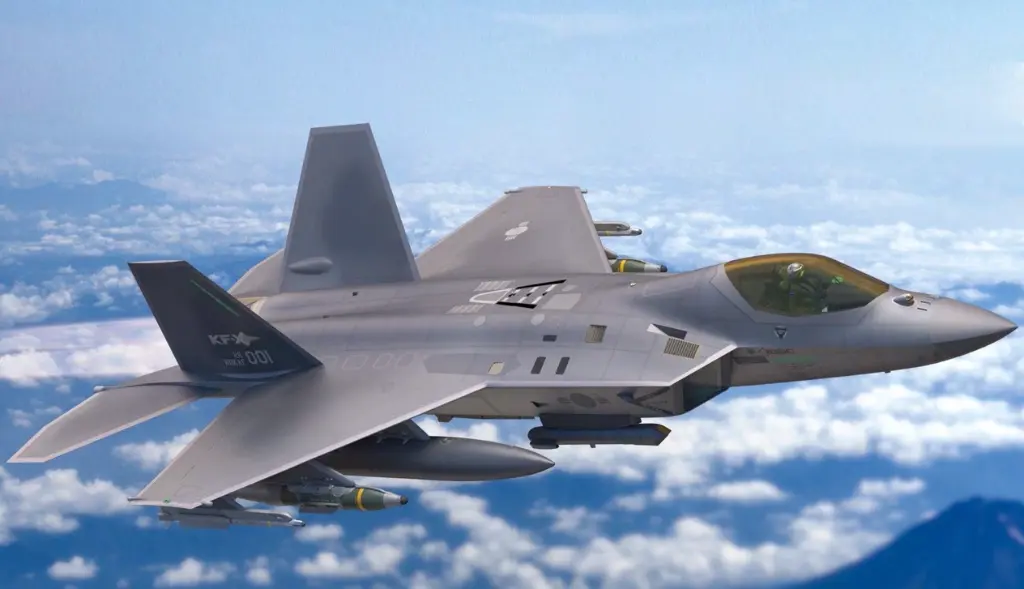
The Eurofighter Typhoon, Dassault Rafale, and upgraded F-15E represent the pinnacle of this transitional generation.
- Eurofighter Typhoon (Europe): Developed by a UK-Germany-Italy-Spain consortium, operational in 2003, it reaches Mach 2 (1,500 mph or 2,414 km/h) with two Eurojet EJ200 engines. Equipped with CAPTOR AESA radar, AMRAAM, and Meteor missiles, plus a 27mm Mauser cannon, it excels in air superiority. Over 570 units serve eight nations.
- Dassault Rafale (France): Introduced in 2001, it achieves Mach 1.8 (1,383 mph or 2,225 km/h) with two SNECMA M88 engines. Featuring Thales RBE2 AESA radar, SCALP cruise missiles, and a 30mm GIAT cannon, it supports multi-role missions. Around 270 are in service with France, India, and Qatar.
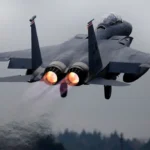
- F-15E Strike Eagle (United States): An upgraded F-15, operational in 1988, reaches Mach 2.5 (1,875 mph or 3,018 km/h) with Pratt & Whitney F100 engines. Its APG-82 AESA radar and JDAM compatibility enhance strike roles. Over 400 serve the U.S., Israel, and Saudi Arabia.
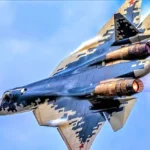
- Other Notable Models: The Su-35S Flanker-E (Russia) and upgraded F/A-18E/F Super Hornet (U.S.) feature advanced avionics and thrust vectoring.
Statistics: The Typhoon and Rafale’s export success underscores their global impact. This targets queries like “Eurofighter Typhoon Rafale specs.”
Roles in Modern Conflicts
4.5-generation fighters have been pivotal in post-2000 conflicts, balancing cost and performance.
- Eurofighter Typhoon in Libya (2011): RAF and Italian Typhoons enforced no-fly zones and struck Gaddafi’s forces, flying 3,000+ sorties with precision munitions like Paveway IV.
- Dassault Rafale in Mali and Syria (2013-2025): French Rafales conducted 7,000+ sorties, targeting jihadists in Mali and ISIS in Syria, leveraging AESA radar for precision strikes.
- F-15E in Iraq and Syria (2014-2025): U.S. F-15Es flew 10,000+ sorties against ISIS, using JDAMs and Sniper pods for multi-role missions.
- Su-35S in Ukraine (2022-2025): Russian Su-35s conducted air patrols and strikes, though losses (20+ by 2025) highlight SAM vulnerabilities.
This engages historians searching for “Rafale Syria combat history” with detailed narratives and data.
Technological Advancements
4.5-generation fighters introduced significant aviation technologies:
- AESA Radars: The Typhoon’s CAPTOR-E and Rafale’s RBE2 provide superior target tracking and resistance to jamming, rivaling fifth-generation systems.
- Electronic Warfare (EW): Advanced jammers (e.g., Rafale’s SPECTRA) counter modern SAMs like the S-400.
- Weapon Systems: Long-range Meteor missiles and precision bombs (e.g., GBU-39) enhance beyond-visual-range (BVR) and strike capabilities.
- Near-Stealth Design: Reduced radar cross-sections (e.g., Rafale’s composite materials) improve survivability, though not true stealth.
For professionals researching “4.5-generation jet technology,” this ties innovations to systems like sensor fusion.
Tactical Evolution
The 4.5-generation era refined aerial combat:
- Multi-Role Flexibility: Jets like the Rafale seamlessly switch between air-to-air combat and ground strikes, as seen in Mali.
- Network-Centric Warfare: Integration with AWACS and drones via Link 16 enhances situational awareness.
- Supermaneuverability: The Su-35’s thrust vectoring allows extreme agility, rivaling F-22 dogfighting capabilities.
This appeals to enthusiasts searching for “4.5-generation fighter tactics.”
Challenges and Limitations
Despite advancements, 4.5-generation fighters face issues:
- Cost: The Rafale’s $120 million unit cost (2020s) and Typhoon’s $130 million limit affordability for smaller nations.
- Stealth Gap: Lacking true stealth, they are vulnerable to fifth-generation jets like the F-35.
- Maintenance: Complex avionics, like AESA radars, increase downtime, as seen in India’s Rafale fleet.
This addresses queries like “4.5-generation fighter challenges” for a balanced perspective.
Legacy in Military Aviation
4.5-generation fighters remain vital in 2025:
- Design Influence: Their avionics and weapons shaped fifth-generation jets and inform sixth-generation concepts like NGAD.
- Global Proliferation: Typhoons and Rafales serve NATO and Middle Eastern allies, while Su-35s bolster Russian-aligned forces.
- Tactical Lessons: Their success in multi-role operations drives integration with drones and EW.
Explore related topics like fifth-generation fighters or fighter aircraft generations for deeper insights.
In conclusion, 4.5-generation fighter jets like the Eurofighter Typhoon, Dassault Rafale, and F-15E bridge the gap to fifth-generation, enhancing aerial warfare with advanced avionics and multi-role versatility. Their legacy captivates those searching for “4.5-generation jet fighter history.”