
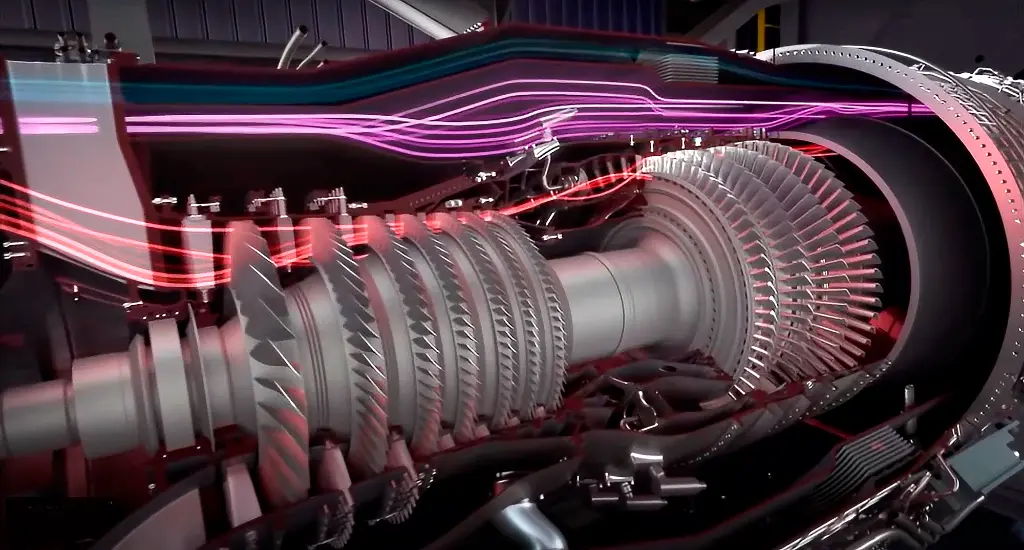
Adaptive Cycle Engine Technology
Adaptive cycle engines (ACEs), also known as variable cycle engines (VCEs), represent a revolution in military aircraft propulsion. These engines are designed to operate efficiently under mixed flight conditions, including subsonic, transonic, and supersonic regimes. The distinctive feature of these engines is their ability to reconfigure themselves mid-flight, adjusting the bypass ratio and fan pressure to optimize performance according to operating conditions.
Main Development Programs
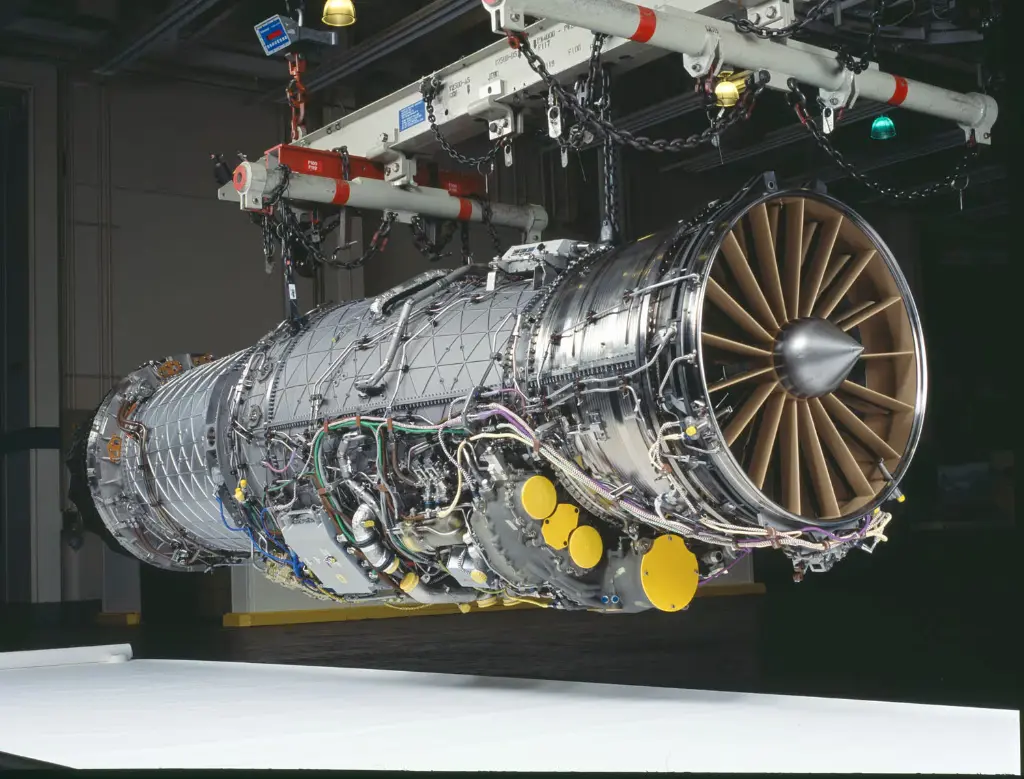
Adaptive Motor Transition Program (AETP)
The development of adaptive motors has been driven by several U.S. research programs. The Adaptive Motor Transition Program (AETP) represents the most advanced effort, launched in 2016 and planned to last ten years. Under this program, two major manufacturers have developed demonstration engines:
General Electric XA100 : This three-flow engine can reduce fuel consumption by 25%, increase range by 35%, and improve endurance by 50%. The XA100 has successfully completed key component testing and full engine testing since 2020.
Pratt & Whitney XA101 : Designed specifically for the F-35 Lightning II, this engine has demonstrated exceptional high-temperature performance, achieving a turbine inlet temperature (TIT) of 2400 K, an increase of 150 K compared to the F135 engine.
Next Generation Adaptive Propulsion Program (NGAP)
As an extension of the AETP, the NGAP program aims to develop adaptive engine prototypes for the NGAD (Next Generation Air Dominance) program, intended to replace the F-22 by 2030. This program continues to utilize adaptive airflow concepts, composite ceramic matrix materials, thermal management techniques, and additive manufacturing for critical components.
Specific Technological Advances
Three-Flow Architecture
The most advanced adaptive motors utilize a three-flow configuration that allows for unprecedented airflow control. This architecture includes revolutionary components such as:
- Core Driven Stage Fan (CDFS) : Allows greater flexibility in modulating the bypass ratio
- Variable Bypass Injectors (FVABI and RVABI) : Control the mixture and distribution of air flow
- Mode Selection Valves (MSV) : Facilitate the transition between different operating modes
Performance Capabilities
Adaptive motors offer significant improvements in multiple performance parameters:
Fuel Efficiency : 25% improvement in specific fuel consumption during cruise
Operational Range : Extension of the aircraft’s operational range by more than 30%
Thermal Management : Significantly improved thermal management capabilities compared to current most advanced fighter engines
Thrust : Increased thrust by up to 20% for combat aircraft
Applications in Sixth Generation Fighter Aircraft
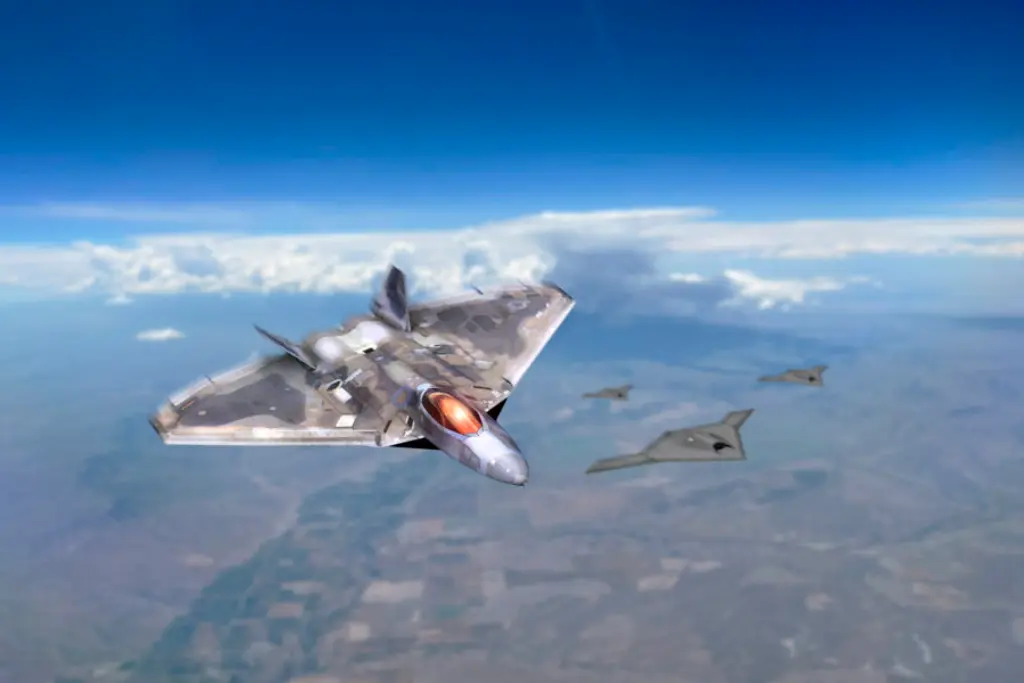
NGAD Program
Adaptive engines are critical to the Next Generation Air Dominance program. Sixth-generation fighters are expected to use adaptive cycle engines developed under the NGAP program, with the General Electric XA102 and Pratt & Whitney engines being prime candidates.
Operational Advantages
Adaptive technology provides increased acceleration for combat maneuvers, but also offers reduced fuel consumption in cruise or patrol modes. This duality allows next-generation fighters to:
- Switch between high-efficiency and high-thrust modes depending on the tactical situation
- Maintaining operational advantage in protracted combat
- Significantly extend the time spent on station
International Developments
Adaptive engine technology isn’t limited to the United States. The European trinational effort seeks to bring adaptive cycle propulsion to the Future Combat Air System, with the goal of delivering 30 to 40 percent more thrust than current European powerplants.
Challenges and Current Status
Despite significant advances, adaptive engines face considerable challenges. In 2023, the U.S. Air Force decided to discontinue the application of AETP engines on the existing F-35 series, opting to prioritize the development of improved versions of the current F-135, primarily due to cost and adaptability factors.6.
However, development continues to move forward. In 2024, GE announced the completion of a new round of testing for the XA100 and began development of the second-generation XA102 engine, which inherits the core technologies of the XA100 while significantly reducing production complexity and costs through digital design and manufacturing optimizations.
Historical Evolution of Development Programs
Adaptive engines have their roots in the ADVENT (Adaptive Versatile Engine Technology) program that began in 2007, followed by the AETD (Adaptive Engine Technology Demonstrator) program in 2012.3This programmatic evolution established the technological foundations that later materialized in AETP and NGAP.
Advances in Materials and Manufacturing
Adaptive engines incorporate revolutionary material technologies. Turbine blades made from ceramic matrix composites (CMC) can withstand 500 degrees Fahrenheit more heat than the current F135.4These materials, combined with additive manufacturing techniques (3D printing), make it possible to create complex heat exchangers that could not be manufactured conventionally. 3D printing technology also reduces manufacturing costs and improves serviceability, as replacement parts can be reproduced in maintenance workshops.
Recent Developments and Program Status
In February 2025, both GE Aerospace and Pratt & Whitney successfully completed Detailed Design Reviews (DDRs) for their respective NGAP engines. GE’s XA102 represents the first engine in the company’s history developed using Model-Based Systems Engineering (MBSE), a transformative shift in advanced propulsion system design.
Contracts for both companies have been significantly increased, with each company receiving contracts of up to $3.5 billion to continue prototype development. Testing of the demonstration engines is scheduled for the late 2020s.
Strategic Implications for the Indo-Pacific Theater
Adaptive engines are particularly critical for operations in the Indo-Pacific theater, where long distances and the vulnerability of aerial refueling assets pose significant challenges. The ability to operate with greater fuel efficiency allows aircraft carriers and tankers to operate farther from areas of hostilities, increasing the survivability of both U.S. tankers and aircraft carriers in the region.
Power Generation Capacities
The third airflow from the adaptive motors can be used to generate up to one megawatt of electrical power. This power generation capability will be essential for powering guided laser weapons and advanced electronic systems expected on sixth-generation fighters.
F-47 Decision and Future of the Program
In March 2025, the U.S. Air Force selected Boeing’s F-47 design as the winning fighter for the NGAD program, with a contract valued at more than $20 billion. This decision solidifies the future of adaptive engines, as the F-47 will use engines developed under the NGAP program.
Budgetary and Policy Perspectives
GE Aerospace’s CEO has urged the Pentagon to continue pursuing the Navy’s F/A-XX program, arguing it will boost development of adaptive engine technology that faces delays in the Air Force’s most recent budget. Congress has renewed its support for adaptive drivetrain technology, with both chambers providing funding for next-generation propulsion programs