The Cold War triggered one of the most dramatic technological revolutions in aviation history. This article explores how superpower rivalry propelled aircraft from subsonic to supersonic speeds, transforming military strategy and aerospace technology forever. Discover the key breakthroughs, legendary aircraft, and lasting impacts of this extraordinary period in aviation development.
The Cold War Catalyst: Why Speed Became Essential
The race for supersonic supremacy began almost immediately after World War II. Both superpowers recognized that aircraft speed provided critical military advantages. Faster planes could intercept bombers, deliver nuclear weapons, and conduct reconnaissance with reduced vulnerability.
This competition became a proxy war for technological superiority. Each new speed record demonstrated which political system could produce better technology. The Soviet Union and United States poured enormous resources into research programs aimed at pushing aircraft beyond Mach 1, then Mach 2, and eventually Mach 3.
The military imperative drove this rapid development. Supersonic capabilities compressed decision timelines in nuclear scenarios and created new possibilities for strategic reconnaissance. This urgency transformed supersonic flight from theoretical possibility to operational reality in less than a decade.
Legendary Supersonic Aircraft: Engineering Marvels
F-104 Starfighter: The Missile with a Man In It
The Lockheed F-104 Starfighter (1954) embodied the extreme pursuit of performance. Its radical design featured tiny, thin wings for minimal drag and a powerful J79 engine. The F-104 became the first aircraft to hold simultaneous world records for speed and altitude.
MiG-21: The Supersonic Workhorse
The Mikoyan-Gurevich MiG-21 (1955) became the most produced supersonic jet in history. Its delta wing design balanced high-speed performance with reasonable low-speed handling. The aircraft’s simplicity and effectiveness made it a favorite among numerous air forces worldwide.
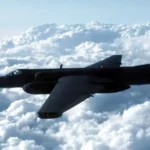
SR-71 Blackbird: The Ultimate Spy Plane
The Lockheed SR-71 Blackbird (1964) represented the pinnacle of Cold War aerospace engineering. Its titanium construction allowed it to cruise at Mach 3.3 at altitudes above 85,000 feet. The aircraft remained operationally invulnerable throughout its career.
MiG-25 Foxbat: The Soviet Response
The Mikoyan-Gurevich MiG-25 (1964) was built with one mission: intercept high-altitude threats. Its powerful radar and enormous engines enabled Mach 3+ performance, though with significant limitations in maneuverability and range.
Table: Comparative Supersonic Aircraft Specifications
| Aircraft | First Flight | Max Speed | Service Ceiling | Primary Role |
|---|---|---|---|---|
| F-104 Starfighter | 1954 | Mach 2.2 | 58,000 ft | Interceptor |
| MiG-21 Fishbed | 1955 | Mach 2.05 | 57,400 ft | Air Superiority |
| SR-71 Blackbird | 1964 | Mach 3.3 | 85,000 ft | Reconnaissance |
| MiG-25 Foxbat | 1964 | Mach 2.83 | 67,600 ft | Interceptor |
Technological Breakthroughs: Overcoming Sound Barriers
Supersonic flight presented enormous engineering challenges that required innovative solutions across multiple disciplines.
Aerodynamic Innovations
Engineers developed area ruling (“Coke bottle” fuselage shaping) to reduce transonic drag. Delta wings and swept wings became standard for high-speed aircraft, providing better stability and control at supersonic speeds.
Propulsion Advances
The development of afterburning turbojets provided the tremendous thrust needed for supersonic flight. These engines could dramatically increase power by injecting additional fuel into the exhaust stream, though at massive fuel consumption rates.
Materials Science
Kinetic heating posed a critical challenge at supersonic speeds. Friction with the air could heat aircraft surfaces to temperatures that would weaken conventional aluminum. This led to the use of titanium alloys and specialized stainless steel designs.
Avionics and Systems
Flying at supersonic speeds required new flight control systems, advanced navigation equipment, and specialized life support systems for high-altitude operation. These technological spin-offs would later benefit numerous other industries.
Strategic Impact: Changing Military Doctrine Forever
The introduction of supersonic aircraft fundamentally transformed military strategy and tactics during the Cold War.
Nuclear Deterrence
Supersonic bombers like the B-58 Hustler compressed decision timelines for nuclear response. The ability to penetrate enemy airspace at high speeds made early warning systems increasingly critical to national survival.
Air Defense Revolution
Interceptor aircraft like the F-106 Delta Dart provided continental defense against bomber threats. Their incredible rate of climb and supersonic speed enabled rapid response to incoming threats.
Reconnaissance Transformation
The SR-71 Blackbird could overfly hostile territory with near-impunity due to its speed and altitude. This capability provided invaluable intelligence while maintaining plausible deniability.
Tactical Aviation Evolution
Air combat tactics had to completely evolve to incorporate supersonic capabilities. The concept of supersonic intercept and disengagement became critical elements of aerial warfare doctrine.
Frequently Asked Questions
What was the first supersonic fighter to enter service?
The F-100 Super Sabre became the world’s first operational supersonic fighter when it entered service with the US Air Force in 1954. It could reach Mach 1.3 in level flight.
How did supersonic capabilities affect aircraft range?
Early supersonic aircraft had notoriously short range due to enormous fuel consumption at high speeds. The F-104 required multiple aerial refuelings for relatively short missions, limiting its operational flexibility.
What made the SR-71 Blackbird so difficult to intercept?
The SR-71’s combination of extreme altitude (over 85,000 feet) and incredible speed (Mach 3.3) made it virtually invulnerable to contemporary surface-to-air missiles and interceptor aircraft.
Did supersonic technology benefit commercial aviation?
Yes, the Concorde and Tu-144 supersonic airliners directly benefited from military supersonic research. However, high operating costs and environmental concerns limited their widespread adoption.
Conclusion: The Lasting Legacy
The supersonic revolution during the Cold War represents one of the most remarkable periods of technological achievement in human history. In less than two decades, aircraft progressed from struggling to break the sound barrier to routinely cruising at triple that speed.
This extraordinary progress was driven overwhelmingly by military necessity and superpower competition. The constant pressure to maintain technological superiority led to breakthroughs that might have taken decades under normal circumstances.
The legacy of these achievements extends far beyond military aviation. The materials science, propulsion technology, and aerodynamic understanding gained during this period laid the foundation for space exploration and modern aerospace development.
Today’s aircraft, from advanced fighters to commercial airliners, still benefit from the innovations pioneered during the intense competition of the Cold War. The supersonic revolution reminds us how geopolitical pressures can accelerate technological progress in ways that ultimately benefit all of humanity.