Air superiority remains the cornerstone of modern warfare, enabling control of the skies and supporting ground and naval operations. Fighter aircraft, with their advanced technology and versatility, are at the forefront of this mission. This article explores how fighter jets maintain dominance in the 21st century and what challenges they face in an evolving battlefield.
What Is Air Superiority?
Air superiority is the ability to control the airspace over a battlefield, preventing enemy aircraft from operating while ensuring freedom for friendly forces. It ranges from air supremacy (total dominance) to local air superiority (control over specific areas). Fighter aircraft are critical to achieving this, engaging enemy planes, supporting ground troops, and protecting strategic assets.
Role of Modern Fighter Aircraft
Fighter jets are multi-role platforms designed for:
- Air-to-Air Combat: Engaging enemy aircraft to secure the skies (e.g., F-22 Raptor vs. Su-57).
- Air-to-Ground Strikes: Supporting ground forces with precision munitions (e.g., JDAM bombs).
- Reconnaissance and Intelligence: Gathering data with advanced sensors.
- Electronic Warfare: Jamming enemy radar and communications.
For example, during Operation Inherent Resolve, F-35s provided real-time targeting data to coalition forces, showcasing their versatility.
Key Technologies in 21st-Century Fighters
Modern fighters leverage cutting-edge technology to maintain an edge:
- Stealth: Low-observable designs (e.g., F-35, B-21) reduce radar detection.
- Sensor Fusion: Integrates radar, infrared, and electronic data for real-time situational awareness (e.g., F-35’s AN/APG-81 radar).
- Supersonic and Supercruise: Speeds up to Mach 2+ and sustained supersonic flight without afterburners (e.g., F-22).
- Network-Centric Warfare: Connects fighters with drones, satellites, and command centers for coordinated operations.
- Advanced Weapons: Long-range missiles (e.g., AIM-120 AMRAAM) and laser-guided bombs enhance lethality.
These technologies allow fighters to dominate contested environments, as seen in exercises like Red Flag, where F-22s consistently outperform older aircraft.
Challenges to Air Superiority
Despite their advancements, fighters face significant challenges:
- Advanced Air Defenses: Systems like Russia’s S-400 or China’s HQ-9 can target stealth aircraft at long ranges.
- Drones and Swarms: Low-cost UAVs, like those used in Ukraine, challenge traditional air superiority with numbers and agility.
- Electronic Warfare: Jamming and cyberattacks can disrupt sensors and communications.
- Cost: Modern jets like the F-35 cost $80-110 million each, with high maintenance costs (~$30,000 per flight hour).
- Hypersonic Threats: Emerging hypersonic missiles travel at Mach 5+, outpacing most interceptors.
The Future of Fighter Aircraft
The next generation of fighters will integrate with emerging technologies:
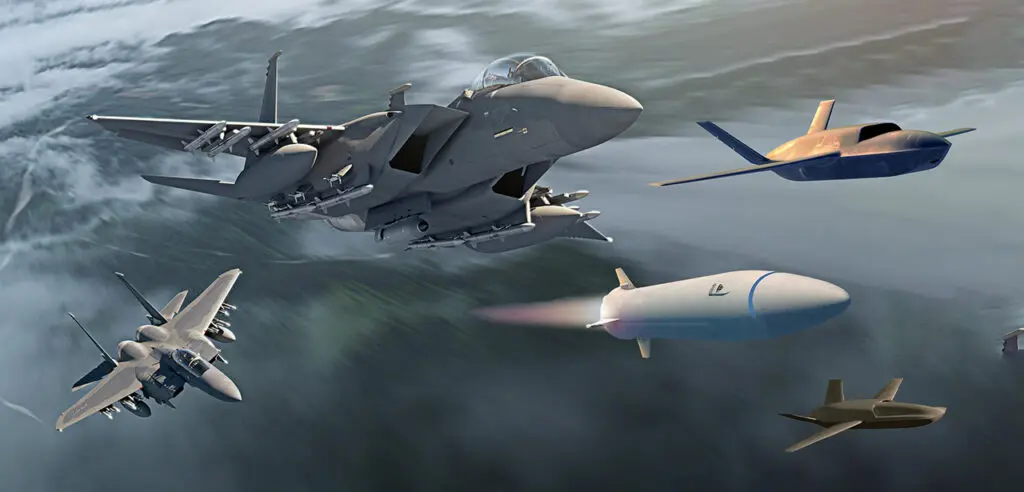
- Sixth-Generation Fighters: Programs like the U.S. NGAD and Europe’s FCAS aim for enhanced stealth, AI, and directed-energy weapons (e.g., lasers).
- Loyal Wingman Drones: Unmanned systems like the XQ-58 Valkyrie will support fighters, handling reconnaissance or decoy roles.
- AI and Autonomy: AI-driven systems will enhance decision-making, potentially allowing semi-autonomous combat.
- Directed Energy Weapons: Lasers and microwave weapons could counter drones and missiles.
By 2035, air forces expect to field hybrid fleets where manned jets coordinate with drones and satellites, maintaining superiority in contested skies.
Conclusion
Fighter aircraft remain indispensable for air superiority, combining speed, stealth, and firepower to control the battlefield. While challenges like drones and advanced defenses loom, innovations in AI, sixth-generation jets, and networked warfare ensure their relevance. Explore the latest in aerospace technology to understand how fighters will shape the future of warfare.
Preguntas Frecuentes
- What makes a fighter jet “fifth-generation”? Stealth, sensor fusion, supercruise, and networked capabilities define fifth-gen jets like the F-22 and F-35.
- Can drones replace fighters? Not fully; drones complement fighters but lack the versatility and human judgment for complex missions.
- How do fighters counter hypersonic threats? Emerging laser weapons and advanced interceptors are being developed to address hypersonic missiles.
Key Insight: Fighter aircraft will evolve with AI and drones, ensuring air superiority through adaptability and technological dominance.