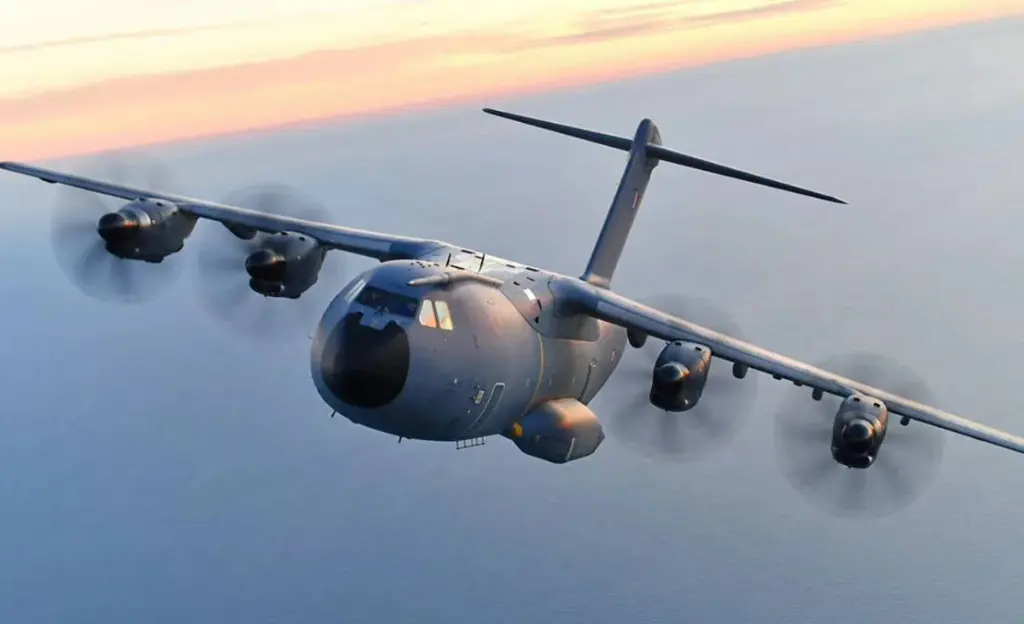
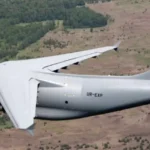
The Airbus A400M Atlas is a European four-engine turboprop military transport aircraft developed by Airbus Defence and Space. Designed for tactical and strategic missions, the A400M can carry heavy and oversized cargo, troops, vehicles, and perform medical evacuation, aerial refueling, and paratroop drops. It first flew in 2009 and entered service in 2013.
Fact Sheet
| Role | Military Transport |
|---|---|
| Manufacturer | Airbus Defence and Space |
| First Flight | December 11, 2009 |
| Service Entry | 2013 |
| Crew | 3–4 |
| Capacity | Up to 116 troops or 37 tons of cargo |
Specifications
| Length | 45.1 m (148 ft 3 in) |
|---|---|
| Wingspan | 42.4 m (139 ft 1 in) |
| Height | 14.7 m (48 ft 3 in) |
| Max Takeoff Weight | 141,000 kg (310,852 lb) |
| Engines | 4 × Europrop TP400-D6 turboprops (11,000 shp each) |
| Max Speed | 780 km/h (485 mph) |
| Range | 3,300 km (2,050 mi) with max payload |
| Service Ceiling | 12,200 m (40,000 ft) |
Notable Features
- Can carry heavy and oversized military equipment
- Short and unprepared runway capability
- Aerial refueling and medical evacuation roles
- Advanced avionics and fly-by-wire controls
- Used by several European and international air forces
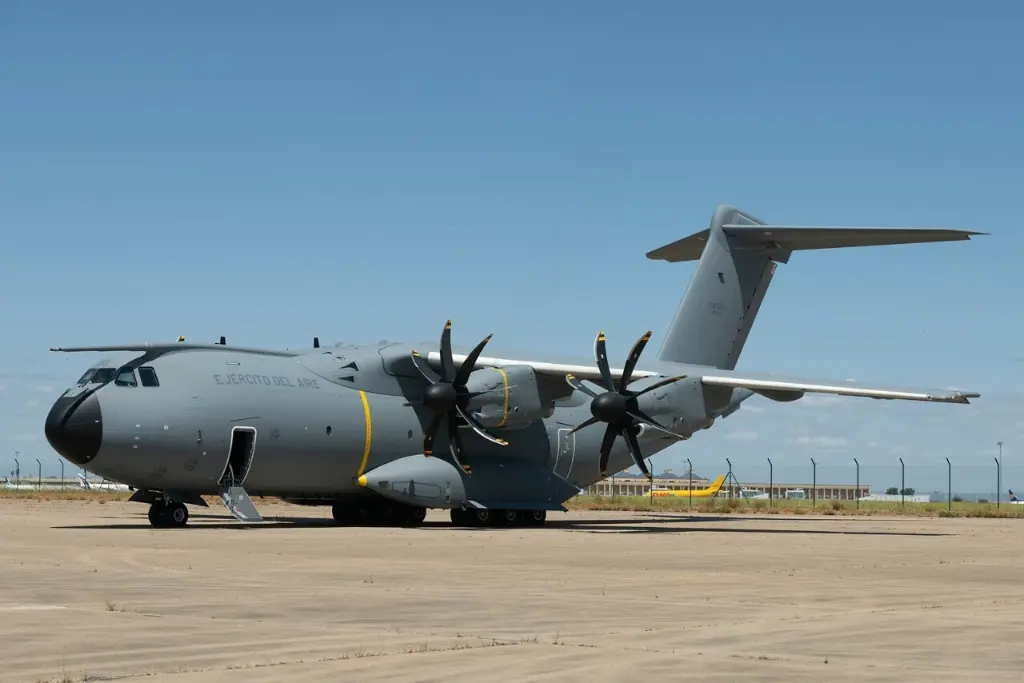
Airbus A400M Atlas
The Airbus A400M Atlas is a large, four-engine turboprop military transport aircraft. It was developed to replace older fleets of tactical transports like the Transall C-160 and the Lockheed C-130 Hercules in many European air forces. The A400M combines the ability to carry heavy, strategic-level payloads with the flexibility to operate from short, unprepared runways, a capability usually associated with smaller, tactical transports.
Key Features and Role
The A400M’s design gives it a unique combination of strategic and tactical capabilities. Its four Europrop TP400-D6 engines are the most powerful turboprops to enter operational use in the West. The aircraft can carry a payload of up to 37 tons, which includes vehicles too large for the C-130, such as a large helicopter or an armored fighting vehicle.
Its ability to operate autonomously, with an onboard winch and crane, means it can load and unload cargo without relying on ground support. The aircraft can also perform aerial refueling for both fixed-wing aircraft and helicopters, as well as airdrop cargo and paratroopers.
Program Challenges and Status
The A400M program has faced significant delays and cost overruns, particularly in its early years. A major setback occurred in May 2015 when a prototype crashed in Seville, Spain, due to a software issue that caused the engines to fail. This incident led to a temporary grounding of the fleet and highlighted the program’s technical hurdles.
Despite these issues, the A400M has proven its capabilities in service and is now a central asset for its operators. Countries including France, Germany, the United Kingdom, Spain, Belgium, Luxembourg, Turkey, Malaysia, and Kazakhstan all operate the A400M. The aircraft is a key component of their strategic airlift capabilities and is regularly used for humanitarian aid and military missions.
As of mid-2025, Airbus is continuing to develop and improve the A400M’s capabilities, including the integration of new defensive aid systems and a firefighting kit.
A video from Airbus provides an in-depth look at the A400M’s many capabilities, including its ability to land on unprepared surfaces.
Previous Article
Antonov An-178Next Article
Boeing C-17 Globemaster III