The F-22 Raptor: The Birth of the First Fifth-Generation Fighter and Its Dominance of the Air
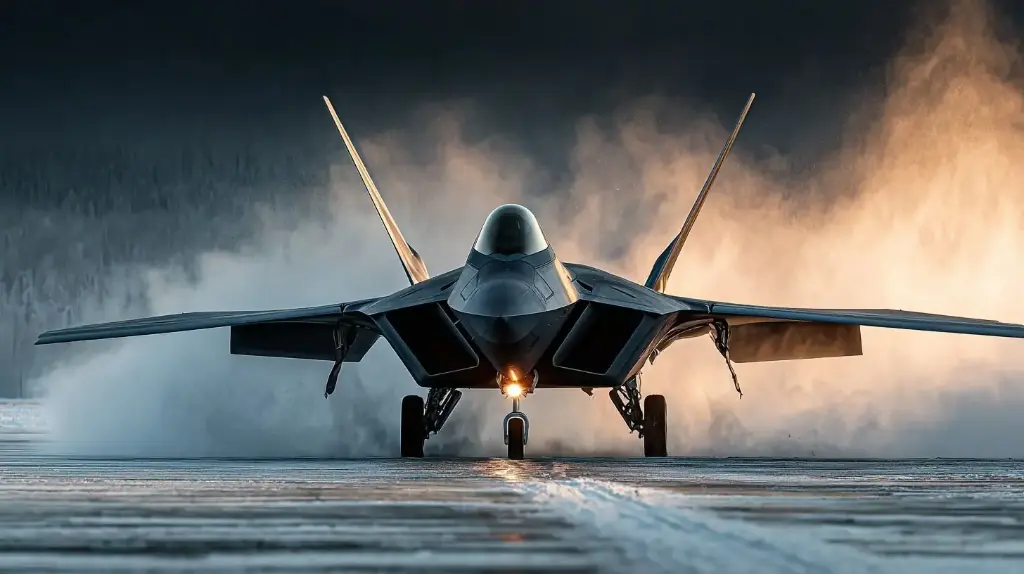
For over two decades, the skies of the world have been dominated by one aircraft, a machine so far ahead of its time that it remains a benchmark for air power: the F-22 Raptor. It was born from a need to replace the venerable F-15 Eagle and ensure that the U.S. Air Force could maintain absolute air superiority well into the 21st century.
The F-22 isn’t just an upgraded fighter; it’s the very definition of a fifth-generation fighter, a category of aircraft that combines a series of revolutionary technologies to create a combat platform unlike any other. Its introduction signaled a new era of air warfare, and its capabilities still represent the pinnacle of military aviation.
What is a “Fifth-Generation” Fighter?
When we talk about fighter generations, we’re not just talking about when an aircraft was built; we’re talking about a combination of specific technologies that define its capabilities. A fifth-generation fighter like the F-22 has four core characteristics that set it apart:
- Stealth: The F-22 was designed from the ground up to be virtually invisible to enemy radar. Its sleek, angular shape is built to deflect radar waves, and its entire surface is coated in Radar-Absorbent Material (RAM). Its internal weapons bays also ensure that no external weapons, which would create a large radar signature, are carried. This stealth, known as a low observable design, is the foundation of its dominance.
- Supercruise: The F-22 can fly at supersonic speeds (Mach 1.5+) without having to use its afterburners. This ability, known as supercruise, gives it a massive tactical advantage. It can get to the fight faster, maintain supersonic speeds for longer without draining its fuel, and still have enough energy to perform maneuvers and evade threats.
- Sensor Fusion: The F-22 is a flying supercomputer. It takes data from all its onboard sensors—radar, infrared, and electronic warfare systems—and from offboard data links, and then combines all of this information into a single, clear, and easy-to-understand picture for the pilot. This sensor fusion prevents the pilot from being overwhelmed with information and allows them to make faster, more informed decisions in the heat of battle.
- Extreme Agility: The F-22’s flight controls allow it to perform maneuvers that are impossible for other aircraft. This is thanks in large part to its thrust vectoring nozzles, which can move independently to direct the engine thrust. This gives the pilot incredible control at both high and low speeds, making the F-22 an unmatched dogfighter, should an enemy ever get close enough to engage it.
A Digital Cockpit: Beyond Sticks and Dials
The F-22 is a perfect example of a new era of human-machine interaction in the cockpit. While it still has a control stick and throttle, the way the pilot interacts with the aircraft is fundamentally different from a third or fourth-generation fighter.
The F-22’s cockpit is a true “Beyond Glass” environment. Instead of dozens of analog gauges, the pilot interacts with multiple high-resolution digital displays. These screens are where the magic of sensor fusion comes to life, presenting all the critical information in a single, cohesive interface. This allows the pilot to focus on the mission instead of constantly scanning different gauges and screens. The aircraft’s flight is managed by a fly-by-wire system, which replaces the physical cables and pushrods of older aircraft with a series of digital commands. The F-22’s inherent aerodynamic instability is tamed by a powerful flight control computer, which makes thousands of tiny adjustments per second to keep the jet flying perfectly. This digital connection allows the F-22’s pilot to perform maneuvers that would be impossible in a mechanically controlled aircraft.
The F-22’s cockpit also heavily relies on the Hands-On Throttle-And-Stick (HOTAS) principle. The pilot can access almost all critical functions, from radar modes to weapon selection, without ever having to take their hands off the controls. This is a critical feature that allows the pilot to react instantly in a fast-paced aerial engagement.
Dominance of the Air: Why the F-22 is Unrivaled
The F-22’s unique combination of technologies gives it an undeniable edge in combat, often referred to as the “First Look, First Shot” advantage.
- The Invisible Threat: Because of its stealth, an F-22 can detect and engage an enemy aircraft from a great distance with its powerful APG-77 active electronically scanned array (AESA) radar, long before the enemy has any idea it’s even there. By the time an enemy pilot detects the F-22, it’s often too late. This advantage is crucial, as modern air combat is often decided at long range, and the F-22 is designed to dominate that fight.
- Speed and Endurance: The F-22’s ability to supercruise allows it to get into a position to engage a target much faster than a conventional fighter. It can maintain a higher energy state throughout a fight, giving it a performance advantage that allows it to dictate the terms of any engagement. In a battle of speed and maneuverability, the F-22 simply has more of both.
- Unmatched Situational Awareness: The F-22’s sensor fusion gives the pilot an unparalleled view of the battlespace. A pilot in an F-22 doesn’t have to piece together information from a radar screen, a data link, and other sensors. The aircraft’s computer does all the work, presenting the pilot with a single, clear tactical picture that allows them to make faster and better decisions than their adversary.
In conclusion, the F-22 Raptor isn’t just a powerful fighter jet; it’s a monument to technological ingenuity. Its combination of stealth, supercruise, sensor fusion, and extreme agility set a new standard for air power. By pioneering what it means to be a fifth-generation fighter, the F-22 created a gap in capability that few other aircraft have been able to close. It remains the ultimate symbol of air superiority, a technological icon that changed what we thought was possible in the skies.