
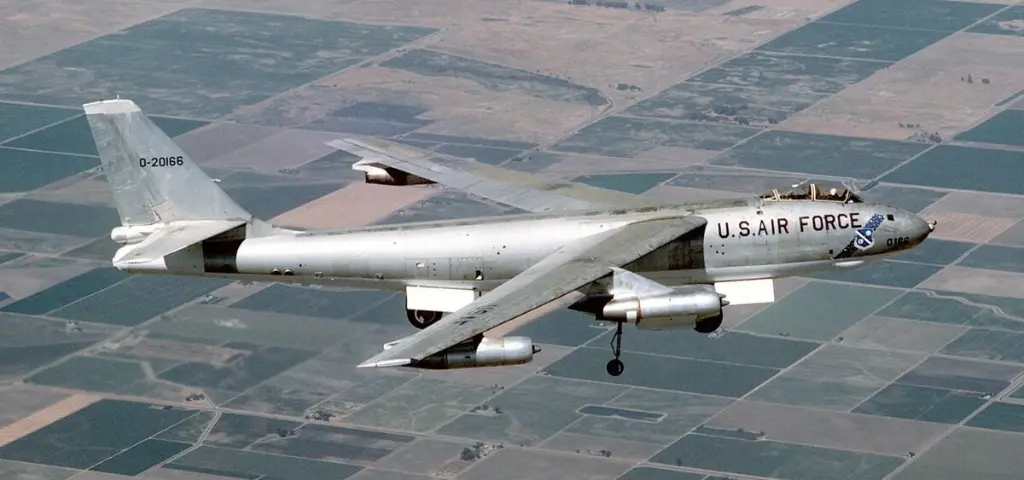
The Boeing B-47 Stratojet was a long-range, six-engine, jet-powered strategic bomber designed to serve as the backbone of the United States Air Force’s Strategic Air Command during the early Cold War. Introduced in 1951, the B-47 was a revolutionary aircraft that set the standard for modern jet bombers with its swept-wing design and high-speed performance. Over 2,000 units were built, and it played a critical role in nuclear deterrence.
Fact Sheet
| Role | Strategic Bomber |
|---|---|
| Manufacturer | Boeing |
| First Flight | December 17, 1947 |
| Service Entry | 1951 |
| Crew | 3 |
| Number Built | 2,032 |
Specifications (B-47E Model)
| Length | 107 ft 1 in (32.64 m) |
|---|---|
| Wingspan | 116 ft (35.4 m) |
| Height | 27 ft 11 in (8.5 m) |
| Wing Area | 1,428 sq ft (132.7 m²) |
| Empty Weight | 79,074 lb (35,880 kg) |
| Loaded Weight | 185,000 lb (83,915 kg) |
| Max Takeoff Weight | ~230,000 lb (104,300 kg) |
| Powerplant | 6 × General Electric J47-GE-25 turbojet engines (5,970 lbf each) |
| Max Speed | 607 mph (977 km/h) |
| Cruise Speed | 500 mph (805 km/h) |
| Range | 4,650 mi (7,480 km) |
| Service Ceiling | 40,500 ft (12,300 m) |
| Rate of Climb | 4,900 ft/min (25 m/s) |
Armament & Defensive Equipment
| Guns | 2 × .50 in (12.7 mm) M2 Browning machine guns in tail turret |
|---|---|
| Bomb Load | Up to 20,000 lb (9,100 kg) |
| Aiming Equipment | AN/APG-39 radar fire control system |
Notable Features
- First operational jet bomber with swept wings
- High-speed performance for nuclear strike missions
- Revolutionary design influencing future bombers like the B-52
- Played a key role in the Strategic Air Command during the Cold War
- Used as a reconnaissance platform in later years
Boeing B-47 Stratojet: The Jet Age’s First Strategic Bomber
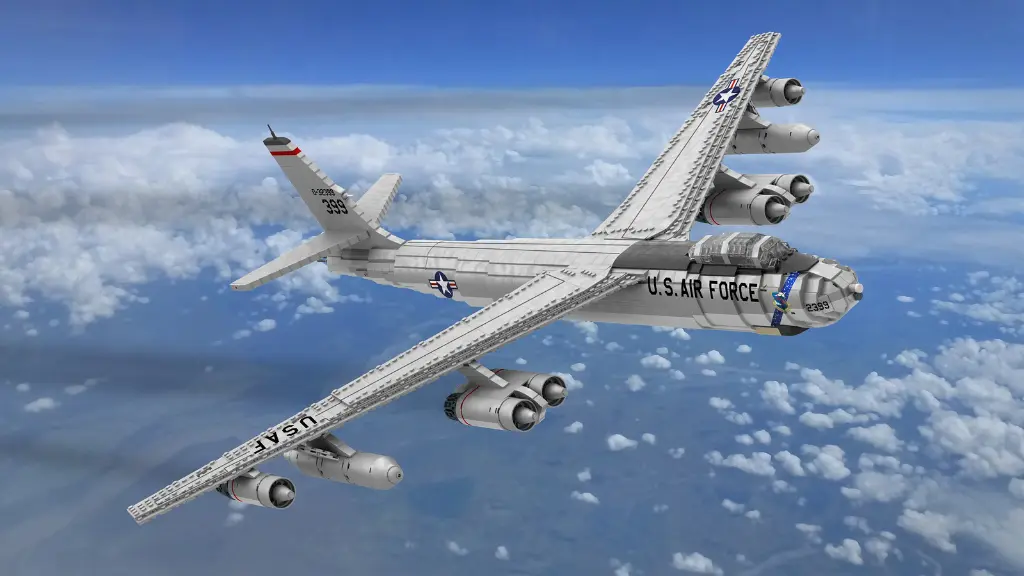
The Boeing B-47 Stratojet was a revolutionary American long-range, swept-wing, six-engine jet bomber that became the backbone of the United States Air Force’s (USAF) Strategic Air Command (SAC) during the crucial early years of the Cold War. Its groundbreaking design, with its sleek swept wings and podded engines, profoundly influenced the development of nearly all subsequent jet aircraft, including modern airliners.
B-47 Development & A Leap into the Jet Age
The B-47’s origins trace back to a 1943 USAAF requirement for a jet-powered reconnaissance bomber. Boeing’s initial designs were conventional, but rapid advances in German aerodynamic research (captured after WWII) on swept-wing technology convinced Boeing engineers to radically redesign their proposal. This led to the creation of the Model 450, a truly innovative design that marked a seismic shift in aviation.
The XB-47 prototype made its maiden flight on December 17, 1947, a date deliberately chosen to coincide with the 44th anniversary of the Wright Brothers’ first flight. This flight signaled the dawn of the jet bomber era. The B-47 officially entered operational service with SAC in 1951. Over 2,000 B-47s were manufactured by Boeing, Douglas, and Lockheed, making it one of the most widely produced strategic bombers in history.
B-47 Design Features: Swept Wings & Podded Engines
The B-47’s design was a complete departure from its piston-engine predecessors, establishing a paradigm for jet aircraft:
- Swept Wings: The most prominent feature was its thin, shoulder-mounted, highly swept-back wings (35 degrees). This design was crucial for achieving high subsonic speeds and delaying the onset of transonic drag. The wings were so thin that the main landing gear had to be housed in the fuselage, necessitating a unique “bicycle” landing gear arrangement.
- Podded Engines: The B-47 was the first large aircraft to mount its six turbojet engines in streamlined pods suspended on pylons below the wings. This arrangement offered several advantages: it reduced wing structural weight (by placing engine weight outboard), eased engine maintenance, and minimized drag. This design became standard for virtually all subsequent multi-engine jet aircraft, including airliners.
- Tandem Cockpit: The pilot and co-pilot sat in tandem, fighter-style, under a bubble canopy, providing excellent visibility.
- Long and Slender Fuselage: The fuselage was long and relatively narrow, housing the bomb bays and much of the fuel.
- Takeoff & Landing Aids: Early jet engines had poor thrust at low speeds, so the B-47 was typically fitted with JATO (Jet-Assisted Take-Off) rocket bottles for heavily loaded takeoffs. Due to its high landing speed and thin wings, it used a drogue parachute for braking after touchdown.
- Crew: Typically operated by a crew of three: pilot, co-pilot (who also operated the tail turret remotely), and a navigator/bombardier/radar operator in the nose.
B-47 Avionics & Armament: Cold War Capabilities
The B-47 was designed primarily as a nuclear deterrent platform, featuring a blend of conventional and advanced systems:
- Bomb Load: Designed to carry a substantial internal bomb load of up to 25,000 lbs (11,340 kg), including nuclear weapons.
- Defensive Armament: Initially, the B-47 had only a single remotely controlled tail turret armed with two .50 caliber (12.7 mm) machine guns. Later, this was upgraded to two 20 mm M24A1 cannons in the tail, controlled by radar and optical sights, operated remotely by the co-pilot. This minimal defensive armament reflected the doctrine that its high speed would provide sufficient protection.
- Radar & Navigation: Equipped with a sophisticated radar system for navigation and target acquisition, essential for its all-weather, day/night bombing missions.
- Electronic Countermeasures (ECM): As Soviet air defenses improved, later B-47s were increasingly fitted with advanced ECM equipment.
B-47 Variants: Specialization in the Jet Age
The B-47 spawned numerous variants for various roles within the USAF:
- XB-47: Prototypes.
- B-47A: Initial test and evaluation aircraft.
- B-47B: First production bomber variant.
- B-47E: The definitive production bomber variant, featuring more powerful General Electric J47-GE-25 engines (7,200 lbf thrust with water injection), strengthened structure, and an improved defensive system.
- RB-47E/H/K: Strategic reconnaissance variants, which became critically important for Cold War intelligence gathering.
- RB-47E: Photographic reconnaissance, with up to 11 cameras in the nose.
- RB-47H: Electronic Intelligence (ELINT) “ferret” variant, carrying additional electronic warfare officers (“Ravens” or “Crows”) in a pressurized compartment in the bomb bay to intercept and analyze Soviet radar and communication signals. These aircraft flew some of the most dangerous missions of the Cold War, often probing Soviet airspace.
- WB-47E: Weather reconnaissance variant.
- TB-47B/E: Trainer variants, used to convert pilots to the B-47.
- EB-47E: Electronic Countermeasures (ECM) aircraft.
- KB-47G: Proposed aerial tanker variant (not built).
- YDB-47E / DB-47E: Used to carry and launch experimental missiles, notably the Bold Orion air-launched ballistic missile.
B-47 Combat History: Cold War Vigilance
The B-47 Stratojet never dropped a bomb in anger during its operational career as a bomber. Its primary role was as a deterrent during the height of the Cold War.
- Strategic Nuclear Deterrence: From the early 1950s through the mid-1960s, the B-47 was the workhorse of SAC, maintaining constant alert status, often with crews on 15-minute readiness to launch a nuclear strike. It practiced “fail-safe” procedures where bombers would fly towards the Soviet Union and only proceed to target if given a specific code.
- Reconnaissance Missions: While the bomber variants never saw combat, the RB-47 reconnaissance variants did fly highly dangerous “ferret” missions along and occasionally across Soviet and Warsaw Pact borders. Several RB-47s were intercepted, and at least one RB-47H was shot down by a Soviet MiG-19 over the Barents Sea on July 1, 1960, killing four of the six crew members (two survivors were captured and later released). These incidents underscored the real dangers of Cold War intelligence gathering.
B-47 Retirement & Enduring Legacy
The B-47’s operational life was relatively intense but short by bomber standards. Its high operating costs, complex maintenance, and the rapid obsolescence brought on by new Soviet interceptors (like the MiG-21 and Su-9) and surface-to-air missiles led to its replacement by the larger, longer-range Boeing B-52 Stratofortress.
The last B-47 bombers were retired from SAC in 1965. However, specialized reconnaissance (RB-47) and electronic warfare (EB-47) variants continued to serve until 1969, and a few served as testbeds until 1977, making the B-47 one of the longest-serving Cold War jet aircraft.
Today, no B-47 Stratojets remain airworthy. Approximately 23 complete airframes are preserved in museums across the United States, standing as powerful monuments to the dawn of the jet age in strategic aviation and the intense technological race of the Cold War. The B-47’s pioneering design principles, particularly its swept wings and podded engines, truly laid the foundation for virtually every multi-engine jet aircraft that followed.
Previous Article
Convair B-36 PeacemakerNext Article
Boeing B-52 Stratofortress