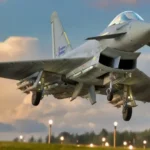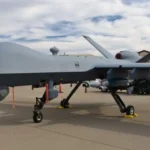
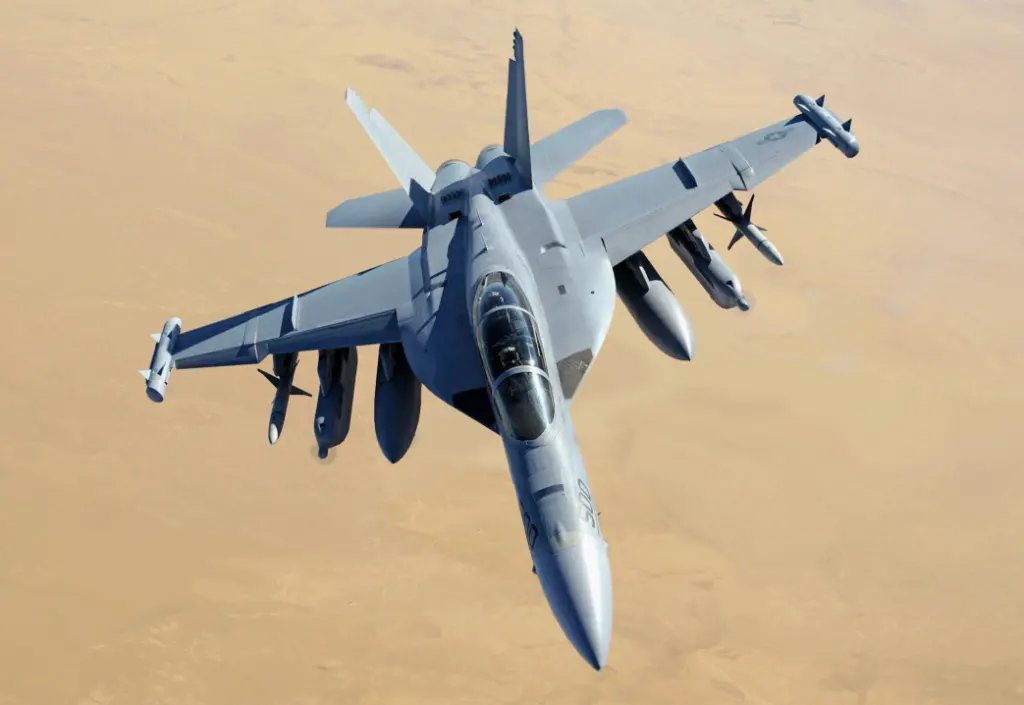
In today’s rapidly evolving battlefield, drones and cruise missiles are rewriting the rules of aerial warfare. These threats—small, fast, stealthy, and often deployed in swarms—pose a significant challenge to even the most advanced air defense systems. But US Air Force and NATO fighter jets, equipped with cutting-edge radar, missiles, and AI-powered targeting, are proving they can intercept and neutralize these dangers before they reach their targets.
The Growing Threat to Homeland and Allied Defense
From the deserts of the Middle East to Europe’s eastern flank, military drones and long-range cruise missiles are now key tools in the arsenals of both state and non-state actors.
- Drones: Models like Iran’s Shahed-136 cost as little as $40,000 and can be deployed in large numbers to overwhelm air defenses. They fly low, evade radar, and sometimes operate in autonomous swarms.
- Cruise Missiles: With terrain-hugging flight paths, GPS precision guidance, and stealth shaping, systems like Russia’s Kalibr or China’s CJ-10 can strike deep inside enemy territory, making them a high-priority threat for US and NATO defense planners.
Detection: How Fighters See the Unseen
Modern fighters such as the F-35 Lightning II rely on Active Electronically Scanned Array (AESA) radars like the AN/APG-81, capable of picking up small, low-flying objects invisible to legacy radar. Combined with data fusion from AWACS aircraft and satellite intelligence, these jets can detect and track multiple inbound threats—crucial for defending US and allied airspace.
Neutralizing the Threat in Midair
The US Air Force and its allies employ a range of air-to-air missiles for interception:
- AIM-9X Sidewinder: Heat-seeking, short-range missile perfect for quick engagements.
- AIM-120 AMRAAM: Radar-guided, medium-range missile with beyond-visual-range kill capability.
In real operations, Dutch F-35s have shot down drones over the Baltic, while Israeli F-35s have intercepted hostile UAVs in contested airspace—proving that this technology is battle-tested.
Innovation: Drone Wingmen and Autonomous Escorts
The Pentagon is investing heavily in loyal wingman drones—autonomous UAVs designed to fly alongside manned fighters, engaging threats before they get too close. Similar concepts are being tested by the USAF’s Skyborg program, aiming to give every pilot a robotic wingman capable of missile interception and electronic warfare support.
The Role of Early Warning Systems
Airborne Warning and Control System (AWACS) jets extend detection range far beyond ground-based radar. Their ability to spot cruise missiles flying close to the earth’s surface makes them indispensable during homeland defense missions. In NATO exercises, F/A-18s, F-35s, and Gripens have worked alongside AWACS to shadow and intercept strategic bombers armed with cruise missiles.
Improved Interceptor Missiles and Layered Defense
Ground-based interceptors like the Patriot PAC-3 MSE are being upgraded with faster processors, improved seekers, and enhanced agility. In layered defense, fighters engage first, and if threats breach that line, ground systems take over—creating a multi-shield approach for protecting cities, bases, and key assets.
The Future of Air Defense
- Gun-based counter-drone systems like Northrop Grumman’s CBAD offer a low-cost way to deal with swarm attacks, using guided ammunition to protect both military and civilian infrastructure.
- AI-driven targeting and real-time software upgrades will allow fighters like the USAF F-35 to adapt to new threats without needing costly hardware replacements.