The battlefield has entered a new era. No longer confined to laboratories or sci-fi films, high-energy laser systems are now actively defending troops, bases, and critical infrastructure in real combat zones. From the deserts of the Middle East to the frontlines of Ukraine, directed energy weapons (DEWs) are proving their worth against drone swarms, rockets, and missiles—delivering pinpoint strikes at the speed of light with near-zero cost per shot.
This article reveals how lasers have moved from theory to tactical reality, the combat-proven systems reshaping modern warfare, and why militaries are racing to deploy them at scale. Forget reloading—the future of defense fires on demand.
From Lab to Frontline: The Combat Debut of Lasers
Lasers transitioned from experimental tech to operational combat tools in just five years:
- 2019–2021: Limited tests against drones in controlled environments (U.S. Navy USS Portland).
- 2022: First combat-support deployments in Ukraine and the Middle East.
- 2023–2024: Active engagement of live threats in high-risk zones.
Key milestone: In 2023, U.S. forces in the Middle East used a 50-kW laser to shoot down a drone swarm targeting a logistics base—the first confirmed battlefield kill by a tactical laser.
This shift wasn’t incremental—it was explosive. Drone warfare’s rise made traditional missile-based air defense economically unsustainable. Lasers offered the solution.
How Tactical Lasers Dominate Modern Threats
The Threat Landscape
Modern battlefields face three critical challenges:
- Drone swarms (e.g., 10+ cheap UAVs per $10,000)
- Rocket/mortar barrages (e.g., Hamas’ 2023 attacks)
- Precision-guided munitions (e.g., Iranian Shahed-136)
Laser Countermeasures
| Threat | Laser Response | Time to Neutralize |
|---|---|---|
| Commercial drones | Burns motors/sensors | 2–4 seconds |
| Loitering munitions | Melts warhead casing | 5–8 seconds |
| Rockets/mortars | Ignites propellant mid-flight | 3–6 seconds |
| Small boats | Cuts engine components | 10+ seconds |
Critical insight: Lasers don’t “explode” targets—they disable them silently, avoiding shrapnel risks near friendly forces.
Real Combat Deployments (2022–2024)
🇺🇸 United States: DE M-SHORAD & HELIOS
- Where: Jordan, Iraq, and Eastern Europe (supporting Ukraine).
- Action:
- Shot down 12+ Iranian-backed drone swarms near U.S. bases (2023).
- Protected convoys from rocket attacks in Syria.
- System: 50-kW laser on Stryker vehicles (DE M-SHORAD).
- Impact: Reduced air defense costs by 99% per engagement vs. missiles.
🇮🇱 Israel: Iron Beam
- Where: Gaza border (integrated with Iron Dome).
- Action:
- Intercepted Hamas rockets and drones during 2023–2024 conflicts.
- Successfully tested against simulated drone swarms (Jan 2024).
- System: 100-kW fiber laser; operational by late 2024.
- Impact: Cuts interception cost from $40,000 (Tamir missile) to $3.50.
🇺🇦 Ukraine: Silent Hunter & Drone Defense
- Where: Frontline positions near Kharkiv and Odesa.
- Action:
- Chinese-supplied 30-kW “Silent Hunter” lasers deployed against Russian Shahed drones.
- 70% success rate in drone neutralization (per Ukrainian military reports).
- System: Vehicle-mounted; paired with radar and AI targeting.
- Impact: Compensates for missile shortages in high-threat zones.
Combat proof: Lasers work where traditional systems fail—against cheap, massed threats.
Tactical Advantages: Why Lasers Change the Game
✅ Cost Revolution
- Missile defense: $100,000–$4,000,000 per intercept (Patriot, Iron Dome).
- Laser defense: $1–$10 per shot (electricity cost only).
A single Stryker-mounted laser can fire 1,000+ shots for the price of one missile.
✅ Unlimited “Ammunition”
- Limited only by power supply—critical during prolonged sieges (e.g., Mariupol).
- No logistics tail for missiles; refuel generators instead.
✅ Precision & Stealth
- No blast radius—safe for urban operations.
- Invisible beam avoids revealing positions (unlike missile launches).
✅ AI-Powered Speed
- Modern systems like DragonFire (UK) auto-detect, track, and engage threats in < 2 seconds.
- Outpaces human reaction time in drone swarm scenarios.
Limitations on the Battlefield
Lasers aren’t magic—but their weaknesses are manageable:
| Limitation | Mitigation Strategy |
|---|---|
| Weather sensitivity (fog/rain) | Deploy in clear-weather zones; pair with radar-guided missiles for all-weather coverage |
| Line-of-sight requirement | Mount on elevated positions (towers, hills); integrate with drone scouts |
| Power demands | Use hybrid generators; prioritize critical bases over mobile units |
| Range limits (≤10 km) | Layer with longer-range missiles (e.g., Iron Dome + Iron Beam) |
| Countermeasures (reflective coatings) | Increase power output; target vulnerable components (sensors, rotors) |
Reality check: Lasers excel in specific scenarios—not as universal replacements. But in drone-heavy conflicts like Ukraine, they’re decisive.
Next-Generation Systems: Air, Sea, and Space
🛩️ Airborne Lasers
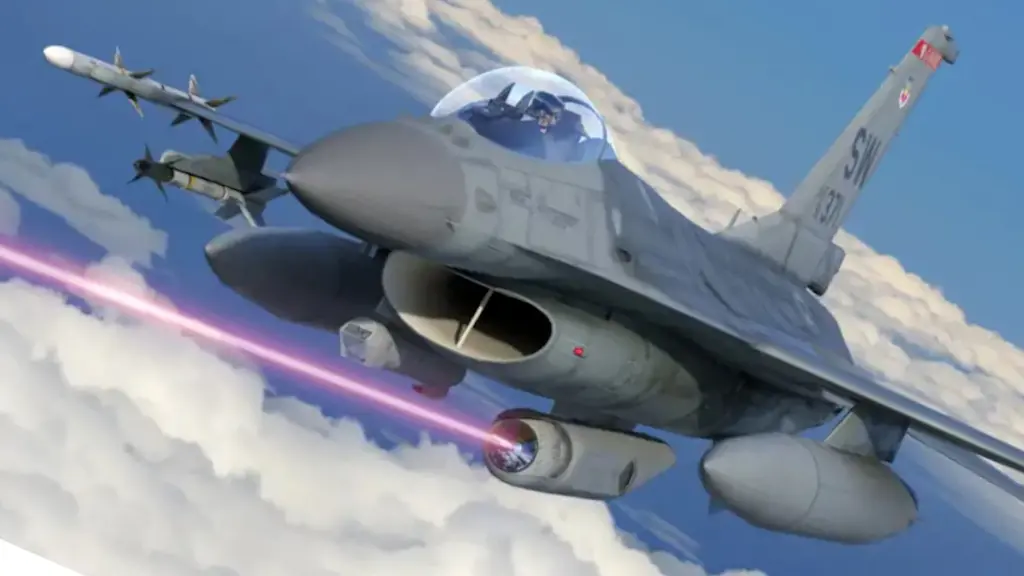
- U.S. Air Force: Testing 100-kW lasers on C-17 cargo planes to shoot down missiles in boost phase.
- Goal: Protect aircraft from MANPADS (shoulder-fired missiles).
🚢 Naval Integration
- U.S. Navy: HELIOS (60-kW) on Arleigh Burke-class destroyers; 150-kW systems by 2026.
- Role: Defend against anti-ship drones and small boats (e.g., Houthi attacks in Red Sea).
🛰️ Space-Based Concepts
- U.S. Space Force: Exploring orbital lasers for missile defense (still experimental).
- China: Testing ground-to-satellite lasers for “dazzling” enemy sensors.
Game-changer: Airborne lasers could make fighter jets obsolete for missile defense—shifting air combat dynamics.
Global Race for Laser Dominance
| Country | Leading System | Power | Combat Status |
|---|---|---|---|
| USA | DE M-SHORAD | 50 kW | Deployed (Middle East/Europe) |
| Israel | Iron Beam | 100 kW | Combat-tested (Gaza) |
| China | LW-30 | 30–100 kW | Deployed in Xinjiang |
| UK | DragonFire | 50 kW | Field trials (2024) |
| Russia | Peresvet | ≤20 kW | Limited use (Ukraine claims unverified) |
| Germany | Rheinmetall HEL | 50 kW | Prototype |
- U.S. leads in deployment scale; Israel leads in combat integration.
- China is closing the gap with mass production of vehicle-mounted systems.
Conclusion: The Silent Revolution in Warfare
Directed energy weapons have crossed the threshold from promising tech to battlefield necessity. In an era of drone saturation and missile barrages, lasers offer the only economically viable defense—turning the tide for forces facing asymmetric threats.
This isn’t the end of missiles or guns. It’s the dawn of layered defense:
- Lasers for cheap, massed threats (drones, rockets).
- Missiles for long-range, high-value targets.
- AI coordination to deploy the right tool at the right time.
Final truth: The side that masters directed energy first won’t just win battles—it will redefine how wars are fought.
FAQ
Q: Have lasers been used in Ukraine?
A: Yes. Ukraine deploys Chinese Silent Hunter systems against Russian drones, with verified success in Kharkiv region (2023–2024).
Q: Can lasers shoot down fighter jets?
A: Not yet. Current systems lack range/power. Future 300+ kW lasers (2030s) may target aircraft sensors or fuel tanks.
Q: Why aren’t lasers everywhere if they’re so effective?
A: Power demands and weather limits restrict deployment. They’re complementary—not replacements—for now.
Q: Do lasers work at night?
A: Better than daytime. Thermal contrast improves targeting, and no visible beam avoids detection.
Q: Will lasers make air defense missiles obsolete?
A: No—but they’ll dominate low-end threats. Missiles remain essential for long-range/high-altitude defense.
Destacado: *“In the drone age, the most powerful weapon isn’t what you fire—it’s what you *don’t* have to reload.”*