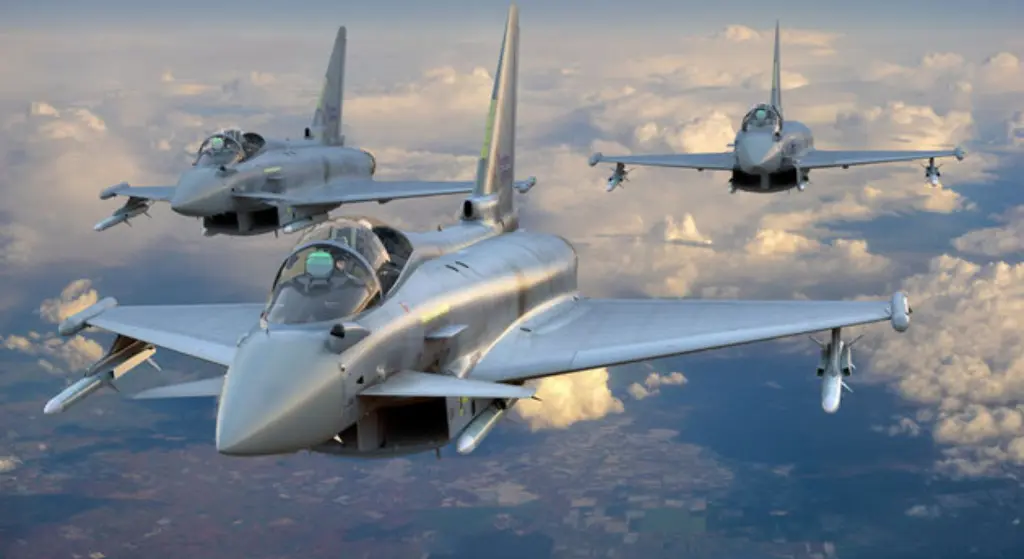
The Eurofighter Typhoon is the product of a major multinational collaboration involving the United Kingdom, Germany, Italy, and Spain. This partnership not only shaped how the Typhoon was funded and built, but strongly influenced its technology, versatility, and adaptability.
Diverse Requirements Leading to a Multi-Role Design
- Each nation had its own operational requirements. For example, the UK wanted air dominance and quick reaction alert capability, while Germany and Italy emphasized multi-role flexibility capable of ground attack and air superiority.
- The resulting Eurofighter Typhoon features a blend of these needs: a true multi-role aircraft. Its design allows for rapid switching between air-to-air and air-to-ground missions, and can be configured for reconnaissance or maritime strike.
Shared Cutting-Edge Technologies and Expertise
- The involvement of leading aerospace firms—Airbus (Germany/Spain), BAE Systems (UK), and Leonardo (Italy)—meant that the Typhoon is built on pooled technological expertise.
- This collaboration enabled major advancements:
- Canard-delta wing design: Offers high agility, influenced by input from all partner nations’ aerodynamic research.
- Eurojet EJ200 engines: Developed by a consortium from the partner countries, leading to outstanding thrust, efficiency, and reliability.
- Sensor and avionics integration: Different nations contributed to innovative radar (CAPTOR), infrared tracking (PIRATE), and electronic warfare systems, resulting in exceptional situational awareness and survivability.
Redundancy, Interoperability, and Upgrades
- Each country produces major components which are then integrated, creating a redundant supply chain and making long-term support easier.
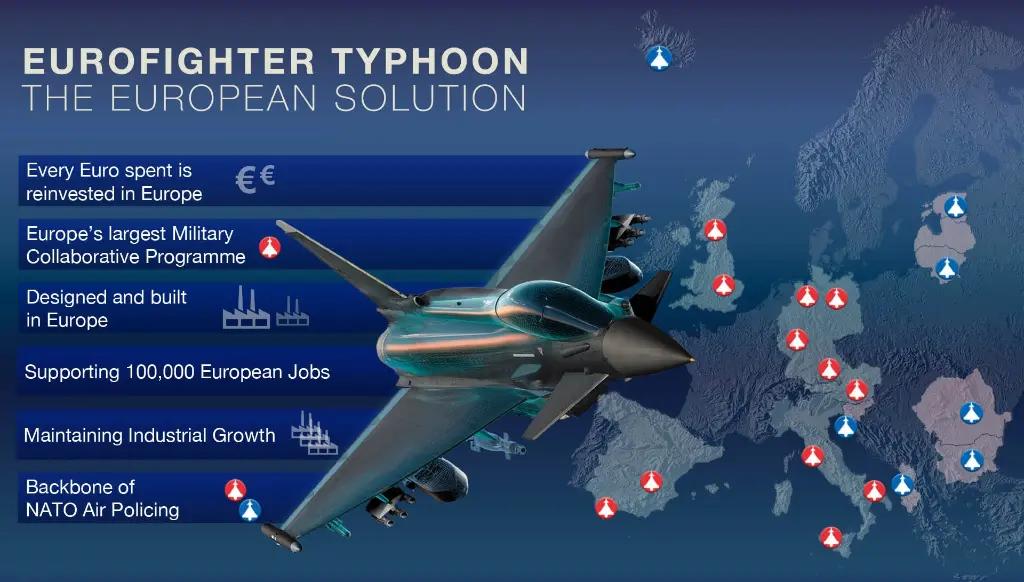
- Multinational development pressed for interoperability: Typhoons can share data and operate seamlessly within NATO forces—a direct result of harmonizing standards across partners.
- Evolution of the aircraft is a shared endeavor, meaning upgrades in radar, weapons, and communications benefit every operator at once.
Economic and Strategic Benefits
- Collaborative design meant costs and risks were spread across countries, making ambitious technical advances affordable and minimizing per-nation burden.
- The program fostered close defense and industrial ties, creating a unified European approach to air combat capability.
In essence, multinational development made the Eurofighter Typhoon:
- Highly agile and adaptable.
- Equipped with advanced sensors and systems from the best of European technology.
- Easy to maintain, upgrade, and operate jointly among NATO and allied nations.
- The result is a fighter jet perfectly designed for modern European defense needs—versatile, powerful, and future-ready.
Previous Article
Northrop Grumman B-2 SpiritNext Article
Northrop Grumman B-21 Raider