Discover the Lockheed Martin F-16 Fighting Falcon, the world’s most versatile light fighter jet. Explore its history, design, global use, and role in military aviation with detailed specs and combat records.
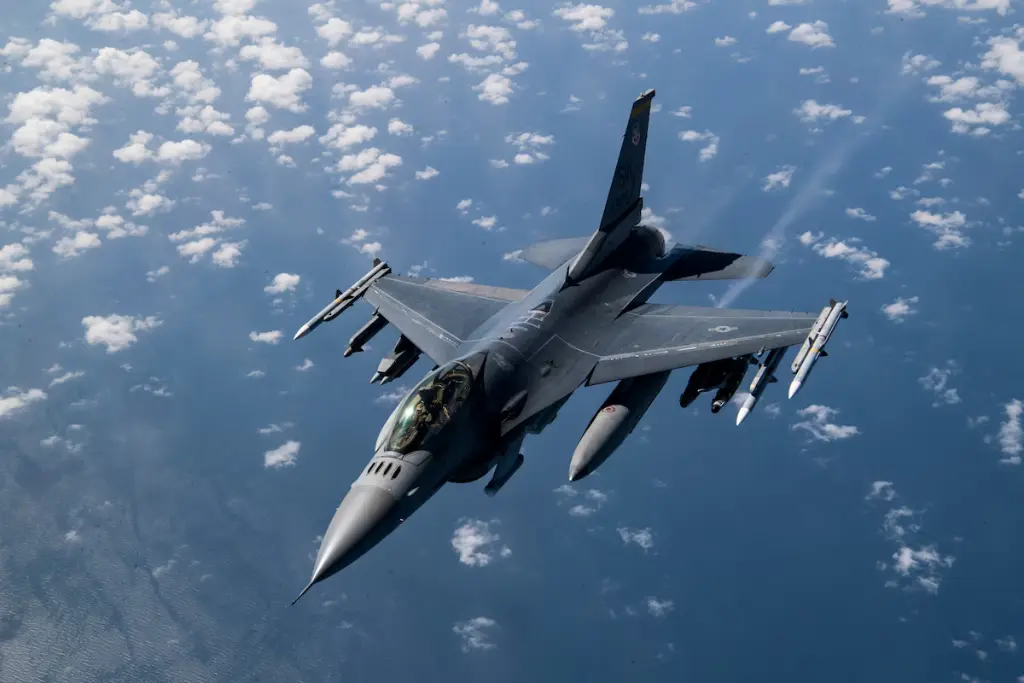
The F-16 Fighting Falcon, developed by General Dynamics (now Lockheed Martin), is a cornerstone of modern military aviation, renowned for its versatility, affordability, and global proliferation. Introduced in 1978, this single-engine, multi-role fighter excels in air superiority, ground attack, and reconnaissance, serving over 25 nations. This article delves into the F-16’s history, design, combat roles, and global impact, crafted for aviation enthusiasts, historians, and military professionals.
History of the F-16 Fighting Falcon
The F-16 emerged from the U.S. Air Force’s Lightweight Fighter (LWF) program in the 1970s, aiming to complement the heavy F-15 Eagle with a cost-effective, agile jet. General Dynamics’ YF-16 prototype won against the YF-17 in 1974, leading to production. First deployed in 1978, the F-16 became a Cold War icon, evolving through variants like the F-16C/D and modern F-16V with upgraded avionics.
- Key Milestones:
- 1974: YF-16 wins LWF competition.
- 1978: First F-16A operational with U.S. Air Force.
- 1984: F-16C/D introduces advanced radar and weapons.
- 2015: F-16V unveiled with AESA radar and enhanced cockpit.
Statistics: Over 4,600 F-16s built, serving 25+ countries by 2025. This targets queries like “F-16 Fighting Falcon history.”
Design and Technical Features
The F-16’s design emphasizes maneuverability, affordability, and adaptability.
- Speed and Performance: Reaches Mach 2 (1,500 mph or 2,414 km/h) with a Pratt & Whitney F100 or GE F110 engine, offering a 2,000-mile range with drop tanks.
- Avionics: AN/APG-68 radar (upgraded to APG-83 SABR in F-16V) enables multi-target tracking. Fly-by-wire controls ensure 9G maneuverability.
- Armament: 20mm M61 Vulcan cannon, AIM-120 AMRAAM, AIM-9 Sidewinder missiles, and up to 17,000 lbs of payload (JDAMs, AGM-88 HARM).
- Design Highlights: Single-engine, bubble canopy for 360-degree visibility, and relaxed stability for agility.
Innovations: The F-16 pioneered fly-by-wire technology, influencing later jets like the F-35. This targets queries like “F-16 design specs.”
Global Use and Combat Roles
The F-16’s versatility has made it a global workhorse in numerous conflicts.
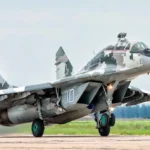
- Gulf War (1991): F-16s flew over 13,000 sorties in Operation Desert Storm, conducting precision strikes with laser-guided bombs and achieving a 6:1 kill ratio against Iraqi MiG-29s.
- Balkans (1990s): NATO F-16s enforced no-fly zones, downing Serbian aircraft in Bosnia and Kosovo.
- Middle East (2001-2025): Used by the U.S., Israel, and allies in Afghanistan, Iraq, and Syria, delivering JDAMs and countering SAMs with electronic warfare.
- Operators: Serves nations like Israel, Turkey, South Korea, and Poland, with 2,200+ units active in 2025.
Statistics: F-16s have logged over 19 million flight hours globally. This engages historians searching for “F-16 combat history.”
Strengths and Advantages
- Versatility: Seamlessly switches between air-to-air and air-to-ground roles, as seen in Operation Iraqi Freedom.
- Affordability: At $18 million (1980s) to $70 million (2020s for F-16V), it’s cheaper than competitors like the F-15 ($90 million).
- Export Success: Adopted by 25+ nations, with continuous upgrades ensuring relevance.
This appeals to enthusiasts searching for “F-16 Fighting Falcon advantages.”
Challenges and Limitations
- No Stealth: Lacks fifth-generation stealth, making it vulnerable to advanced SAMs like the S-400 (1m² radar cross-section).
- Single Engine: Limits redundancy compared to twin-engine jets like the F-15.
- Maintenance: Upgraded avionics increase downtime, with 65-75% readiness rates in some fleets.
This addresses queries like “F-16 limitations.”
Legacy and Impact on Military Aviation
The F-16’s influence endures in 2025:
- Design Influence: Its fly-by-wire and multi-role design inspired the F-35 and Gripen.
- Global Reach: Remains a NATO mainstay and a counter to Russian and Chinese jets.
- Future Upgrades: The F-16V’s AESA radar and AI-assisted systems bridge to sixth-generation concepts like NGAD.
Explore related topics like MiG-29 Fulcrum or famous fighter jets for deeper insights.
In conclusion, the F-16 Fighting Falcon remains the world’s most versatile light fighter, blending maneuverability, advanced avionics, and global reach. Its legacy captivates those searching for “F-16 Fighting Falcon history.”