The FCAS/NGWS (Future Combat Air System / New Generation Weapon System) isn’t just Europe’s answer to 6th-generation fighters—it’s a paradigm shift in air combat. While rivals like the U.S. NGAD focus on next-gen jets, Europe’s Franco-German-Spanish consortium is building a fully integrated combat ecosystem where drones, AI, and cloud networks are as critical as the piloted aircraft.
In an era where hypersonic missiles and drone swarms threaten air dominance, FCAS redefines victory: not by flying faster, but by thinking faster. This article breaks down why FCAS is the most ambitious military project in Europe since NATO—and how it could reshape global warfare by 2040.
FCAS/NGWS: A System of Systems, Not Just an Aircraft
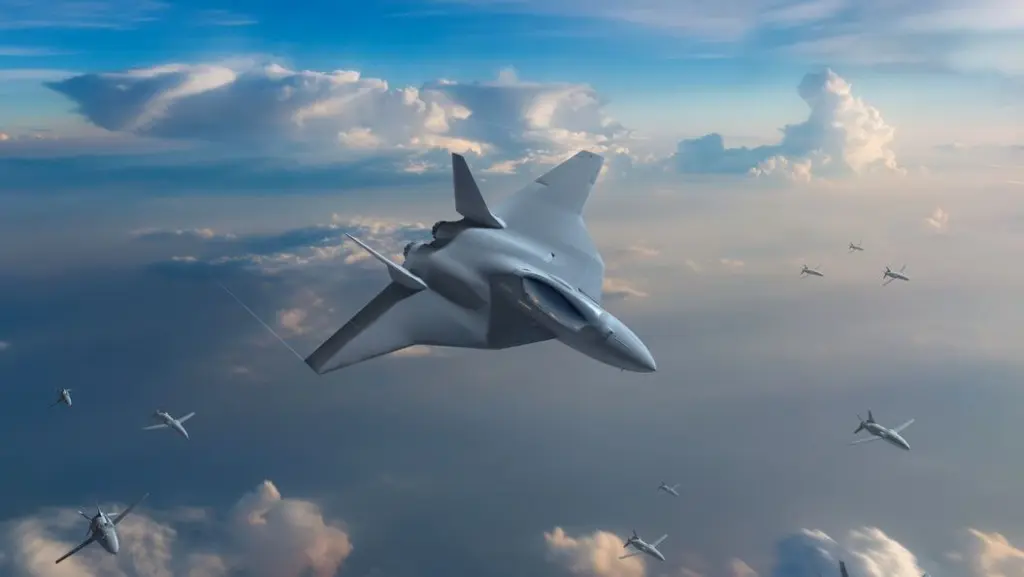
FCAS transcends traditional fighter development. It’s a networked combat cell comprising:
- 1 Manned fighter (New Generation Fighter, NGF)
- 5+ Remote Carriers (AI-piloted drones)
- Combat Cloud (real-time data fusion network)
- Weapons and sensors (integrated across all elements)
Why it matters: In modern combat, a single jet is a liability. FCAS turns one aircraft into a flying command center—controlling drones, jamming enemy systems, and launching missiles without ever entering visual range.
The 4 Technological Pillars of FCAS
| Pillar | Key Capabilities | Combat Impact |
|---|---|---|
| New Generation Fighter (NGF) | Adaptive stealth, AI co-pilot, laser weapons | Penetrates dense air defenses undetected |
| Remote Carriers (RC) | Swarming drones (50+ km range), expendable sensors | Sacrificial scouts that absorb enemy fire |
| Combat Cloud | Quantum-secure data links, sensor fusion | Creates a “god view” of the battlefield |
| AI Decision Engine | Threat prediction, autonomous drone control | Processes data 10x faster than human pilots |
Game-changer: A pilot flying the NGF could direct 5 drones to attack 5 separate targets while evading missiles—simultaneously.
The Manned Fighter: Beyond Stealth and Speed
The NGF isn’t just “stealthier F-35.” Its breakthroughs:
- Adaptive Camouflage: Nano-coatings that shift radar signature mid-flight.
- Directed Energy Weapons: Onboard lasers to shoot down missiles (2040+).
- AI Co-Pilot (“Virtual Wingman”): Manages sensors, comms, and threats—freeing the pilot for strategy.
- Open Architecture: Upgrades via software (like smartphones), avoiding costly hardware overhauls.
Real-world edge: In contested airspace (e.g., Taiwan Strait), the NGF could detect threats 300+ km away—then unleash drones to destroy them before radar locks on.
Remote Carriers: The “Loyal Wingman” Revolution
Forget “drones.” FCAS uses Remote Carriers (RCs):
- 3 Types:
- Scout RCs: Stealthy sensors that map enemy defenses.
- Strike RCs: Carry missiles/bombs (e.g., future SPEAR 3).
- Jammer RCs: Disrupt radar/GPS with electronic warfare.
- Swarm Intelligence: RCs self-organize if comms are jammed.
- Expendable by Design: Cheap enough to lose (cost: ~€1M vs. €100M+ for a fighter).
Tactical shift: In Ukraine-style conflicts, RCs could neutralize 10+ Russian air defenses before the NGF enters range—saving pilots and jets.
The Combat Cloud: Invisible Battlefield Brain
The Combat Cloud is FCAS’ secret weapon:
- Quantum Encryption: Unhackable data links (critical against Russian cyber warfare).
- Sensor Fusion: Merges radar, infrared, and satellite feeds into one 3D battlefield map.
- Edge Computing: Processes data onboard—no vulnerable satellite dependency.
Example: An RC detects a SAM site → Cloud shares coordinates with a drone 200 km away → NGF launches a missile without ever seeing the target.
AI as a Combat Multiplier
FCAS uses AI not just for flying—but for winning:
- Threat Prediction: Analyzes enemy patterns to anticipate attacks (e.g., “Russian drone swarm likely in 90 sec”).
- Autonomous Targeting: RCs identify/engage targets without human approval (within strict ethical rules).
- Pilot Augmentation: Projects critical data onto the visor—no cockpit screens needed.
Critical advantage: In a dogfight, AI reacts in 0.1 seconds vs. human 1.5 seconds—turning near-misses into kills.
Challenges: Budgets, Timelines, and Geopolitics
FCAS faces steep hurdles:
| Challenge | Risk | Mitigation |
|---|---|---|
| €100B+ Cost | Budget overruns could kill the program | Phased rollout (RCs by 2030, NGF by 2040) |
| Workshare Disputes | France vs. Germany tensions (e.g., engine control) | Binding EU-level treaty signed in 2023 |
| Tech Gaps | Combat Cloud reliability in electronic warfare | Testing with NATO allies (e.g., U.S. MADL links) |
| U.S. Pressure | Temptation to buy F-35s instead | EU sovereignty argument: “No U.S. veto on European operations” |
Stakes: Failure means Europe cedes air dominance to U.S./China—succeeding makes it a military peer.
FCAS vs. NGAD (U.S.) and Tempest (UK)
| Program | Strength | Weakness | Strategic Goal |
|---|---|---|---|
| FCAS (EU) | System integration (drones + cloud + AI) | Slow development (2040+ NGF) | European sovereignty |
| NGAD (U.S.) | Funding ($40B/year), AI maturity | Over-reliance on satellites | Pacific dominance (vs. China) |
| Tempest (UK/Italy/Sweden) | Speed (2035 demo), drone focus | No combat cloud equivalent | NATO interoperability |
Key insight: FCAS is the only program treating drones as equal to manned jets—not just support tools.
Conclusion: Europe’s Path to Strategic Autonomy
FCAS isn’t about building a better fighter—it’s about reinventing air power for the AI age. While the U.S. bets on incremental upgrades, Europe is leapfrogging with a networked, expendable, and intelligent system that thrives in contested environments.
If successful, FCAS will:
✅ End Europe’s dependence on U.S. weapons (e.g., F-35s)
✅ Make drone swarms obsolete as offensive weapons
✅ Give the EU independent strike capability from Moscow to Mali
Final truth: The future of air combat isn’t won by the fastest jet—it’s owned by the smartest network. FCAS aims to be that network.
FAQ
Q: When will FCAS enter service?
A: Remote Carriers by 2030, full system (NGF + Cloud) by 2040–2045.
Q: Can FCAS defeat Russian S-500 or Chinese J-20?
A: Yes—if used correctly. Its drones would saturate defenses before the NGF approaches.
Q: Why not just buy more F-35s?
A: F-35s can’t control drone swarms or operate without U.S. support—FCAS gives EU full autonomy.
Q: Will AI ever replace pilots?
A: Not in FCAS. Humans retain “kill authority”—AI only assists.
Q: How does FCAS handle electronic warfare?
A: Combat Cloud uses mesh networking (like drones) to reroute data if jammed—no single point of failure.
Highlighted Insight: “FCAS doesn’t replace pilots—it turns them into battlefield conductors, orchestrating drones, data, and destruction at the speed of light.”