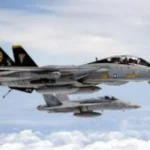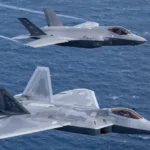
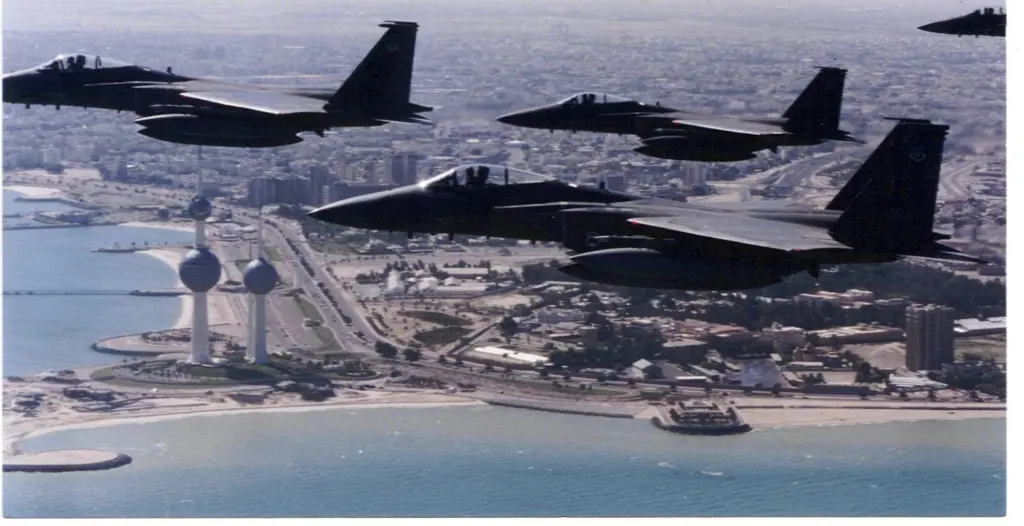
Explore how F-15 Eagle and F-117 Nighthawk redefined aerial combat in the Gulf War of 1991. Learn about their roles, stealth technology, and impact on modern fighter jet warfare.
The Gulf War of 1991 showcased the transformative power of modern fighter aircraft, with the U.S.-led coalition’s F-15 Eagle and F-117 Nighthawk dominating Iraqi forces. This conflict marked a shift toward precision strikes and stealth technology, cementing air superiority as a cornerstone of modern warfare. This article delves into the key fighters, their roles in Operation Desert Storm, technological advancements, and their legacy in military aviation, crafted for aviation enthusiasts, historians, and military professionals.
Operation Desert Storm: Context and Air Campaign
The Gulf War began when Iraq invaded Kuwait in 1990, prompting a U.S.-led coalition to launch Operation Desert Storm in January 1991. The air campaign aimed to cripple Iraq’s military infrastructure, achieving air superiority within days.
- Primary Keywords: Gulf War fighter jets, F-15 Eagle Gulf War, F-117 Nighthawk stealth, Operation Desert Storm air combat.
The coalition flew over 100,000 sorties, with fighters like the F-15 and F-117 leading the charge. This section addresses search intent for “Gulf War air campaign history” with detailed context.
The F-15 Eagle: King of Air Superiority
Designed by McDonnell Douglas, the F-15 Eagle entered service in 1976 and proved invincible in the Gulf War.
- Specifications: Powered by twin Pratt & Whitney F100 engines, it reached Mach 2.5 (1,875 mph or 3,018 km/h) with a range of 3,450 miles (5,552 km). Equipped with an AN/APG-63 radar and armed with AIM-7 Sparrow and AIM-9 Sidewinder missiles, plus a 20mm M61 Vulcan cannon.
- Role in the Gulf War: F-15s achieved 34 of the coalition’s 37 air-to-air kills, downing Iraqi MiG-29s, MiG-23s, and Su-22s with no losses. They flew over 5,900 sorties, securing the skies.
- Notable Engagements: On January 17, 1991, F-15s destroyed multiple Iraqi jets in a single night, leveraging superior radar and pilot training.
Statistics: The F-15 maintained a perfect 104-0 air-to-air combat record by 1991, a testament to its dominance. This appeals to enthusiasts searching for “F-15 Eagle Gulf War performance.”
The F-117 Nighthawk: Pioneering Stealth
The Lockheed F-117 Nighthawk, the world’s first operational stealth fighter, redefined precision strikes.
- Specifications: Powered by two General Electric F404 engines, it flew at subsonic speeds (617 mph or 993 km/h) with a range of 1,070 miles (1,720 km). Its faceted design minimized radar cross-section, making it nearly invisible to Iraqi defenses.
- Role in the Gulf War: F-117s flew 1,300 sorties, dropping 2,000 laser-guided bombs on high-value targets like command bunkers in Baghdad. They operated at night, evading SAMs and radar.
- Key Missions: On the war’s opening night, F-117s destroyed Iraq’s air defense network, enabling follow-on strikes by conventional aircraft.
Statistics: F-117s achieved a 95% mission success rate, with zero losses despite flying into heavily defended zones. This section targets queries like “F-117 Nighthawk Gulf War stealth.”
Technological Advancements in the Gulf War
The Gulf War highlighted cutting-edge aviation technology:
- Stealth Technology: The F-117’s radar-absorbing materials and angular design set the standard for future stealth jets like the F-22 Raptor.
- Precision-Guided Munitions: Laser-guided bombs (e.g., GBU-10) allowed pinpoint strikes, minimizing collateral damage.
- Command and Control: AWACS (E-3 Sentry) and JSTARS coordinated air operations, integrating data from F-15 radars and ground sensors.
- Electronic Warfare: EF-111 Ravens and EA-6B Prowlers jammed Iraqi radars, protecting strike packages.
For professionals researching “Gulf War aviation technology,” this ties innovations to modern systems like the F-35.
Tactical Success and Air Superiority
The coalition’s air campaign crippled Iraq’s air force and defenses:
- Air-to-Air Dominance: The F-15 Eagle neutralized Iraq’s air force (39 kills total), with Iraqi pilots often fleeing or defecting.
- Ground Support: F-117s and other jets destroyed 1,600 tanks, 1,400 artillery pieces, and key infrastructure, paving the way for the ground offensive.
- Losses: Iraq lost over 250 aircraft (in air and on ground), while the coalition lost fewer than 40, mostly to SAMs.
This section engages historians searching for “Operation Desert Storm air combat tactics” with precise data and narratives.
Legacy in Modern Military Aviation
The Gulf War set benchmarks for fighter jet operations:
- Stealth Integration: The F-117’s success accelerated stealth development, leading to the F-22 and F-35.
- Precision Warfare: The war’s emphasis on guided munitions became standard in conflicts like Afghanistan and Syria.
- Global Impact: The F-15’s export to allies like Saudi Arabia and Israel strengthened regional air forces.
Explore related topics like F-22 and F-35 in modern conflicts or stealth technology for deeper insights.
In conclusion, the Gulf War demonstrated the dominance of F-15 Eagle and F-117 Nighthawk, revolutionizing aerial combat with stealth and precision. Their legacy continues to shape military aviation, captivating those searching for “Gulf War fighter jet history.”