Dive into the Korean War’s iconic jet battles, where the Soviet MiG-15 clashed with the American F-86 Sabre in “MiG Alley.” Learn about their specs, tactics, and the war’s impact on fighter jet development.
The Korean War (1950-1953) marked the first major clash of jet-powered fighter aircraft, with the Soviet MiG-15 and the American F-86 Sabre defining aerial combat in the skies over “MiG Alley.” This conflict introduced supersonic dogfights and set the stage for modern air warfare. In this article, we explore the aircraft, their roles, technological advancements, and the lasting legacy of this pivotal moment in aviation history, crafted for aviation enthusiasts, historians, and military professionals.
Context of the Korean War
The Korean War erupted when North Korea, backed by the Soviet Union and China, invaded South Korea in 1950. The United Nations, led by the United States, intervened, making air superiority a critical objective. The Yalu River region, dubbed “MiG Alley,” became the hotspot for jet-on-jet combat, testing new technologies and pilot skills.
This addresses search intent for queries like “Korean War jet fighter history” by blending historical context with technical details.
The Soviet MiG-15: A Formidable Foe
Designed by Mikoyan-Gurevich, the MiG-15 entered service in 1949 and surprised Western forces with its performance.
- Specifications: Powered by a Klimov VK-1 engine (a reverse-engineered Rolls-Royce Nene), it reached speeds of 668 mph (1,075 km/h, Mach 0.89) and had a service ceiling of 50,850 ft (15,500 m). Armed with two 23mm cannons and one 37mm cannon, it excelled in high-altitude combat.
- Advantages: Superior climb rate and high-altitude performance, often piloted by covert Soviet aces.
- Deployment: Flown by North Korean, Chinese, and Soviet pilots, the MiG-15 conducted ambushes from bases in China, exploiting sanctuary rules that limited UN pursuits.
Aviation enthusiasts searching for “MiG-15 Korean War specs” will find this section rich in detail.
The American F-86 Sabre: A Dogfighting Legend
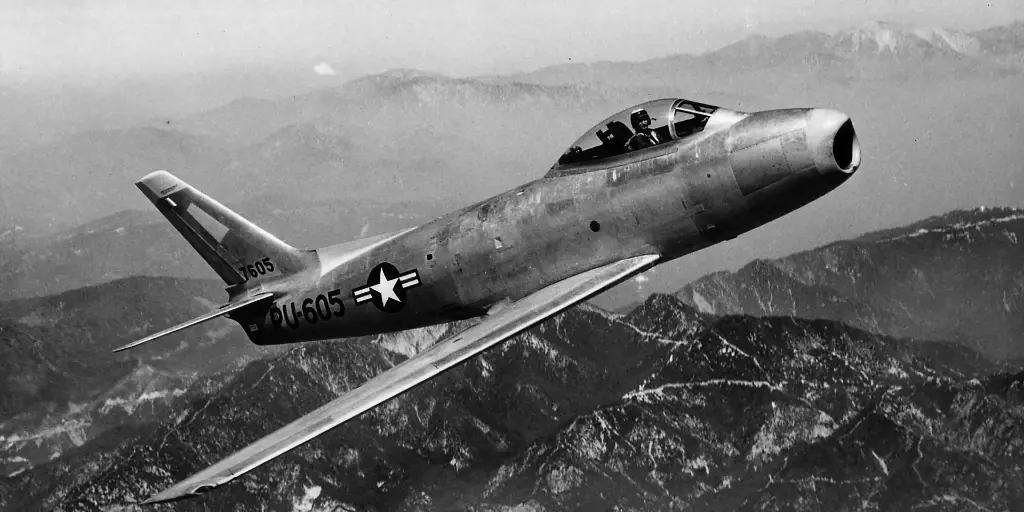
Built by North American Aviation, the F-86 Sabre became operational in 1949 and was the West’s answer to the MiG-15.
- Specifications: Powered by a General Electric J47 engine, it achieved 678 mph (1,091 km/h, Mach 0.91) and a ceiling of 49,600 ft (15,100 m). It carried six .50-caliber machine guns and, later, AIM-9 Sidewinder missiles.
- Advantages: Better avionics radar (AN/APG-30) and maneuverability at lower altitudes, paired with superior pilot training.
- Deployment: Operated by the USAF, the Sabre dominated dogfights, leveraging advanced tactics and gunnery sights.
Queries like “F-86 Sabre Korean War performance” draw readers to this technical breakdown.
Battles in MiG Alley
MiG Alley, near the Yalu River, saw over 1,000 jet engagements, with the F-86 achieving a kill ratio of approximately 10:1 against the MiG-15. Key factors included:
- Tactics: The Sabre’s pilots used “boom and zoom” tactics, diving from higher altitudes, while MiG-15s relied on climbing ambushes.
- Engagements: By 1953, the USAF reported 792 MiG-15s downed versus 78 F-86 losses, though Soviet records claim lower MiG losses (around 350).
- Notable Aces: American pilots like James Jabara (15 kills) and Soviet pilots like Yevgeny Pepelyaev (23 kills) became legends.
This section caters to historians searching for “MiG Alley Korean War battles” with precise data and engaging narratives.
Technological and Tactical Innovations
The Korean War accelerated fighter jet development:
- Jet Propulsion: Both aircraft used early turbojets, paving the way for afterburners in later designs.
- Weaponry: The MiG-15’s cannons offered heavy firepower, while the F-86’s machine guns were more reliable for dogfights. Early missiles like the Sidewinder debuted late in the war.
- Radar and Avionics: The Sabre’s radar-assisted gunsight improved accuracy, a precursor to modern fire-control systems.
Tactics shifted from WWII-style dogfights to high-speed, high-altitude engagements, influencing future conflicts like Vietnam. For professionals researching “Korean War aviation technology,” this ties directly to modern fighter systems.
Legacy in Fighter Jet Development
The MiG-15 vs. F-86 rivalry highlighted the importance of pilot training, avionics, and tactical flexibility. The war led to:
- Training Programs: The USAF established advanced combat schools, precursors to Top Gun.
- Design Influence: The MiG-15 inspired the MiG-21, while the F-86 led to the F-100 Super Sabre.
- Global Impact: The MiG-15’s proliferation to Soviet allies shaped Cold War air forces.
Explore related topics like Vietnam War fighter evolution or fighter aircraft generations for deeper insights.
In conclusion, the Korean War’s MiG-15 vs. F-86 Sabre battles were a turning point in aviation history, introducing jet combat and shaping modern fighter design. These first jet dogfights remain a fascination for those searching for “Korean War jet fighter legacy.”