Discover first-generation fighter jets like the MiG-15 and F-86 Sabre, the pioneers of the jet era. Learn their specs, roles in the Korean War, and impact on military aviation history.
The first-generation fighter jets, emerging in the late 1940s, marked the dawn of the jet era in military aviation. Powered by early jet engines, these aircraft, such as the Soviet MiG-15 and American F-86 Sabre, introduced unprecedented speed and combat capabilities, transforming aerial warfare. This article explores their development, technical features, roles in early conflicts, and lasting legacy, crafted for aviation enthusiasts, historians, and military professionals.
The Birth of Jet Fighters
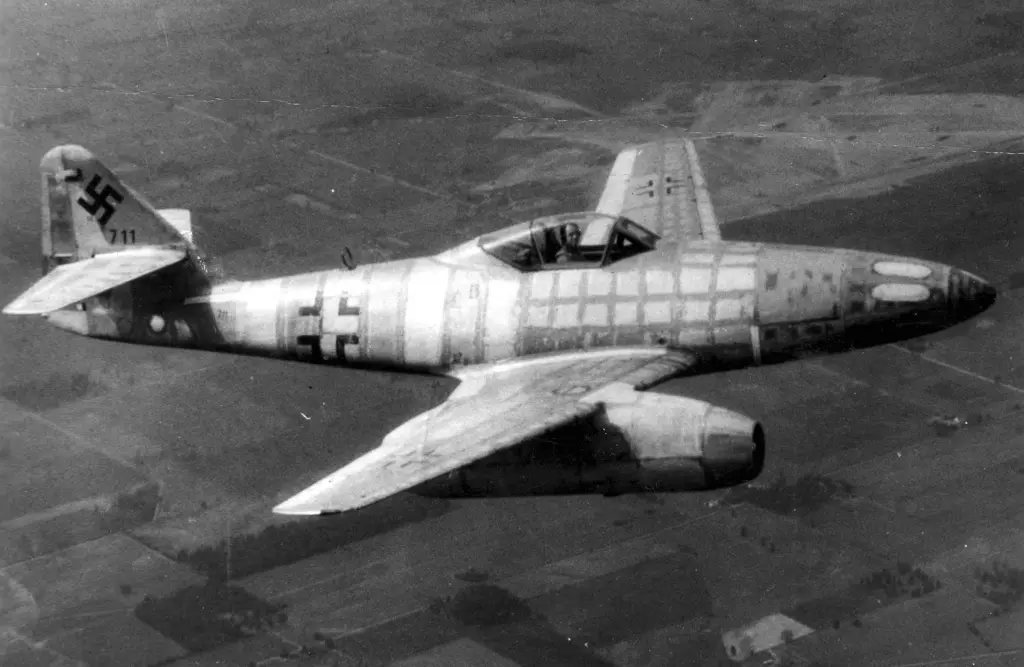
The transition from propeller-driven aircraft to jet fighters began post-World War II, driven by advancements in jet propulsion. The first-generation fighters (1944-1953) were characterized by subsonic or transonic speeds, basic avionics, and cannon-based armament, setting the stage for modern aerial combat.
- Primary Keywords: first-generation fighter jets, MiG-15 jet era, F-86 Sabre history, jet fighter pioneers.
This addresses search intent for “first-generation jet fighter history” with historical and technical insights.
Iconic First-Generation Fighters
The MiG-15 and F-86 Sabre defined this era, particularly during the Korean War.
- MiG-15 Fagot (Soviet Union): Designed by Mikoyan-Gurevich, the MiG-15 entered service in 1949. Powered by a Klimov VK-1 engine (reverse-engineered Rolls-Royce Nene), it reached 668 mph (1,075 km/h, Mach 0.89) with a ceiling of 50,850 ft (15,500 m). Armed with two 23mm and one 37mm cannon, it excelled in high-altitude climbs.
- F-86 Sabre (United States): Built by North American Aviation, the F-86 debuted in 1949, achieving 678 mph (1,091 km/h, Mach 0.91) with a General Electric J47 engine. Its six .50-caliber machine guns and AN/APG-30 radar made it a dogfighting legend.
- Other Notable Models: The British Gloster Meteor (first Allied jet, 1944) and U.S. F-80 Shooting Star saw early combat, though less prominent than the MiG-15 and F-86.
Statistics: Over 15,000 MiG-15s and 9,800 F-86s were produced, with the MiG exported to 40+ countries. This section targets queries like “MiG-15 F-86 Sabre specs.”
Roles in the Korean War
The Korean War (1950-1953) was the proving ground for first-generation fighters, particularly in “MiG Alley” near the Yalu River.
- MiG-15 Performance: Flown by Soviet, Chinese, and North Korean pilots, the MiG-15 leveraged its climb rate to ambush UN forces, downing bombers like the B-29.
- F-86 Sabre Dominance: The F-86 achieved a 10:1 kill ratio, with 792 MiG-15s downed versus 78 Sabre losses, thanks to superior pilot training and radar-assisted gunnery.
- Key Engagements: Over 1,000 jet dogfights occurred, with aces like James Jabara (15 kills) showcasing tactical prowess.
This engages historians searching for “Korean War jet combat history” with detailed narratives and data.
Technological Features and Limitations
First-generation fighters introduced key aviation technologies but had notable constraints:
- Jet Propulsion: Early turbojets like the VK-1 and J47 provided subsonic speeds, lacking afterburners for sustained supersonic flight.
- Armament: Cannons and machine guns dominated, as guided missiles were still experimental (e.g., early AIM-9 Sidewinder trials).
- Avionics: Basic radar and analog instruments limited situational awareness compared to later generations.
- Limitations: Short ranges (500-1,000 miles) and high fuel consumption restricted operational flexibility.
For professionals researching “first-generation jet technology,” this ties early innovations to modern systems like radar and missiles.
Tactical Impact and Evolution
The jet era shifted aerial combat from slow, close-range dogfights to high-speed engagements:
- Dogfight Tactics: Pilots used “boom and zoom” maneuvers, exploiting speed and altitude.
- Air Superiority: The F-86 Sabre’s success emphasized pilot training, influencing programs like Top Gun.
- Global Proliferation: The MiG-15’s export to Soviet allies shaped Cold War air forces.
This section appeals to enthusiasts searching for “first-generation fighter tactics.”
Legacy in Military Aviation
First-generation fighters laid the foundation for modern jet fighters:
- Design Influence: The MiG-15 inspired the MiG-21, while the F-86 led to the F-100 Super Sabre.
- Tactical Lessons: The Korean War highlighted the need for better avionics and training, shaping second-generation fighters.
- Cultural Impact: These jets symbolized the Cold War’s technological race, captivating popular imagination.
Explore related topics like second-generation fighters or fighter aircraft generations for deeper insights.
In conclusion, first-generation fighter jets like the MiG-15 and F-86 Sabre pioneered the jet era, transforming aerial warfare with speed and firepower. Their legacy endures in modern military aviation, captivating those searching for “first-generation jet fighter history.”