
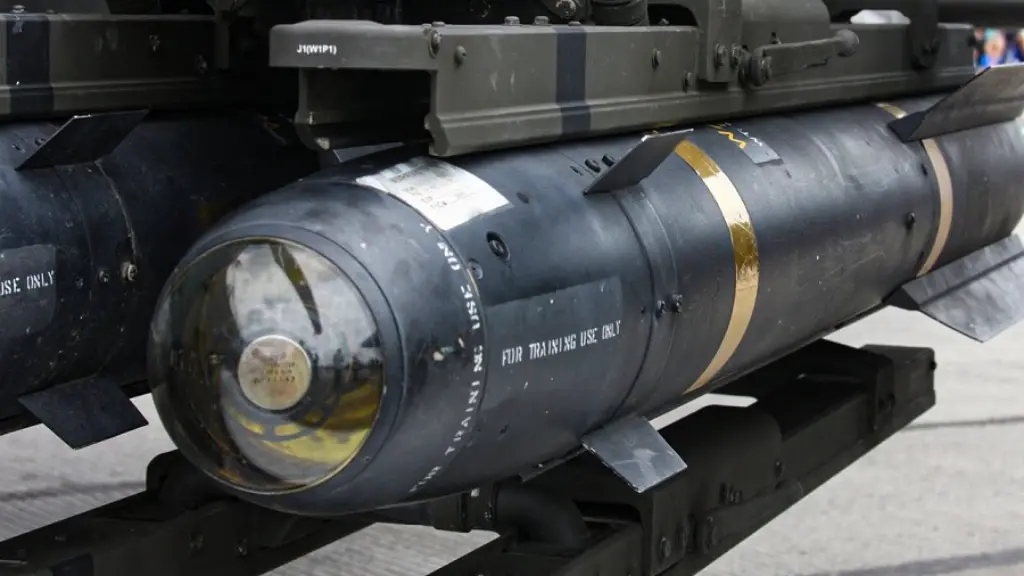
In a significant boost to international defense partnerships, Lockheed Martin has secured a portion of a $720 million U.S. Army contract that includes the production of AGM-114 Hellfire missiles destined for Spain through Foreign Military Sales (FMS).
This award, announced on August 21, 2025, marks the fourth and final follow-on contract under a multi-year agreement, underscoring the ongoing demand for precision-guided munitions amid evolving global security challenges. While the contract primarily supports U.S. forces, its FMS component extends critical capabilities to NATO allies, including Spain, enhancing interoperability and deterrence in Europe.
Contract Overview
The $720 million deal (approximately €615 million) was awarded by the U.S. Army to Lockheed Martin for the continued production of Joint Air-to-Ground Missiles (JAGM) and Hellfire missiles. It addresses urgent operational needs for the U.S. Army and Navy, while incorporating FMS orders for international partners. Production will occur across multiple Lockheed Martin facilities in the U.S., including Orlando and Ocala, Florida; Dallas, Texas; Archbald, Pennsylvania; and Troy, Alabama.
Key elements of the contract include:
- Production Scope: Delivery of JAGM (AGM-179) and Hellfire (AGM-114) missiles, with a focus on procurement and production support.
- U.S. Recipients: Primarily the U.S. Army and Navy, supporting platforms like AH-64 Apache helicopters, MQ-9 Reaper drones, and other rotary- and fixed-wing aircraft.
- Foreign Military Sales (FMS): This segment allocates missiles to allied nations, ensuring shared access to advanced weaponry without direct bilateral negotiations.
- Total Program Context: This is the final award in a series of multi-year contracts. Previous awards, such as a $439 million contract in 2023, have contributed to over 145,000 missiles produced to date.
Casey Walsh, Program Management Director of Multi-Domain Missile Systems at Lockheed Martin Missiles and Fire Control, emphasized the contract’s importance: “This contract is a significant milestone in our ongoing partnership with the U.S. Army, U.S. Navy and our international allies, and we’re proud to continue playing a vital role in their defense strategies. As we continue to evolve our deterrence capabilities, we remain committed to supporting the military’s critical missions and helping to protect those who serve, both at home and abroad.”
FMS Recipients and Allocations
The FMS portion of the contract highlights transatlantic cooperation, with specific allocations as follows:
| Country | Missile Type | Notes |
|---|---|---|
| United Kingdom | 160 JAGMs | Enhances precision strike capabilities for UK forces. |
| Poland | Hellfire missiles | Linked to Poland’s acquisition of AH-64E Apache helicopters, supporting integration of Western systems into its defense architecture. |
| Spain | Hellfire missiles | Bolsters Spain’s air-to-ground munitions stockpile, compatible with platforms like the Tiger attack helicopter. |
| Czech Republic | Hellfire missiles | Strengthens NATO eastern flank defenses. |
| Italy | Hellfire missiles | Supports Italian rotary-wing assets in multinational operations. |
| Canada | Hellfire missiles | New customer under this contract, expanding North American alliances. |
These allocations ensure that NATO allies can maintain readiness against asymmetric threats, such as drone swarms or ground targets in contested environments.
Background on the Hellfire Missile
The AGM-114 Hellfire is a proven air-to-surface missile system, originally developed in the 1970s and continuously upgraded for modern warfare. Key features include:
- Guidance Systems: Semi-active laser homing or millimeter-wave radar for all-weather precision strikes.
- Range and Payload: Up to 11 km range with a high-explosive anti-tank (HEAT) warhead capable of penetrating armored vehicles.
- Platforms: Integrated on helicopters (e.g., AH-64 Apache, Eurocopter Tiger), drones (e.g., MQ-1 Predator, MQ-9 Reaper), and fixed-wing aircraft.
- Variants: Over 20 versions, including the Hellfire II with enhanced guidance for reduced collateral damage.
- Combat History: Extensively used in conflicts like Iraq, Afghanistan, and counter-terrorism operations, with a success rate exceeding 90%.
Lockheed Martin has produced Hellfire missiles since acquiring the program, emphasizing its role in multi-domain operations.
Implications for Spain
Spain’s receipt of Hellfire missiles under this contract aligns with its efforts to modernize its armed forces and enhance NATO commitments. The Spanish Army operates the Eurocopter Tiger HAD attack helicopter, which is Hellfire-compatible, allowing for improved anti-armor and counter-insurgency capabilities. This acquisition supports Spain’s participation in multinational exercises and operations, such as those in the Sahel or Baltic regions.
In the broader context of European defense, this ties into Spain’s involvement in programs like the Future Combat Air System (FCAS), where precision munitions complement next-generation platforms. By procuring through FMS, Spain benefits from U.S. economies of scale, reducing costs while maintaining technological edge against potential threats.
Broader Strategic Impact
This contract reflects a surge in demand for guided missiles amid heightened geopolitical tensions, including conflicts in Ukraine and the Middle East. For Lockheed Martin, it reinforces its position as a leading supplier, with the JAGM serving as the Hellfire’s successor—offering dual-mode guidance for increased versatility.
The inclusion of new customers like Canada signals expanding alliances, while the focus on urgent needs highlights the role of these systems in deterring aggression. As production ramps up, it also creates jobs and stimulates the U.S. defense industrial base.
Future Outlook
With this being the final award under the current multi-year framework, Lockheed Martin anticipates transitioning to new production contracts by 2026, potentially incorporating advanced variants like the JAGM-Extended Range. For Spain and other recipients, sustained access to Hellfire ensures long-term operational readiness, with potential integrations into emerging technologies like directed energy weapons for layered defense.
This development strengthens transatlantic ties and European security. For more specifics on quantities, timelines, or related programs, let me know!