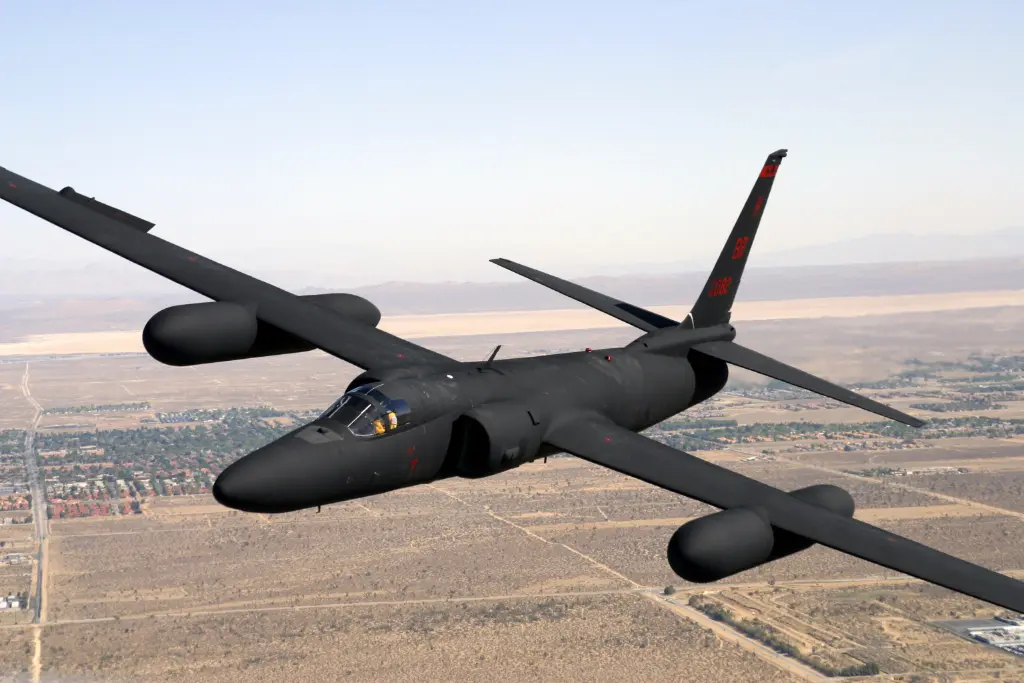
The Lockheed U-2 “Dragon Lady” is a high-altitude reconnaissance aircraft operated by the United States Air Force. Developed in the 1950s by Lockheed’s Skunk Works, the U-2 is capable of flying at altitudes above 70,000 feet, providing intelligence, surveillance, and reconnaissance (ISR) with advanced sensors and cameras. It has served in numerous conflicts and remains in service today.
Fact Sheet
| Role | High-Altitude Reconnaissance (ISR) |
|---|---|
| Manufacturer | Lockheed Corporation |
| First Flight | August 1, 1955 |
| Service Entry | 1956 |
| Crew | 1 (pilot) |
| Number Built | 104 |
Specifications (U-2S)
| Length | 63 ft (19.2 m) |
|---|---|
| Wingspan | 105 ft (32 m) |
| Height | 16 ft (4.88 m) |
| Empty Weight | 16,000 lb (7,257 kg) |
| Max Takeoff Weight | 40,000 lb (18,144 kg) |
| Powerplant | 1 × General Electric F118-101 turbofan (17,000 lbf) |
| Max Speed | 500+ mph (805+ km/h) |
| Range | 7,000 mi (11,265 km) |
| Service Ceiling | 70,000+ ft (21,300+ m) |
Sensors & Systems
| Sensors | Electro-optical, infrared, radar, signals intelligence (SIGINT), and more |
|---|---|
| Communications | Secure voice/data, satellite communications |
| Other Systems | Advanced imaging and electronic intelligence suites |
Notable Features
- Flies at extreme altitudes for strategic reconnaissance
- Long, glider-like wings for high-altitude performance
- Used in Cold War, Cuban Missile Crisis, and modern conflicts
- Continuously upgraded with new sensors and avionics
- Still in service after more than 65 years
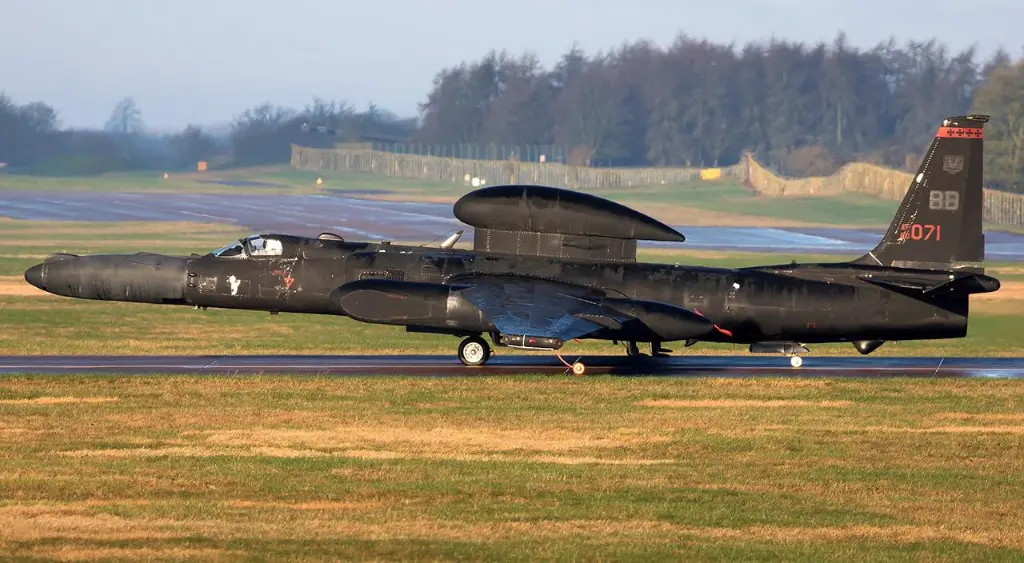
Lockheed U-2 “Dragon Lady”
The Lockheed U-2 “Dragon Lady” is a legendary American high-altitude reconnaissance aircraft that has served for an astonishingly long time, an accomplishment in the world of modern aviation. Developed in the 1950s by Lockheed’s famed “Skunk Works”, the U-2 was designed to conduct intelligence, surveillance, and reconnaissance (ISR) missions from altitudes that made it nearly invulnerable to the enemy fighters and air defenses of its time.
A Cold War Icon
The U-2’s most defining feature is its ability to fly at altitudes exceeding 70,000 feet, an altitude where the pilot must wear a full pressure suit similar to that of an astronaut. This capability is made possible by its unique design: a sleek, single-engine fuselage and large, glider-like wings that allow it to fly in the thin air at the edge of space.
The aircraft gained global fame and notoriety during the Cold War. The U-2 was used for secret overflights of the Soviet Union to gather critical intelligence, a program that came to an end in 1960 when pilot Francis Gary Powers was shot down. However, the U-2’s most famous mission came during the Cuban Missile Crisis of 1962, when its photographs confirmed the presence of Soviet nuclear missiles in Cuba, providing the U.S. with the intelligence needed to avert a potential nuclear war.
Modern Role and Capabilities
Despite its Cold War origins, the U-2 remains a vital and highly capable asset. The current U-2S variant has been continuously upgraded, transforming it into a technologically advanced platform. The original film cameras have been replaced by a suite of modern, modular sensors, including:
- SYERS-2 Sensor: An advanced multi-spectral imaging sensor that can collect high-resolution data in various light spectra.
- ASARS-2 Radar: An all-weather synthetic aperture radar that can detect ground moving targets from very long ranges.
The U-2’s open architecture allows it to quickly integrate new technologies, making it an ideal testbed for new sensors and systems for future aircraft. The aircraft’s ability to remain on station for over 10 hours at high altitude and its human-in-the-loop capability give it a level of responsiveness and flexibility that unmanned systems cannot fully match.
Retirement and the Future
For decades, the U.S. Air Force has tried to retire the U-2, citing the high operational costs of its aging airframe and its vulnerability to modern anti-air defenses. However, its retirement has been continually delayed due to its unique capabilities.
As of mid-2025, the U.S. Air Force plans to retire the U-2 fleet in fiscal year 2026. The aircraft’s mission is expected to be taken over by a combination of new platforms:
- Next-Generation Stealth Drones: A classified, high-altitude stealth drone, believed to be the Northrop Grumman RQ-180, is expected to assume the high-threat reconnaissance role.
- Satellites: New generations of military and commercial satellites are providing increasingly capable surveillance from space.
- Multi-Domain Systems: The U-2’s data-sharing role is being transitioned to a network of different manned and unmanned platforms as part of the Air Force’s Joint All-Domain Command and Control (JADC2) initiative.
The U-2’s unparalleled service record and its continued relevance after almost 70 years in the air cement its legacy as one of the most remarkable aircraft in aviation history.
Next Article
Northrop Grumman RQ-4 Global Hawk