Modern fighter jets have become decisive assets in recent military conflicts, combining raw power with surgical precision. From Ukraine to the Middle East, these advanced aircraft shape the outcome of air campaigns and influence battlefield dynamics.
In this article, you’ll discover how today’s fighter jets are used in real combat scenarios, which models dominate the skies, and what makes them so effective in modern warfare. Get ready to explore the technology, tactics, and impact behind the world’s most advanced warplanes.
The Evolving Role of Fighter Jets in Modern Warfare
Gone are the days when dogfights defined air superiority. Today, fighter jets operate as multi-role platforms—conducting reconnaissance, electronic warfare, precision strikes, and command coordination.
Modern conflicts demand speed, stealth, and smart targeting. Fighter jets now integrate AI-assisted systems, networked battlefield data, and long-range missiles to strike before being detected.
This shift reflects a move from brute force to precision and information dominance—where the ability to gather, process, and act on data is as critical as firepower.
Key Fighter Jets in Recent Conflicts
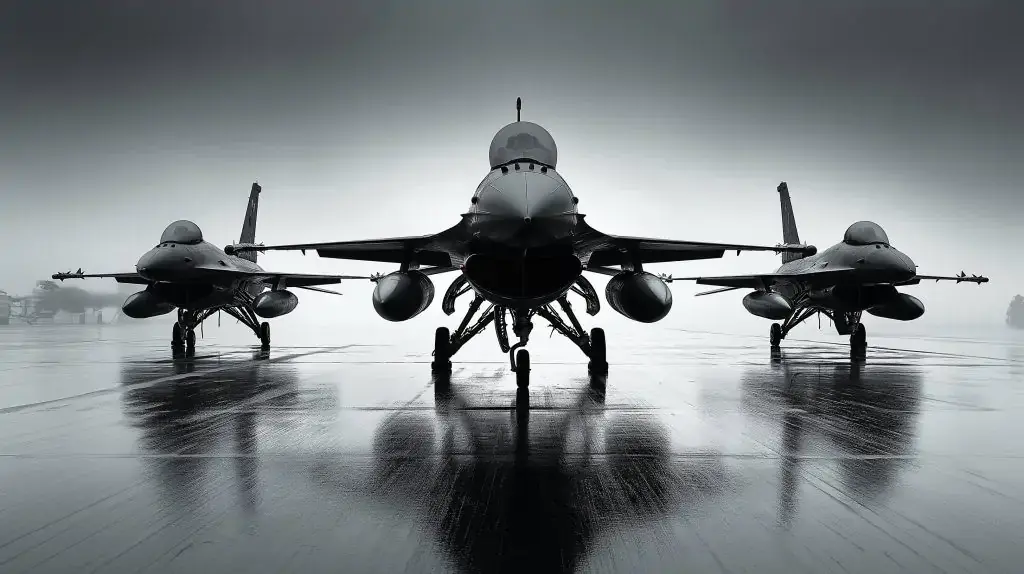
F-16 Fighting Falcon (USA & Allies)
- Still widely used by Ukraine, Türkiye, and NATO countries.
- Proven in air-to-air combat and ground attacks.
- Upgraded with modern avionics and targeting pods.
Su-35 (Russia)
- Advanced variant of the Su-27 family.
- Used in Syria and over Ukraine.
- Highly maneuverable but vulnerable to long-range Western missiles.
Rafale (France)
- Deployed in Libya, Syria, and by Ukraine-bound allies.
- Known for its omnirole capability—can switch missions mid-flight.
- Equipped with Meteor BVRAAM (Beyond Visual Range Air-to-Air Missile).
F-35 Lightning II (USA & Allies)
- Stealth design reduces radar detection.
- Used by Israel in strikes on Iran-linked targets.
- Provides real-time battlefield awareness through sensor fusion.
Israel’s use of the F-35 in 2024 operations marked one of the first stealth jet combat deployments in a high-threat environment.
Precision Strike Capabilities
Modern jets deliver pinpoint accuracy with guided munitions, minimizing collateral damage.
- JDAM (Joint Direct Attack Munition): GPS-guided bombs used by F-16s and F-15s.
- SDB (Small Diameter Bomb): Allows one jet to hit multiple targets in a single pass.
- Storm Shadow / SCALP EG: Long-range cruise missiles used by Ukraine’s allies.
Example: In 2023, Ukrainian forces used modified Soviet-era jets equipped with Western GPS-guided weapons to strike Russian airfields—proving that precision can compensate for technological gaps.
Air Superiority and Electronic Warfare
Controlling the skies requires more than speed—it demands situational awareness and electronic dominance.
- Radar and AESA (Active Electronically Scanned Array): Allows jets like the F-35 to detect threats at long range.
- Electronic Countermeasures (ECM): Jam enemy radar and communications.
- Networked Warfare: Jets share targeting data with drones, ground units, and AWACS.
The F-22 Raptor, though rarely deployed, remains unmatched in air dominance due to stealth and supercruise (supersonic flight without afterburner).
However, in Ukraine, both sides rely heavily on ground-based air defenses, forcing jets to avoid high-risk zones—a sign that air superiority is no longer guaranteed.
Challenges on the Modern Battlefield
Despite their power, modern fighter jets face growing threats:
- Advanced SAMs (Surface-to-Air Missiles): Like Russia’s S-400, which can track stealth aircraft.
- Drone Proliferation: Cheap UAVs force jets into defensive roles.
- Pilot Shortage: Training a fighter pilot takes years and millions.
- Cost: An F-35 costs over $80 million—limiting fleet size.
In Ukraine, most air operations are conducted at night or with standoff weapons to avoid radar exposure. This shows a new reality: even advanced jets must adapt to asymmetric threats.
Conclusion: The Future of Air Combat
Modern fighter jets remain essential, but their role is evolving. Power and precision are now balanced with survivability, connectivity, and adaptability.
The future lies in loyal wingman drones, AI-assisted targeting, and stealthier, faster platforms like the upcoming Next Generation Air Dominance (NGAD) fighters.
For now, the skies are contested like never before—where technology, training, and strategy determine who controls the battlefield.
FAQ
Q: Which fighter jet has seen the most action in recent years?
A: The F-16 remains the most widely deployed, used by over 25 countries in combat roles.
Q: Can stealth jets be detected?
A: Yes—modern radar, infrared sensors, and networked systems can reduce stealth effectiveness, especially from the side or rear.
Q: Why doesn’t Ukraine use F-16s more openly?
A: They’ve only recently received them (2024). Their use is limited to high-value missions to avoid losses and preserve capability.
Q: Are fighter jets becoming obsolete?
A: No—but they’re part of a larger system that includes drones, satellites, and cyber warfare.
You may also be interested in:
How Cruise Missiles Work
Drones vs. Fighter Jets: Who Dominates the Future of the Air?
F-35 vs. Su-57: Stealth Fighter Comparison
Destacado: “In modern air combat, the first to detect, track, and decide wins—even before firing a shot.”