An Unprecedented Escalation in the Ukraine Conflict
🔥 A Turning Point in European Security
The early hours of September 10, 2025 marked a pivotal moment in the Ukraine war and collective NATO security. Poland, a NATO member country, was forced to intercept and shoot down multiple Russian drones that violated its airspace, in what constitutes the first direct confrontation between NATO forces and Russian assets since the start of the full-scale invasion of Ukraine in 2022. This incident, described by Polish Prime Minister Donald Tusk as “the largest large-scale provocation since World War II”, has raised tensions between Russia and the West to unprecedented levels in recent decades.
The violation of NATO airspace occurred amid a massive Russian attack against Ukraine, where according to Kyiv authorities, 415 drones and 35 missiles were launched against civilian and military infrastructure. The incursion into Polish territory has activated all of the Alliance’s alert mechanisms and triggered a coordinated response from member countries, testing collective defense systems on Europe’s eastern flank.
🚀 The Incident: Timeline and Development of Events
📍 Airspace Violation
According to Polish authorities, the first drones began violating national airspace around 23:30 hours on Tuesday, September 9, with incursions continuing until approximately 06:30 hours on Wednesday, September 10. The exact number of drones involved has been subject to various assessments:
- Prime Minister Tusk initially reported between 11 and 19 airspace violations
- Foreign Minister Radosław Sikorski subsequently confirmed 19 violations total
- At least 3-4 drones were shot down by Polish and NATO defenses
- Another 3-4 drones apparently crashed on Polish territory without being intercepted
🛡️ NATO’s Response
The Atlantic Alliance’s reaction was swift and coordinated, involving capabilities from several member countries:
- Poland: Deployed F-16 fighter jets, Mi-24, Mi-17 and S-70 Black Hawk helicopters, and a Saab 340 Erieye early warning aircraft
- Netherlands: Contributed with F-35 fighter jets stationed at Malbork base, Poland
- Italy: Provided aerial surveillance capabilities with a Gulfstream G-550 AWACS aircraft
- Germany: Alerted its Patriot systems deployed in Poland
- NATO: Activated an A330 MRTT tanker aircraft for in-flight refueling operations
Table: Military Resources Deployed by NATO During the Incident
| Country | Resources Deployed | Function |
|---|---|---|
| Poland | F-16, Mi-24, Mi-17, S-70 Black Hawk, Saab 340 Erieye | Interception, reconnaissance and early warning |
| Netherlands | F-35 | Air superiority and interception |
| Italy | Gulfstream G-550 AWACS | Surveillance and air control |
| Germany | Patriot systems | Anti-aircraft defense |
| NATO | A330 MRTT | In-flight refueling |
🚁 The Drones: Characteristics and Capabilities
🔧 Identified Drone Types
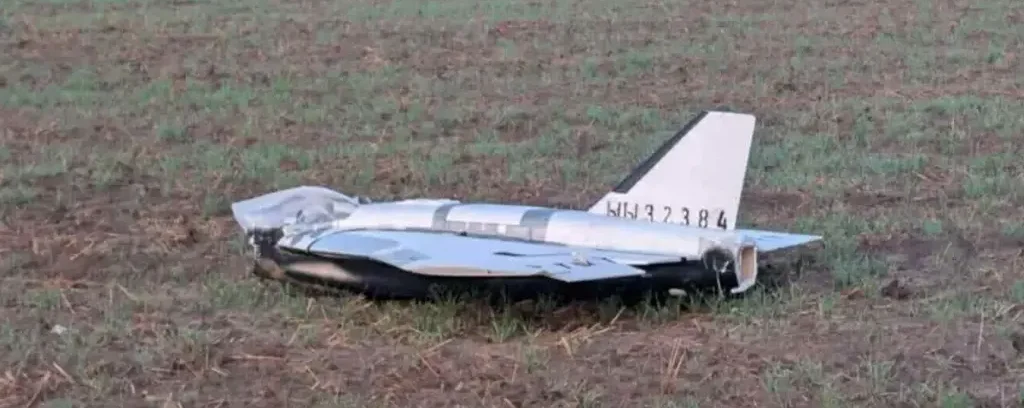
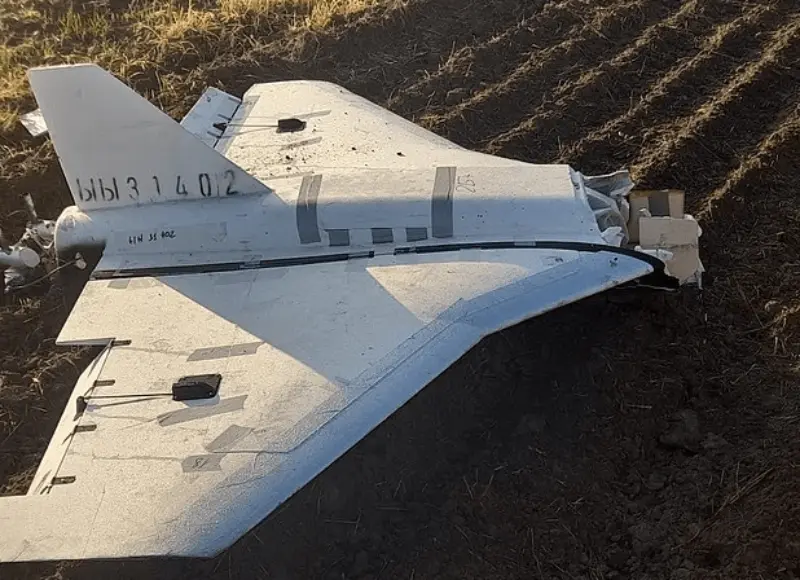
Evidence recovered on Polish territory suggests the involved drones were primarily Gerbera-type, a low-cost Russian unmanned aerial vehicle that complements variants and derivatives of the Iranian-designed Shahed-136. Their main characteristics include:
- Configuration: Can be configured as kamikaze drones or as decoys to saturate air defenses
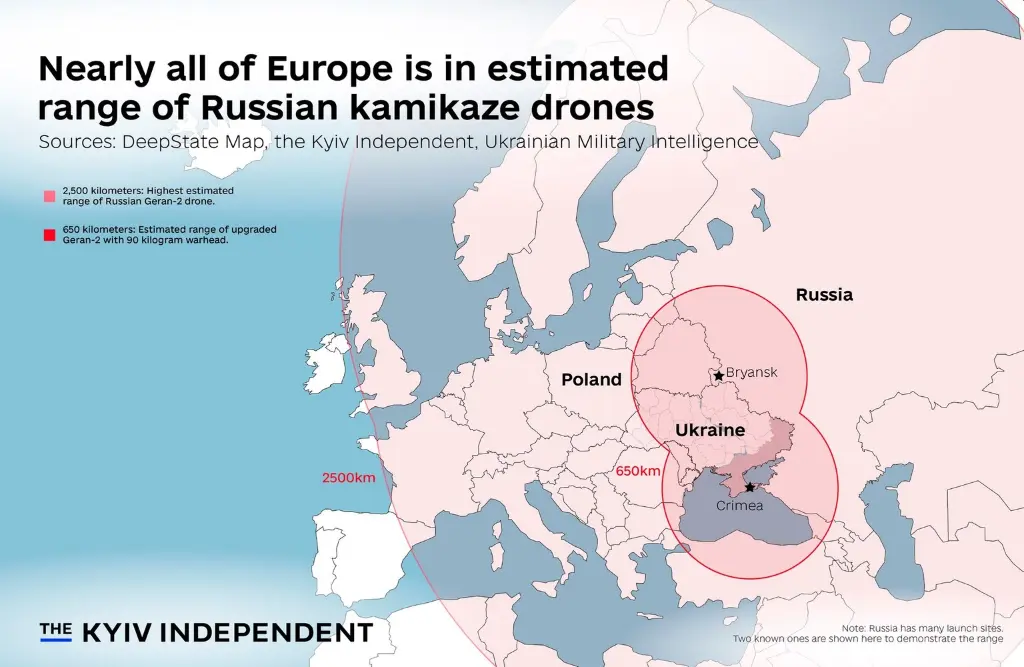
- Range: Estimated range of 600 kilometers (373 miles)
- Construction: Made with lightweight materials like polystyrene foam and basic components, reducing radar detectability
- Cost: Extremely cheap compared to defense systems used to intercept them
🎯 Possible Objectives of the Incursion
Polish and NATO authorities have suggested several possible objectives behind this incursion:
- Testing NATO’s defense capabilities and response times
- Intimidating Poland and other border countries supporting Ukraine
- Collecting intelligence on NATO’s air defense systems
- Diverting attention and resources from simultaneous attacks in Ukraine
🌍 International Reactions: Solidarity and Condemnation
🤝 NATO and Allied Response
The incident has triggered a wave of solidarity with Poland and unanimous condemnation of Russia from Western leaders:
- Donald Tusk (Polish Prime Minister): Activated Article 4 of the NATO treaty for urgent consultations among allies
- Mark Rutte (NATO Secretary General): Called the incident “absolutely reckless” and promised to defend “every inch of NATO territory”
- Donald Trump (US President): Criticized Russia on social media asking “What about Russia violating Poland’s airspace with drones? Here we go!”
- Emmanuel Macron (French President): Condemned the incident as “simply unacceptable” and called on Russia to “end this reckless escalation”
🇷🇺 Russian Position: Denials and Disinformation
Meanwhile, Russia has denied any deliberate responsibility for the incident:
- The Russian Defense Ministry stated that “there were no targets planned for destruction on Polish territory”
- Andrey Ordash, Russian chargé d’affaires in Poland, called the accusations “unfounded” and claimed Poland hadn’t presented evidence of the drones’ Russian origin
- Dmitri Peskov, Kremlin spokesman, merely noted that the EU and NATO “accused Russia of provocations daily” without presenting arguments
⚠️ Strategic Implications: A New Security Scenario
🔥 Risk of Escalation and Expanded Conflict
This incident represents the most serious episode of spillover from the Ukrainian conflict into NATO territory since the start of the Russian invasion in 2022. Security analysts and experts have noted several concerning implications:
- Deliberate testing: Russia might be systematically testing NATO’s limits and responses
- New type of threat: Cheap drones pose an asymmetric challenge to NATO’s expensive defense systems
- Dangerous precedent: Lack of a strong response could encourage further provocations
💰 Cost-Effectiveness Imbalance in Air Defense
One of the most concerning aspects revealed by this incident is the economic disproportion between drone costs and the systems used to neutralize them:
- Gerbera drones are “exceedingly cheap”, according to experts
- NATO’s response involved high-cost systems like F-35 and F-16 fighters, attack helicopters, and Patriot systems
- This imbalance poses serious challenges for the sustainability of air defense against mass drone attacks
Table: Cost Comparison Between Attack and Defense Systems
| System | Type | Approximate Cost | Notes |
|---|---|---|---|
| Gerbera Drone | Attack/Decoy | Very low | Basic materials (foam, simple components) |
| F-35 Lightning II | Combat fighter | 80 million USD | Cost per unit |
| Patriot Missile | Air defense | 3-4 million USD | Cost per interceptor |
| AIM-120 AMRAAM | Air-to-air missile | 400,000 USD | Cost per unit |
🔮 The Future of Security on NATO’s Eastern Flank
🛡️ Strengthening Defense Capabilities
Following the incident, several NATO countries have announced measures to reinforce air defense in the region:
- United Kingdom: Considering deploying Typhoon fighters as part of an expanded air policing mission
- Poland: Has received “concrete support proposals” for its air defense from allies
- EU: European diplomacy chief Kaja Kallas has proposed creating a “drone wall” along the eastern flank
📋 Possible Development Scenarios
Analysts contemplate several possible developments after this incident:
- Increased military presence of NATO in Poland and Baltic countries
- Development of more effective and economical countermeasures against drones
- New sanctions against Russia and its drone technology suppliers
- Permission to intercept Russian drones in Ukrainian airspace
💭 Final Reflections: An Inflection Point in the Conflict
The September 10, 2025 incident represents a before and after in the evolution of the Ukraine conflict and Russia-NATO relations. For the first time, the Atlantic Alliance has used force against Russian assets in defense of a member state’s territory, setting a clear limit to Moscow’s actions.
The hybrid nature of this provocation – using cheap and presumably unarmed drones – shows the evolution of Russian tactics and the new challenges facing Western defense systems in the 21st century.