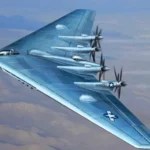
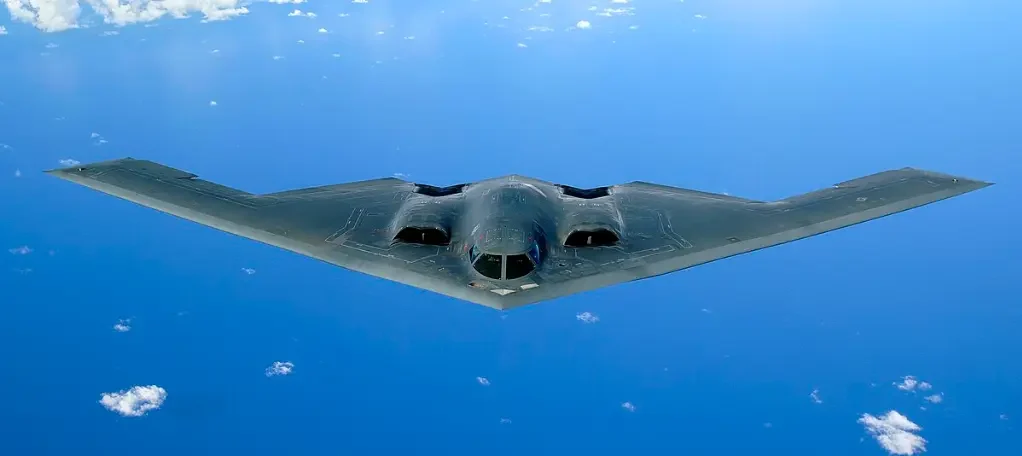
The Northrop Grumman B-2 Spirit, also known as the “Stealth Bomber,” is an American heavy strategic bomber featuring low observable stealth technology designed for penetrating dense anti-aircraft defenses. First flown in 1989 and entering service in 1997, the B-2 is capable of deploying both conventional and nuclear weapons. Its flying wing design and advanced materials make it one of the most advanced and recognizable aircraft in the world.
Fact Sheet
| Role | Stealth Strategic Bomber |
|---|---|
| Manufacturer | Northrop Grumman |
| First Flight | July 17, 1989 |
| Service Entry | 1997 |
| Crew | 2 (pilot, mission commander) |
| Number Built | 21 |
Specifications
| Length | 69 ft (21.0 m) |
|---|---|
| Wingspan | 172 ft (52.4 m) |
| Height | 17 ft (5.1 m) |
| Wing Area | 5,140 sq ft (478 m²) |
| Empty Weight | 160,000 lb (72,575 kg) |
| Max Takeoff Weight | 336,500 lb (152,634 kg) |
| Powerplant | 4 × General Electric F118-GE-100 turbofan engines (17,300 lbf each) |
| Max Speed | High subsonic (~628 mph, 1,010 km/h) |
| Range | 6,900 mi (11,100 km) unrefueled |
| Service Ceiling | 50,000 ft (15,240 m) |
Armament & Defensive Equipment
| Guns | None |
|---|---|
| Bomb Load | Up to 40,000 lb (18,144 kg) of ordnance, including nuclear and conventional bombs |
| Aiming Equipment | AN/APQ-181 radar, GPS-aided targeting, advanced avionics |
Notable Features
- Stealth technology for low radar cross-section
- Flying wing design for aerodynamic efficiency and reduced detectability
- Capable of intercontinental missions with aerial refueling
- Can deliver both nuclear and conventional weapons
- One of the most expensive aircraft ever built
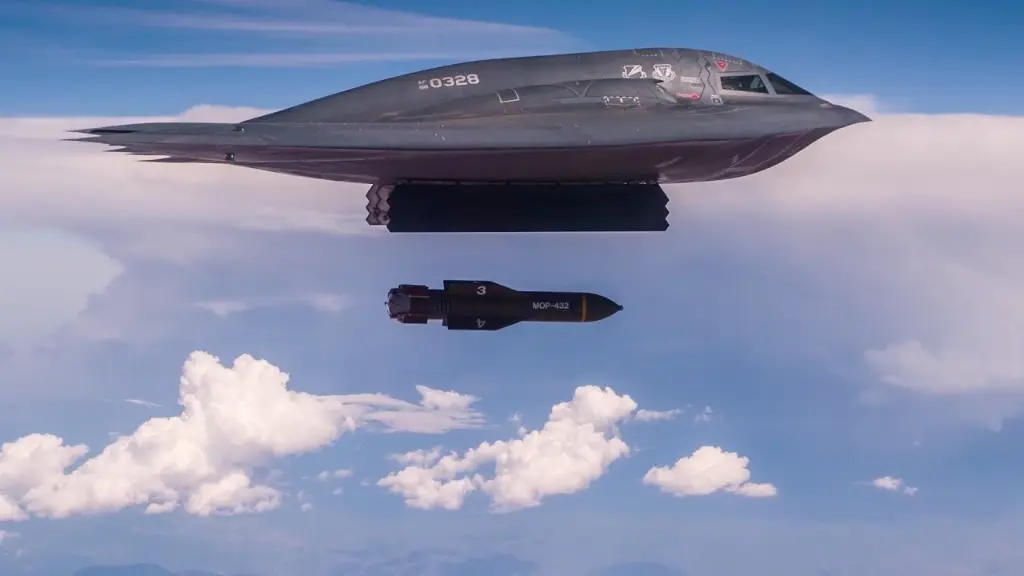
The Northrop Grumman B-2 Spirit, also known as the “Stealth Bomber,” is a strategic, heavy bomber known for its unique flying wing design and extremely low radar observability. It’s designed to penetrate dense air defenses and deliver both conventional and nuclear weapons.
Overview and Current Status
The B-2 was developed under the classified Advanced Technology Bomber (ATB) program during the Cold War. Despite initial plans for a large fleet, only 21 aircraft were built due to the high cost and the dissolution of the Soviet Union. As of mid-2025, the U.S. Air Force operates a fleet of 19 B-2s, all based at Whiteman Air Force Base, Missouri.
The B-2’s key advantage is its stealth, which allows it to operate undetected in highly contested airspace where conventional aircraft cannot. It can carry a massive payload of up to 40,000 pounds, including up to 80 GPS-guided JDAMs. This capability makes it a crucial asset for long-range precision strikes. Recent combat deployments, such as a major strike on Iranian nuclear facilities in mid-2025, have reinforced the B-2’s relevance for high-priority missions.
Modernization and Future
Despite its age, the B-2 is not a “legacy” platform; it’s a continuously upgraded operational asset. The Air Force is investing in ongoing modernization programs to keep the B-2 effective against evolving threats. These upgrades focus on:
- Communications: A new beyond-line-of-sight satellite communication system allows for the simultaneous transmission and reception of voice and data, significantly improving real-time mission planning.
- Survivability: Improvements to its low-observable materials and coatings are being made to enhance its radar signature and maintain its stealth advantage.
The B-2 is the nation’s premier stealth bomber, but it is expensive to operate and maintain. The Northrop Grumman B-21 Raider, a more advanced and digitally integrated stealth bomber, is being developed to replace the B-2. The B-21 is expected to be more affordable to operate and maintain, with the first aircraft already undergoing flight testing. The B-2 fleet is planned to be retired in the early 2030s, as the B-21 Raider enters service in greater numbers.