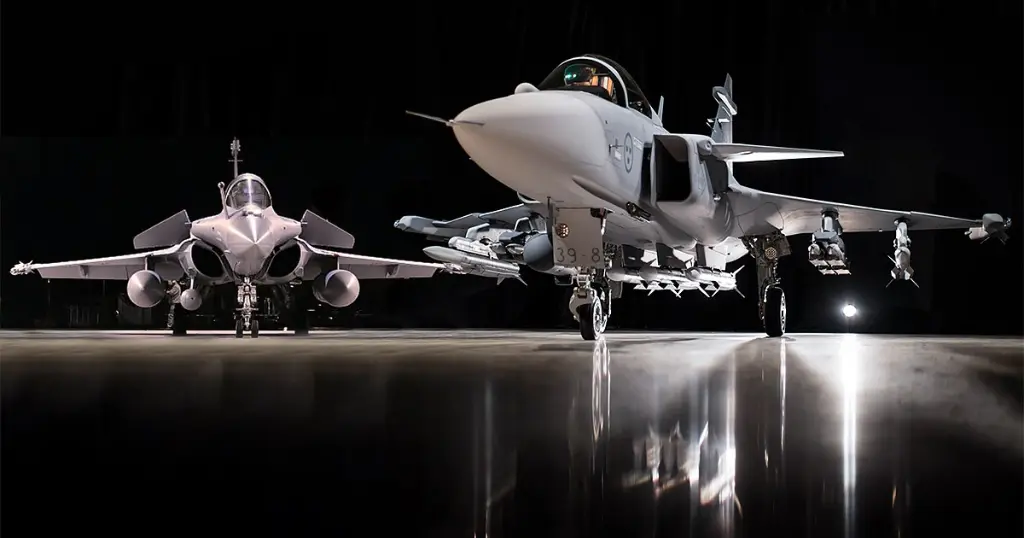
Peru stands at a critical crossroads in modernizing its air defense capabilities. The South American nation is currently evaluating three of the world’s most advanced fighter aircraft—the Swedish Saab Gripen, the French Dassault Rafale, and the American Lockheed Martin F-16—as it seeks to replace its aging fleet of combat aircraft. An official Peruvian delegation has traveled to Europe to conduct final evaluations of these aircraft, with a decision expected to shape the country’s defense strategy for the next three to four decades.
This comprehensive analysis examines Peru’s options, the strategic implications of each aircraft, and the factors likely to influence this significant defense procurement decision.
Background: Peru’s Current Fleet and Modernization Needs
The Peruvian Air Force (Fuerza Aérea del Perú, FAP) currently operates a mixed fleet of combat aircraft, including:
- Mirage 2000Ps: French-built interceptors acquired in the 1980s
- MiG-29s: Russian fighters purchased from Belarus in the 1990s
- Su-25s: Russian ground-attack aircraft
Many of these platforms suffer from limited operational availability, aging systems, and increasing maintenance challenges. The FAP requires approximately 24 new multirole fighter aircraft to maintain credible air defense capabilities and ensure sovereignty over Peru’s extensive territory, which includes challenging Andean mountain terrain and Amazon rainforest.
The Contenders: Technical Comparison
Saab Gripen E/F (Sweden)
Key Specifications:
- Generation: 4.5+
- Role: Multirole fighter
- Unit Cost: $70-85 million
- Top Speed: Mach 2
- Range: 1,500 km (with internal fuel)
- Radar: Raven ES-05 AESA
- Armament: Meteor, IRIS-T, and Derby air-to-air missiles
Advantages:
- Lower operating costs (approximately $4,700 per flight hour)
- Advanced electronic warfare systems
- High sortie generation rate
- Designed for operations from dispersed bases
- Strong technology transfer offerings
Considerations:
- Less combat proven than competitors
- Limited user base compared to F-16
Dassault Rafale (France)
Key Specifications:
- Generation: 4.5++
- Role: Multirole fighter
- Unit Cost: $90-115 million
- Top Speed: Mach 1.8
- Range: 1,850 km (with internal fuel)
- Radar: RBE2-AA AESA
- Armament: MICA, Meteor, and Scalp missiles
Advantages:
- Proven combat record (used in multiple conflicts)
- Omnirole capability (can perform multiple missions simultaneously)
- Superior payload capacity
- Advanced sensor fusion
- Maritime strike capability
Considerations:
- Highest acquisition and operating costs
- Complex maintenance requirements
Lockheed Martin F-16 Block 70/72 (United States)
Key Specifications:
- Generation: 4.5
- Role: Multirole fighter
- Unit Cost: $64-70 million
- Top Speed: Mach 2
- Range: 1,740 km (with external tanks)
- Radar: APG-83 AESA
- Armament: AIM-120 AMRAAM, AIM-9X, and various precision-guided munitions
Advantages:
- Extensive operational history (4,600+ aircraft delivered)
- Large global support ecosystem
- Lower acquisition cost
- Proven reliability
- Interoperability with regional partners
Considerations:
- Older design despite upgrades
- Potential political strings attached to US military equipment
Strategic Considerations for Peru
Operational Requirements
Peru’s diverse geography presents unique operational challenges. The FAP needs aircraft capable of:
- High-altitude operations in the Andes Mountains
- Long-range patrols over extensive territorial borders
- Maritime surveillance along Peru’s Pacific coastline
- Counter-insurgency operations in remote regions
Economic Factors
With a defense budget of approximately $2.5 billion (2023), Peru must balance capability with affordability. Key economic considerations include:
- Initial acquisition costs
- Long-term maintenance and operating expenses
- Training and infrastructure requirements
- Potential industrial offsets and technology transfers
Geopolitical Implications
Peru’s fighter selection carries significant geopolitical weight:
- US Relations: Choosing the F-16 would strengthen ties with the United States and ensure interoperability with other American-equipped air forces in the region.
- European Partnerships: Selecting either the Gripen or Rafale would deepen defense relationships with European nations and potentially provide more flexible technology transfer arrangements.
- Regional Balance: The decision will affect Peru’s strategic position relative to neighbors like Chile (F-16), Brazil (Gripen), and Ecuador (Rafale).
Industrial and Technology Benefits
Each contender offers different industrial participation packages:
- Gripen: Saab has emphasized technology transfer and local industrial participation, potentially including final assembly in Peru.
- Rafale: Dassault has offered partnership in maintenance, repair, and overhaul operations.
- F-16: Lockheed Martin has proposed support for developing Peru’s aerospace capabilities through training and industrial cooperation.
The Decision-Making Process
Peru’s evaluation process involves multiple stakeholders:
- Technical Commission: Assessing each aircraft’s performance against Peru’s specific operational requirements
- Financial Committee: Evaluating life-cycle costs and payment terms
- Political Leadership: Considering strategic partnerships and diplomatic implications
- Military Leadership: Ensuring the selected platform meets tactical needs
The official delegation visiting European facilities will gain firsthand experience with the aircraft and negotiate final terms with manufacturers.
Timeline and Implementation
Based on previous fighter procurement processes in South America, the timeline might look like:
- 2024: Final evaluation and decision
- 2025-2026: Contract negotiation and signing
- 2027-2028: Delivery of first aircraft
- 2029-2030: Full operational capability
The selected aircraft would likely serve as Peru’s primary combat platform until at least 2060.
Regional Context: Fighter Modernization in South America
Peru’s decision comes as several South American nations modernize their air forces:
- Brazil: Selected Gripen E/F in 2014, with deliveries ongoing
- Chile: Operates F-16s upgraded to Block 50/52+ standard
- Colombia: Recently upgraded its Kfir fleet and is considering further modernization
- Argentina: Evaluating multiple options including Tejas, JF-17, and F-16
Peru’s choice may influence other regional air forces considering modernization.
Conclusion: A Strategic Decision for Peru’s Future
Peru’s fighter aircraft selection represents more than a simple equipment purchase—it is a strategic decision that will shape the country’s defense capabilities, international relationships, and aerospace industry for decades to come.
Each contender offers distinct advantages: The Gripen provides cutting-edge technology with favorable terms; the Rafale delivers proven capability and strategic autonomy; the F-16 offers reliability and interoperability with regional partners.
The Peruvian delegation’s evaluation in Europe will likely focus not only on technical specifications but also on the broader partnership each manufacturer and country can offer. The ultimate decision will reflect Peru’s assessment of its security environment, economic constraints, and strategic aspirations.
As Peru weighs its options, the international defense community watches closely, recognizing that this decision will influence defense procurement trends across South America and signal Peru’s strategic orientation in the coming decades.