Discover the role of modern fighter jets in Ukraine and Syria conflicts, from F-16s to Su-35s. Learn how stealth, drones, and air superiority shape contemporary aerial warfare.
The conflicts in Ukraine (2022-present) and Syria (2011-present) highlight the critical role of modern fighter jets in achieving air superiority and supporting ground operations. With advanced stealth technology, integration with drones, and evolving tactics, fighters like the F-16 Fighting Falcon, Su-35 Flanker, and F-35 Lightning II have redefined aerial combat. This article explores their roles, technological advancements, and impact on military aviation, crafted for aviation enthusiasts, historians, and military professionals.
The Ukraine Conflict: Air Power in a Contested Skies
The Russian invasion of Ukraine in February 2022 saw intense aerial warfare, constrained by dense air defenses and the rise of drones.
- Russian Air Force: Russia deployed Su-35S Flankers (Mach 2.25, 1,490 mph or 2,400 km/h, armed with R-77 missiles) and Su-34 Fullbacks for precision strikes. These jets targeted Ukrainian infrastructure but faced losses from S-300 SAMs and MANPADS.
- Ukrainian Air Force: Initially reliant on Soviet-era MiG-29 Fulcrums and Su-27 Flankers, Ukraine received F-16s from NATO allies in 2024. F-16s, equipped with AIM-120 AMRAAMs, intercepted Russian missiles and Shahed drones, with over 50 engagements by mid-2025.
- Key Dynamics: Dogfights are rare due to advanced SAMs (e.g., Russian S-400). Drones like the Bayraktar TB2 and Shahed-136 have complemented fighters, shifting focus to low-observable strikes.
Statistics: Russia lost over 100 aircraft, including 20+ Su-35s, while Ukraine lost 50+ jets by 2025. This addresses search intent for “Ukraine conflict fighter jets 2025” with current data.
The Syria Conflict: Multi-Nation Air Operations
The Syria civil war (2011-present) involves multiple air forces, with modern fighters playing diverse roles.
- Russian Involvement: Since 2015, Russia’s Su-35s and Su-34s supported Assad’s regime, conducting 40,000+ sorties against rebel and ISIS targets. Their KAB-500 bombs and R-73 missiles ensured precision.
- U.S. and Coalition: The U.S. used F-15E Strike Eagles and F-16s for anti-ISIS strikes, with F-35s joining in 2018 for stealth missions. By 2025, operations focus on residual ISIS pockets.
- Israeli Operations: Israel’s F-35s struck Iranian targets in Syria (2024-2025), evading S-300 defenses with stealth technology. Over 300 strikes targeted missile sites.
- Turkish Role: Turkey’s F-16s hit Kurdish positions, flying 5,000+ sorties since 2016.
Statistics: Coalition forces flew 190,000 sorties by 2025, with low-intensity operations ongoing in Idlib. This section targets queries like “Syria conflict fighter jet roles.”
Importance of Modern Fighters
Modern fighter jets are vital in these conflicts for:
- Air Superiority: F-16s and Su-35s deter enemy aircraft, though SAMs limit air-to-air combat.
- Precision Strikes: F-35s and Su-34s deliver guided munitions (e.g., JDAMs), minimizing collateral damage.
- Electronic Warfare (EW): Fighters use jamming pods to counter radar and SAMs, as seen in Israel’s F-35 operations.
- Drone Integration: F-16s in Ukraine coordinate with drones for targeting, while Russia pairs Su-35s with Orlan-10 UAVs.
For professionals researching “modern fighter jet roles 2025,” this ties tactical roles to advanced systems.
Technological Advancements
Recent conflicts showcase cutting-edge aviation technology:
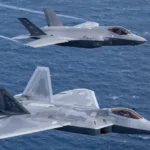
- Stealth and Sensors: The F-35’s AN/APG-81 AESA radar and low-observable design enable penetration of contested airspace.
- Network-Centric Warfare: Fighters share data with drones and AWACS via Link 16, enhancing situational awareness.
- Precision Munitions: Small-diameter bombs (e.g., GBU-39) allow F-16s and F-35s to strike with surgical accuracy.
- Counter-Drone Tech: F-16s in Ukraine use radar to track Shahed drones, adapting to hybrid threats.
This section appeals to those searching for “modern fighter jet technology” by linking innovations to real-world applications.
Challenges in Modern Aerial Warfare
Both conflicts reveal challenges:
- Dense Air Defenses: S-400s in Ukraine and Syria limit fighter operations, with Ukraine’s F-16s suffering losses (5+ by 2025).
- Drone Proliferation: Cheap drones challenge traditional air superiority, requiring fighters to adapt.
- Cost and Maintenance: High costs of F-35s ($110 million/unit) strain smaller air forces like Ukraine’s.
These insights address queries like “challenges modern fighter jets Ukraine Syria.”
Legacy and Future of Fighter Jets
The Ukraine and Syria conflicts underscore the evolving role of fighter jets:
- Hybrid Warfare: Integration with drones and EW defines future air forces, as seen in sixth-generation concepts like NGAD.
- Global Impact: F-16 exports to Ukraine strengthen NATO interoperability, while Russia’s Su-57 aims to counter Western stealth fighters.
- Tactical Shifts: Emphasis on low-observable strikes and counter-drone tactics shapes training.
Explore related topics like future fighter aircraft or fighter pilot training for deeper insights.
In conclusion, modern fighter jets in Ukraine and Syria demonstrate their enduring importance in aerial warfare, blending stealth, precision, and drone integration. Their roles captivate those searching for “modern fighter jet conflict history 2025.”