Explore second-generation fighter jets like the MiG-21 and F-104 Starfighter, which introduced supersonic speed and early missile systems. Learn their specs, roles in Cold War conflicts, and impact on military aviation.
The second-generation fighter jets (1953-1960) marked a leap forward in military aviation, introducing supersonic speed, early missile systems, and improved avionics. Iconic aircraft like the Soviet MiG-21 Fishbed and American F-104 Starfighter defined this era, enhancing aerial combat capabilities during the Cold War. This article delves into their development, technical features, combat roles, and lasting influence on fighter jet design, crafted for aviation enthusiasts, historians, and military professionals.
Emergence of Second-Generation Fighters
Following the Korean War, the second-generation fighters built on first-generation lessons, focusing on achieving supersonic performance and integrating guided missiles. These jets, developed in the 1950s, prioritized speed and interception roles, driven by Cold War tensions between the U.S. and Soviet Union.
- Primary Keywords: second-generation fighter jets, MiG-21 supersonic, F-104 Starfighter history, early missile fighters.
This addresses search intent for “second-generation jet fighter history” with historical and technical insights.
Iconic Second-Generation Fighters
The MiG-21 and F-104 Starfighter were standout aircraft, showcasing diverse design philosophies.
- MiG-21 Fishbed (Soviet Union): Designed by Mikoyan-Gurevich, the MiG-21 entered service in 1959. Powered by a Tumansky R-11 engine, it reached Mach 2 (1,385 mph or 2,228 km/h) with a ceiling of 57,400 ft (17,500 m). Armed with a 23mm cannon and AA-2 Atoll missiles, it was lightweight and agile. Over 11,000 were built, exported to 50+ countries.
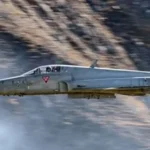
- F-104 Starfighter (United States): Built by Lockheed, the F-104, operational in 1958, achieved Mach 2.2 (1,450 mph or 2,335 km/h) with a General Electric J79 engine. Known as the “missile with a man in it,” it carried a 20mm M61 Vulcan cannon and early AIM-9 Sidewinders. Over 2,500 were produced, serving NATO allies.
- Other Notable Models: The U.S. F-100 Super Sabre (first USAF supersonic jet) and British Hawker Hunter excelled in multi-role missions.
Statistics: The MiG-21’s production outpaced most contemporaries, making it a Cold War staple. This section targets queries like “MiG-21 F-104 Starfighter specs.”
Roles in Cold War Conflicts
Second-generation fighters saw action in proxy wars, particularly the Vietnam War and Middle East conflicts.
- MiG-21 in Vietnam (1965-1975): North Vietnamese MiG-21s engaged U.S. F-4 Phantoms, using agility for hit-and-run tactics. They downed 50+ U.S. aircraft, though losses were high (200+ MiGs).
- F-104 in Global Service: Used by NATO and Pakistan, the F-104 saw combat in the 1965 and 1971 Indo-Pakistani Wars, where Pakistan claimed kills against Indian jets.
- Key Engagements: The MiG-21’s delta-wing design shone in dogfights, while the F-104’s speed suited high-altitude intercepts.
This engages historians searching for “MiG-21 Vietnam War combat” with detailed narratives and data.
Technological Advancements
Second-generation fighters introduced critical aviation technologies:
- Supersonic Engines: Afterburners, like the J79 and R-11, enabled sustained Mach 2 speeds, doubling first-generation performance.
- Early Missiles: The AIM-9 Sidewinder (infrared-guided) and AA-2 Atoll allowed beyond-visual-range (BVR) engagements, though reliability was low (10-15% hit rate).
- Avionics Upgrades: Basic radars (e.g., MiG-21’s RP-21) and analog systems improved target detection, though still rudimentary.
- Design Trade-offs: The F-104’s narrow wings prioritized speed but reduced low-speed maneuverability, while the MiG-21 balanced agility and simplicity.
For professionals researching “second-generation jet technology,” this ties innovations to modern systems like AESA radar precursors.
Tactical Evolution
The second-generation era shifted aerial combat paradigms:
- Dogfights to Missiles: Early missile systems reduced reliance on guns, though dogfights persisted due to missile unreliability.
- Interception Focus: The F-104 was designed to counter high-altitude bombers, reflecting Cold War nuclear fears.
- Pilot Training: The Vietnam War exposed U.S. training gaps, leading to programs like Top Gun.
This section appeals to enthusiasts searching for “second-generation fighter tactics.”
Challenges and Limitations
Despite advancements, second-generation fighters faced issues:
- Missile Reliability: Early missiles often missed, forcing reliance on cannons.
- Range and Endurance: Limited fuel capacity (e.g., F-104’s 900-mile range) restricted mission flexibility.
- Maintenance: Complex jet engines required intensive upkeep, challenging smaller air forces.
This addresses queries like “second-generation fighter challenges” for a balanced perspective.
Legacy in Military Aviation
Second-generation fighters paved the way for modern jet fighters:
- Design Influence: The MiG-21’s simplicity inspired the MiG-29, while the F-104’s speed influenced the F-15 Eagle.
- Global Proliferation: The MiG-21’s affordability made it a mainstay in developing nations, still in service in 2025.
- Tactical Lessons: The Vietnam War emphasized avionics and training, shaping third-generation fighters.
Explore related topics like third-generation fighters or fighter aircraft generations for deeper insights.
In conclusion, second-generation fighter jets like the MiG-21 and F-104 Starfighter revolutionized aerial warfare with supersonic speed and early missiles. Their legacy endures in modern military aviation, captivating those searching for “second-generation jet fighter history.”