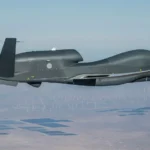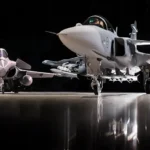
In a significant move that underscores the evolving dynamics of global defense partnerships, Spain has officially decided to postpone its plans to acquire the American-made F-35 fighter jets. Instead, the Spanish government will focus on European alternatives—namely, the Eurofighter Typhoon and the Future Combat Air System (FCAS).
This decision, confirmed by Spain’s Defense Ministry, reflects a blend of economic, political, and strategic considerations that prioritize European industrial collaboration and strategic autonomy. Below, we explore the reasons, implications, and future prospects of this pivotal shift in Spain’s defense policy.
Background of the Decision
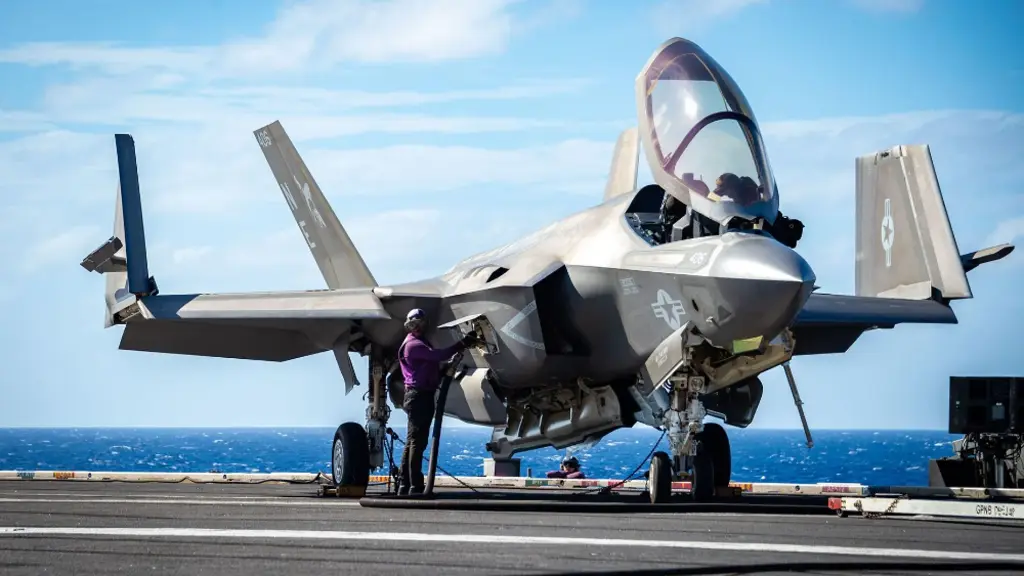
Spain’s initial interest in the F-35 stemmed from the need to modernize its aging military fleet. The Spanish Air Force operates McDonnell Douglas F/A-18 Hornets, while the Navy relies on AV-8B Harrier II jump jets, both scheduled for retirement by 2030 . The F-35, particularly the F-35B short-takeoff and vertical-landing (STOVL) variant, was seen as a logical replacement for the Harriers, ensuring the continuity of fixed-wing operations on Spain’s amphibious assault ship, Juan Carlos I . However, after years of deliberation and a non-binding request for information issued in 2017, Spain has now shelved these plans indefinitely .
Reasons for the Shift
1. Economic and Budgetary Constraints
Spain’s defense budget is a central factor in this decision. The government had allocated €6.25 billion in its 2023 budget for new fighter jets but later emphasized that 85% of additional defense funds must be spent within Europe . This aligns with Spain’s commitment to prioritize European defense industries, making the U.S.-sourced F-35 financially and politically untenable. Prime Minister Pedro Sánchez has consistently argued that meeting NATO’s spending targets does not require exceeding 2.1% of GDP, as higher spending would threaten Spain’s welfare state and economic stability .
2. Political Tensions with the U.S.
The decision also reflects strained relations with the United States, particularly under the Trump administration. President Donald Trump criticized Spain’s refusal to commit to NATO’s proposed 5% GDP defense spending target and threatened tariffs on Spanish goods . Sánchez’s government resisted this pressure, advocating for “strategic autonomy” and emphasizing interoperability and joint European procurement over alignment with U.S. interests . This political stance made the F-35 a less attractive option, both symbolically and practically.
3. Commitment to European Defense Projects
Spain is a key partner in the Future Combat Air System (FCAS), a sixth-generation aircraft program developed jointly with France and Germany . By prioritizing the Eurofighter and FCAS, Spain aims to bolster European defense integration and support its domestic aerospace industry, which includes companies like Airbus and Indra Sistemas . This approach not only secures high-skilled jobs but also reduces dependency on non-European suppliers.
4. Technical and Operational Considerations
While the F-35 offers advanced stealth capabilities, it has faced ongoing technical challenges, including delays in software upgrades and radar improvements . Conversely, the Eurofighter provides a reliable fourth-generation alternative, with Spain already contracting 45 units under its Halcon I and Halcon II programs . However, this choice leaves a capability gap, particularly for the Navy, which may lose its fixed-wing aviation capabilities after the Harriers’ retirement .
Implications of the Decision
For Spain’s Military Capabilities
- Air Force: The continued procurement of Eurofighters ensures a smooth transition from the F/A-18 fleet. However, the lack of a fifth-generation aircraft means Spain will rely on fourth-generation platforms until FCAS becomes operational, expected around 2040 .
- Navy: The absence of the F-35B raises serious concerns. Without a STOVL replacement, the Juan Carlos I may be limited to helicopter operations, reducing its strategic projection capabilities. Studies are underway to explore alternative solutions, such as modifying the ship for conventional aircraft like the Rafale M, but these are long-term options .
For European Defense Integration
Spain’s decision strengthens the European defense industry and reinforces the FCAS program, which has faced industrial disputes between Airbus and Dassault . It signals a collective shift toward strategic autonomy, reducing reliance on U.S. technology and fostering interoperability among European militaries.
For U.S.-Spain Relations
This move may exacerbate tensions with the U.S., particularly regarding defense trade and NATO spending commitments. Lockheed Martin, the F-35 manufacturer, has acknowledged the setback but deferred to government-level discussions .
Future Prospects
Spain’s defense strategy now hinges on two pillars:
- Eurofighter Typhoon: Serving as an interim solution, with ongoing deliveries under the Halcon program.
- FCAS Development: Spain will intensify efforts to advance this sixth-generation system, ensuring it meets operational needs by 2040.
However, challenges remain, including:
- Addressing the Navy’s aviation gap.
- Managing FCAS development complexities.
- Balancing NATO commitments with European priorities.
Conclusion
Spain’s postponement of the F-35 purchase marks a defining moment in its defense policy, reflecting a broader European trend toward strategic autonomy. While this decision safeguards economic stability and promotes industrial collaboration, it also introduces operational risks. The path forward will require careful planning and investment in European solutions to ensure Spain’s military readiness and strategic relevance.