
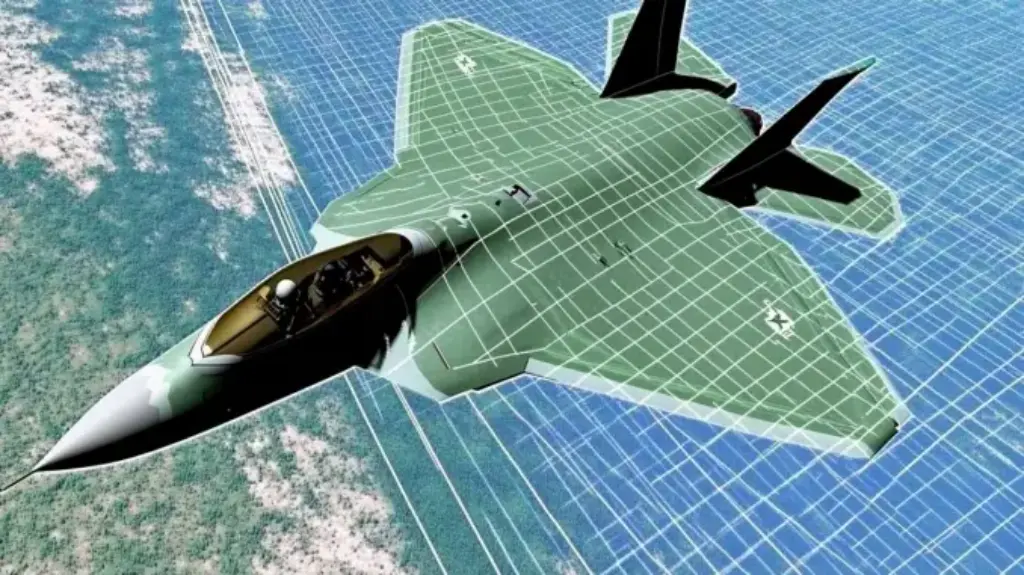
Stealth isn’t magic—it’s science engineered to cheat radar. Modern fighter jets like the F-35 and Su-57 vanish from enemy screens not by disappearing, but by scattering radar waves, absorbing energy, and masking heat signatures.
In conflicts from Syria to Ukraine, stealth has proven decisive: Israel’s F-35s strike Iranian targets undetected, while non-stealth jets face deadly SAM threats. This article reveals exactly how stealth works, the technologies that make it possible, and why it’s reshaping 21st-century air combat.
What Is Stealth Technology?
Stealth (or low observability) minimizes an aircraft’s detectability across radar, infrared, and visual spectrums. It’s not invisibility—it’s delaying detection long enough to strike and escape.
Key metrics:
- Radar Cross-Section (RCS): Measures how “visible” a jet is to radar.
- B-52 bomber: 100 m² (easily detectable at 300+ km).
- F-35: 0.001 m² (appears as a bird at 30 km).
- Infrared Signature: Heat emitted from engines/exhaust.
Critical insight: Stealth isn’t one technology—it’s a system of integrated solutions working in concert.
Modern stealth fighters balance aerodynamics, mission capability, and low observability—a delicate compromise where even minor design changes can dramatically impact radar visibility. The goal isn’t to eliminate detection but to reduce the detection range to the point where the jet can strike before being targeted.
Shaping: The Art of Radar Deflection
90% of stealth comes from aircraft geometry. Radar waves bounce off surfaces like light—stealth jets use angled facets and smooth curves to deflect energy away from enemy radar.
Key Techniques
- Faceted Design: Early jets like the F-117 used flat panels to scatter radar (like a disco ball).
- Continuous Curves: Modern jets (F-35, Su-57) use blended shapes to redirect waves smoothly.
- Edge Alignment: All edges (wings, doors, intakes) are angled to reflect energy in one direction—away from threats.
- Internal Weapons Bays: External missiles increase RCS by 1,000x; stealth jets carry weapons internally.
Modern stealth shaping relies on computational electromagnetics—using supercomputers to simulate how radar waves interact with every surface. The F-35’s design, for example, required 10+ years of computational modeling to optimize its “faceted curvature” approach. Unlike the F-117’s angular design, the F-35 uses continuous curvature theory, where surfaces are shaped to reflect radar energy in precise, narrow beams away from threat radars.
This involves solving Maxwell’s equations for millions of potential geometries. The most critical areas are the leading edges of wings and tail surfaces, which are aligned within 2-degree tolerances to ensure radar reflections scatter in harmless directions. Even small deviations—like an open weapons bay door—can increase RCS by 100x, which is why stealth jets use precision-machined seals that create near-perfect flush surfaces when closed.
Example: The F-35’s diamond-shaped canopy reduces radar reflection by aligning edges with wing sweep.
Radar-Absorbing Materials (RAM)
Even perfect shaping leaves residual radar returns. RAM coatings soak up remaining energy:
| Material | How It Works | Used In |
|---|---|---|
| Iron Ball Paint | Tiny iron spheres convert radar to heat | F-117, B-2 |
| Carbon Nanotubes | Absorb wide radar frequencies | F-35, NGAD |
| Metamaterials | Bend radar waves around the jet | Experimental (NGAD/FCAS) |
- Critical detail: RAM is applied to high-reflection zones (engine intakes, wing edges).
- Trade-off: Heavy coatings reduce payload/range—modern jets use ultra-thin, lightweight composites.
The latest radar-absorbing materials go beyond passive absorption to active cancellation. While early RAM like the F-117’s iron ball paint simply converted radar energy to heat, modern systems like those on the B-21 Raider use frequency-selective surfaces that dynamically adjust their absorption properties. These materials contain microscopic resonant circuits tuned to specific radar bands—when a radar wave hits, the circuits generate a counter-signal that cancels the reflection.
More advanced systems in development for NGAD include graphene-based metamaterials that can be electrically tuned in-flight to adapt to different threat environments. The U.S. Air Force Research Laboratory has demonstrated materials that reduce RCS by 99.999% at specific frequencies. However, these advanced materials face challenges: they’re extremely fragile (requiring protective coatings that add weight), expensive (up to $5,000 per square foot), and require specialized climate-controlled facilities for maintenance—factors that limit their use to only the most critical areas of next-gen aircraft.
Fact: The B-2 Spirit’s RAM adds 1.5 tons to its weight—equivalent to 30% of its bomb load.
4. Infrared Signature Reduction
Radar isn’t the only threat. Heat-seeking missiles target engine exhaust:
- Engine Placement: Embedded deep in the fuselage (F-35) or shielded by wings (Su-57).
- Exhaust Cooling: Mix cool air with hot exhaust (F-22 uses serpentine nozzles).
- Fuel Additives: Reduce flame visibility (e.g., U.S. “IR suppressant” in F-35 fuel).
Modern stealth fighters employ sophisticated thermal management systems that go beyond simple cooling. The F-22 Raptor, for instance, uses serpentine exhaust ducts that dramatically reduce the infrared signature by mixing hot exhaust with cooler ambient air before it exits the aircraft. The F-35 takes this further with its Integrated Power Package, which routes engine exhaust through the aircraft’s structure to dissipate heat over a larger surface area.
Advanced fighters also use adaptive exhaust nozzles that can change shape during flight to optimize both performance and stealth characteristics. Some next-generation concepts involve fuel as a coolant, circulating it through heat exchangers before combustion to reduce thermal emissions. These systems are so critical that during the development of the F-35, engineers discovered that the aircraft’s infrared signature was 20% higher than predicted due to unexpected heat patterns—requiring months of redesign to correct.
Real-world impact: Russian Igla-S10 missiles have 50% lower lock-on range against stealth jets due to reduced IR signatures.
Electronic Countermeasures: The Invisible Shield
Stealth jets combine physical stealth with active electronic warfare:
- Radar Jamming: Emit false signals to confuse enemy tracking (F-35’s AN/ASQ-239 system).
- Decoys: Launch expendable chaff or DRFM jammers to mimic the jet’s signature.
- Low Probability of Intercept (LPI) Radar: F-35’s radar operates at low power—undetectable by enemy sensors.
Modern electronic warfare systems represent a quantum leap from earlier generations. The F-35’s AN/ASQ-239 Barrister system, for example, isn’t just a passive receiver—it’s a full-spectrum electronic attack platform that can simultaneously detect, identify, geolocate, and jam enemy emitters across multiple frequency bands. What makes it revolutionary is its sensor fusion capability: it integrates data from the aircraft’s radar, electronic support measures, and distributed aperture system to create a comprehensive electronic order of battle.
This allows the jet to identify not just the location of threats, but their capabilities and intentions. The system can even predict enemy radar behavior based on historical patterns, enabling preemptive jamming. During testing, the Barrister system demonstrated the ability to neutralize S-400 radar guidance at ranges exceeding 100 km—effectively creating “electronic corridors” through dense air defense networks. This capability transforms stealth from a passive attribute into an active combat multiplier.
Synergy: In Syria, Israeli F-35Is used stealth + jamming to bypass Russian S-400 radars during strikes on Iranian targets.
Real-World Stealth in Combat
F-117 Nighthawk (1991 Gulf War)
- Flew 1,300+ missions over Baghdad with near-zero detection.
- Weakness: Slow speed and no IR reduction made it vulnerable to MANPADS (shot down in 1999).
F-35 in Syria (2018–2024)
- Conducted 100+ deep-strike missions against Iranian sites.
- Key advantage: Low RCS + sensor fusion allowed strikes without triggering SAM alerts.
Su-57 in Ukraine (2022–2024)
- Used for long-range missile launches (avoiding dogfights).
- Limitation: External weapons and poor RAM reduce stealth—detected by Ukrainian radars at 50–70 km (vs. F-35’s 20–30 km).
During Israel’s 2024 strikes on Iranian targets in Syria, F-35Is demonstrated the full integration of stealth technologies. Flying through airspace protected by Russian-supplied S-400 systems, the jets used their low observability to approach undetected, while their electronic warfare suites suppressed remaining threats. The combination of reduced RCS, IR signature management, and active jamming allowed the jets to penetrate deep into defended airspace, deliver precision strikes, and exit before Syrian air defenses could effectively respond.
In contrast, non-stealth aircraft operating in Ukraine face severe limitations—Ukrainian MiG-29s and Su-27s must fly low and fast to avoid radar detection, significantly reducing their operational effectiveness against Russian air defenses. This stark contrast demonstrates why stealth has become the defining technology of modern air superiority.
Combat proof: Stealth isn’t perfect—but it doubles survival odds in high-threat zones.
Limitations of Modern Stealth
Stealth has critical vulnerabilities:
- Low-Frequency Radars: Russian Nebo-M and Chinese JY-27 detect stealth jets at longer ranges (though with poor accuracy).
- Bistatic Radar: Uses scattered signals from commercial sources (e.g., cell towers).
- Infrared Sensors: Heat-seeking missiles still pose risks at close range.
- Maintenance: RAM coatings degrade rapidly—F-35s require 4+ hours of reapplication after each mission.
Ukraine lesson: Both sides avoid jet dogfights—SAMs force stealth reliance, but no jet is “invisible.”
The Maintenance Challenge: Stealth’s Hidden Cost
Stealth technology demands extraordinary maintenance that significantly impacts operational readiness. The F-35’s stealth coating, for instance, requires 4-8 hours of specialized care after every flight—compared to 1-2 hours for non-stealth fighters. Technicians work in climate-controlled hangars (18-22°C, 40-50% humidity) wearing lint-free suits to prevent contamination.
Even minor damage—a scratch from a bird strike or a loose panel seal—can increase RCS by orders of magnitude. During the 2023 Red Flag exercises, F-35s spent 30% more time in maintenance than F-16s due to stealth upkeep. The problem intensifies in forward bases: sand and dust degrade RAM coatings rapidly, forcing jets to return to main operating bases for recoating.
This “stealth tax” has driven innovations like self-healing polymers that automatically seal small cracks, and modular stealth panels that can be replaced in the field. Despite these advances, maintaining low observability remains one of the biggest operational constraints of modern stealth aircraft—particularly in high-intensity conflicts where rapid turnaround is critical.
The maintenance burden extends beyond just the RAM coatings. Stealth aircraft require specialized diagnostic equipment to verify their low observability characteristics. The F-35, for example, uses an Automated Test System that scans the aircraft’s surface with millimeter-wave radar to detect even microscopic imperfections in the stealth coating.
This process alone takes 2-3 hours per aircraft. Additionally, stealth jets cannot be serviced with standard tools—the slightest metal-on-metal contact can damage the delicate RAM surfaces. Special non-magnetic tools and even custom-designed ladders are required to access maintenance panels without compromising stealth properties.
During the 2022 deployment of F-35s to Japan, the U.S. Air Force had to build four new climate-controlled hangars at a cost of $120 million just to maintain the jets’ stealth capabilities in the humid Pacific environment. These hidden costs reveal why stealth isn’t just a technological achievement—it’s a logistical revolution that transforms how air forces operate worldwide.
Counter-Stealth Evolution: The Radar Arms Race
As stealth technology advances, so do detection methods—sparking a technological arms race. Modern counter-stealth systems employ three key approaches: multi-static radar networks, quantum sensing, and AI-powered signal processing. Russia’s Rezonans-NE system, for example, uses low-frequency radar (VHF band) that resonates with aircraft structures larger than stealth shaping can effectively manage—though with poor accuracy for targeting.
More sophisticated is China’s quantum radar technology, which uses entangled photons to distinguish stealth aircraft from background noise with unprecedented precision. Meanwhile, AI algorithms can now analyze microsecond variations in radar returns to identify stealth signatures previously considered undetectable. In response, stealth developers are countering with adaptive camouflage that shifts RCS in real-time, and quantum stealth coatings that manipulate light at the subatomic level. The result is a high-stakes competition where each advance in detection spurs new stealth innovations—ensuring that radar evasion will remain a dynamic, evolving field rather than a solved problem.
The counter-stealth revolution is accelerating faster than many anticipated. Russia’s latest Nebo-M radar system, deployed near Kaliningrad, can reportedly detect the F-35 at 150-200 km—significantly farther than previous systems. More concerning for stealth operators is the emergence of bi-static and multi-static radar networks, which use multiple transmitters and receivers to detect the faint radar reflections that stealth aircraft scatter in directions away from traditional monostatic radars.
China has taken this further with its “Great Firewall of Sensors”—a nationwide network of civilian and military radars that functions as a massive passive detection system. Perhaps most alarming is the progress in quantum radar, which theoretically could detect stealth aircraft regardless of their RCS by measuring quantum-level disturbances in entangled photon pairs. In 2023, Chinese researchers demonstrated a quantum radar prototype with a detection range of 100 km against stealth targets. While these systems face significant technical hurdles, they represent a clear trajectory: the era of near-perfect stealth may be ending, forcing a fundamental rethink of low-observability strategies.
Future of Radar Evasion
Next-gen stealth will focus on:
- Adaptive Camouflage: Nano-coatings that shift radar signature mid-flight (NGAD/FCAS).
- Plasma Stealth: Ionized gas clouds around the jet to absorb radar (Russian Sukhoi concept).
- AI-Optimized Flight Paths: Real-time routing to avoid radar “hot zones.”
- Quantum Radar Countermeasures: Neutralizing emerging Chinese quantum detection tech.
Game-changer: The U.S. NGAD will use metamaterials to achieve an RCS of 0.0001 m²—smaller than a golf ball.
The most promising frontier in stealth technology is active cancellation systems that go beyond passive absorption to dynamically counter radar detection. NGAD (Next Generation Air Dominance) and FCAS (Future Combat Air System) programs are developing adaptive stealth surfaces that can change their electromagnetic properties in real-time based on the threat environment. Imagine a fighter jet that detects an incoming radar pulse and instantly adjusts its surface conductivity to cancel the reflection—this isn’t science fiction but an active area of research at Lockheed Martin and Northrop Grumman.
Another revolutionary approach is plasma stealth, where ionized gas is generated around the aircraft to absorb radar energy. While early Russian attempts with the MiG-1.44 were unsuccessful due to power requirements, new nanosecond-pulsed plasma generators show promise for practical implementation. Perhaps most transformative is the integration of AI-powered mission planning that uses real-time intelligence to calculate optimal flight paths through defended airspace—essentially turning stealth from a static property into a dynamic, context-aware capability. These advances will push stealth beyond mere radar evasion into the realm of electromagnetic dominance, where the aircraft doesn’t just hide but actively controls the electromagnetic environment around it.
Conclusion: The Silent Edge
Stealth technology has evolved from crude faceting to multi-spectrum invisibility—but it’s never been about hiding. It’s about controlling when and how the enemy sees you.
Modern stealth jets don’t just evade radar—they dictate the terms of engagement, striking first and vanishing before defenses react. As radar and missile tech advance, stealth will remain the cornerstone of air dominance—not as a standalone shield, but as the foundation of an integrated survival system.
The future belongs to adaptive stealth—systems that don’t just minimize detection but actively manipulate the electromagnetic environment. In an era where hypersonic missiles travel at Mach 5, the first to detect loses—and stealth ensures you’re never the first seen.
Final truth: Stealth isn’t a technology—it’s a combat philosophy where information dominance begins with electromagnetic dominance.
FAQ
Q: Can stealth jets be detected by modern radars?
A: Yes—but later. Russian S-400 detects F-35s at ~150 km (vs. 400+ km for non-stealth jets)—giving pilots time to evade.
Q: Why don’t all fighters use stealth?
A: Cost and complexity. Stealth adds $30M+ per jet and requires specialized maintenance facilities.
Q: Does stealth work against drones?
A: Partially. Small drones use optical/IR sensors, but stealth reduces detection range for radar-equipped UAVs.
Q: Will hypersonic missiles make stealth obsolete?
A: No. Stealth delays detection—critical when missiles travel at Mach 5. Less warning time = fewer interception chances.
Q: How do pilots know if stealth is working?
A: Cockpit alerts show radar lock warnings. F-35’s sensor fusion displays real-time RCS estimates of threats.
Q: Can stealth technology be retrofitted to older jets?
A: Partially. The F-15EX has some stealth features, but true low observability requires complete airframe redesign.
Q: Do stealth jets need special fuel?
A: Yes. Special additives reduce infrared signature, and some systems use fuel as a coolant before combustion.
Destacado: “Stealth doesn’t make you invisible—it makes the enemy’s radar lie to them until it’s too late.”

Previous Article
Embraer KC-390 Millennium: Revolutionizing Military TransportNext Article
Fifth-Gen vs Sixth-Gen Fighters