Modern fighter jets are no longer just fast planes with guns—they are high-tech battle systems packed with sensors, stealth, and artificial intelligence.
From the F-35’s 360-degree vision to the Su-35’s long-range radar, today’s fighters dominate the skies through technology, not just speed.
In conflicts across Ukraine, the Middle East, and Asia, advanced fighters are proving that information, precision, and survivability win wars. This article reveals how cutting-edge technology is used in real combat—and why the future of airpower is digital.
The Fighter Jet as a Combat System
Today’s fighter is less an aircraft and more a flying computer network.
It integrates:
- Stealth design
- Radar and infrared sensors
- AI-assisted targeting
- Secure data links
- Electronic warfare systems
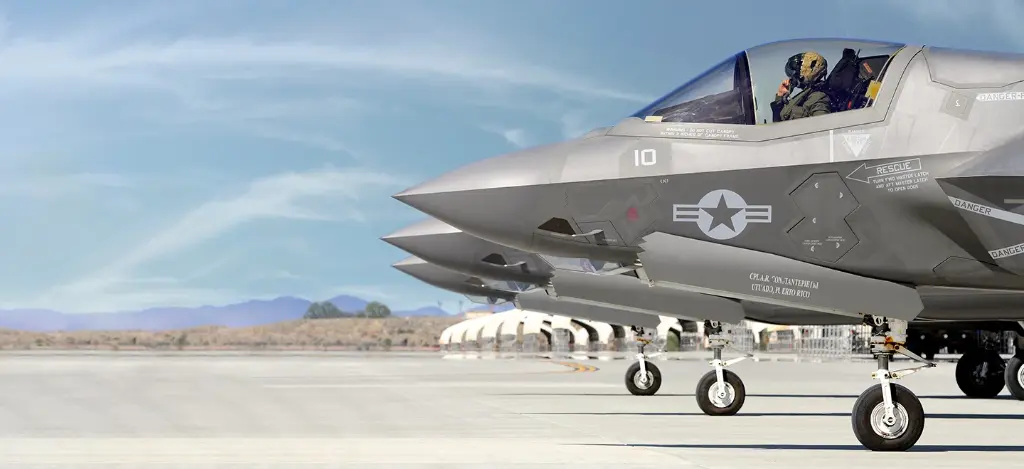
The F-35, for example, processes over 23 million lines of code—more than any other fighter in history.
This transformation means modern jets don’t just fly missions—they command them.
Stealth in Action: Surviving Dense Air Defenses
Stealth isn’t about being invisible—it’s about delaying detection long enough to strike and escape.
In high-threat zones like Syria or near Ukraine, S-300 and S-400 missile systems can track non-stealth aircraft from hundreds of kilometers away.
Stealth fighters counter this by:
- Using angular shapes and radar-absorbing materials
- Carrying weapons internally to reduce radar signature
- Flying low and using terrain masking
Israel’s F-35I “Adir” has conducted over 100 deep-strike missions into Iran-linked targets in Syria—returning safely thanks to stealth and electronic protection.
Even when detected, stealth jets often appear as small, ambiguous blips, making interception difficult.
Sensor Fusion: Seeing Everything at Once
One of the biggest tech leaps is sensor fusion—the ability to combine radar, infrared, electronic signals, and off-board data into a single, real-time display.
The F-35’s DAS (Distributed Aperture System) gives pilots:
- 360° infrared vision
- Missile launch detection
- Ground tracking
- “See-through” capability using helmet-mounted displays
A pilot can look down through the cockpit floor and see an incoming missile—then deploy countermeasures instantly.
This level of awareness turns the F-35 into a mini-AWACS, guiding other jets and drones without revealing its position.
Precision Weapons: One Jet, Multiple Targets
Modern fighters carry smart munitions that can hit multiple targets in a single mission.
Examples:
- JDAM (Joint Direct Attack Munition): GPS-guided bombs, accurate within 5 meters.
- SDB (Small Diameter Bomb): Weighs 110 kg but can hit 4+ targets per pass.
- Storm Shadow / SCALP EG: Long-range cruise missile (560 km), used by Ukraine to strike Russian airfields.
In 2023, a single RAF Typhoon launched four SDBs to destroy four separate targets—minimizing sorties and risk.
This precision reduces collateral damage and increases mission success—especially in urban combat.
Networked Warfare: Sharing the Battlefield Picture
Advanced fighters don’t fight alone. They are nodes in a combat cloud, sharing data with:
- AWACS and surveillance aircraft
- Drones and satellites
- Ground units and naval ships
Using MADL (Multifunction Advanced Data Link), F-35s can:
- Share radar tracks securely
- Redirect missiles mid-flight
- Warn allies of incoming threats
In a 2022 U.S. exercise, an F-35 detected a target and guided a Navy SM-6 missile from a distant ship—proving joint all-domain command and control (JADC2).
This network effect multiplies combat power far beyond individual jet performance.
Electronic Warfare: Fighting in the Invisible Spectrum
Modern air combat happens in the electromagnetic spectrum—where radar, GPS, and communications are weapons.
Fighters use electronic warfare (EW) to:
- Jam enemy radar (e.g., F-15EX with Eagle Passive/Active Warning System)
- Spoof missile guidance
- Detect and locate enemy emitters
In Ukraine, both sides use intense EW to disrupt drone signals and GPS-guided weapons—forcing reliance on older, manual targeting.
The F-35’s AN/ASQ-239 Barrister system provides real-time threat detection and automatic countermeasures, giving pilots a decisive edge.
Real-World Examples: Fighters in Combat
Israel’s F-35 Operations (2018–2024)
- Conducted first stealth jet combat missions in the Middle East.
- Struck Iranian weapons depots in Syria and Lebanon.
- Used sensor fusion to avoid air defenses and return undetected.
Ukraine’s Use of Western-Backed Fighters (2022–2024)
- MiG-29s and Su-27s use Storm Shadow missiles to hit Russian bases.
- Limited flights due to SAM threats, but critical for deterrence.
- Future F-16s will bring better avionics and precision.
Russian Su-35 in Syria and Ukraine
- Used for long-range patrols and missile launches.
- Lacks stealth but carries R-37M hypersonic-range missiles.
- Vulnerable to Western radar and missiles like the AIM-120D.
Technology gap is clear: Western jets detect first, strike first, and survive.
The Human Element: Pilots in the Digital Cockpit
Despite all the tech, the pilot remains essential.
Modern aviators are:
- Battle managers, not just flyers
- Decision-makers under extreme pressure
- Operators of AI and drone teams
Training now includes:
- Virtual reality simulators
- AI-assisted mission planning
- Cyber and electronic warfare drills
Future pilots may control three AI drones from the cockpit—acting as mission commanders.
Conclusion: Technology Wins the Sky
In today’s battlefield, raw speed and firepower are no longer enough. Victory goes to the side with the best sensors, stealth, data links, and smart weapons.
Advanced fighters like the F-35, Rafale, and F-15EX are not just flying weapons—they are command centers in the sky, shaping the outcome of modern wars.
As drones, AI, and hypersonic threats rise, the integration of technology will define air dominance—not just the jet itself.
Final insight: The most advanced fighter isn’t the one that flies the fastest—it’s the one that knows the most, acts the fastest, and stays alive.
FAQ
Q: Can older fighters like the F-16 still compete?
A: Yes—with upgrades. Modern F-16V models have AESA radar and smart weapons, making them effective in lower-threat environments.
Q: How do stealth jets refuel without being detected?
A: Using stealthy flight profiles and protected tanker routes, often at night or behind friendly lines.
Q: Do pilots trust AI systems?
A: Increasingly, yes—but human oversight remains critical for ethical and tactical decisions.
Q: What’s the biggest tech advantage of the F-35?
A: Sensor fusion and networking—it sees more, shares more, and acts faster than any other fighter.
Destacado: “In modern air combat, the first to see, decide, and act wins—before the enemy even knows the fight has begun.”