Explore the Cold War’s aerial arms race, where the USA and USSR developed supersonic fighters like the F-86 Sabre and MiG-15. Learn how this rivalry shaped modern aviation with advanced jets, missiles, and tactics.
The Cold War (1947-1991) was a defining period for military aviation, as the United States and Soviet Union engaged in an intense aerial arms race to achieve air superiority. This era saw the transition from propeller-driven fighters to supersonic jets, the introduction of guided missiles, and the development of advanced radar systems. This article examines the technological breakthroughs, key aircraft, and lasting impact of the Cold War on fighter aircraft development, appealing to aviation enthusiasts, historians, and military professionals.
Historical Context of the Aerial Arms Race
Following World War II, the ideological standoff between the USA and USSR fueled massive investments in military aviation. Both superpowers aimed to deter nuclear threats and dominate proxy wars, making air superiority a strategic priority. The development of jet propulsion and electronics transformed fighters into faster, more lethal platforms.
This period addresses search intent for queries like “Cold War fighter jet development” by combining historical context with technical advancements.
Key American Fighter Aircraft
The United States focused on versatile, technologically advanced fighters to counter Soviet threats.
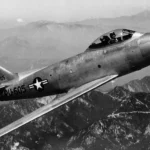
- F-86 Sabre: Introduced in 1949 by North American Aviation, the Sabre was a transonic jet with a top speed of 678 mph (1,091 km/h). It excelled in the Korean War, achieving a 10:1 kill ratio against MiG-15s in “MiG Alley.” Armed with six .50-caliber machine guns, it was a dogfighting icon.
- F-4 Phantom II: Operational by 1960, this McDonnell Douglas jet was a multi-role fighter capable of Mach 2.2 (1,472 mph or 2,368 km/h). Equipped with AIM-7 Sparrow missiles and advanced radar, it saw extensive use in Vietnam, performing air superiority and ground-attack roles.
- Other Notable Models: The F-100 Super Sabre, the first USAF jet to break Mach 1, and the F-104 Starfighter, known for its speed, expanded American air dominance.
Aviation enthusiasts searching for “F-86 Sabre Cold War role” will find detailed insights here.
Soviet Fighter Advancements
The Soviet Union prioritized mass production and agility, exporting fighters to allies worldwide.
- MiG-15: Designed by Mikoyan-Gurevich, this jet debuted in 1949 with a top speed of 668 mph (1,075 km/h). Powered by a reverse-engineered Rolls-Royce engine, it mounted 37mm cannons and performed well in Korea.
- MiG-21 Fishbed: Introduced in 1959, the MiG-21 was a lightweight, Mach 2 fighter exported to over 50 countries. With over 11,000 units built, it became one of the most prolific jets, known for its delta-wing design and agility in Vietnam.
- MiG-25 Foxbat: Operational in 1970, this interceptor reached Mach 3 (2,000 mph or 3,218 km/h) and was designed to counter high-altitude threats like the SR-71 Blackbird.
Queries like “MiG-21 Cold War impact” draw readers to this section for technical and historical depth.
Technological Breakthroughs
The Cold War introduced transformative technologies still relevant today:
- Jet Propulsion: Afterburners enabled supersonic speeds, with engines like the General Electric J79 powering the F-4.
- Guided Missiles: The AIM-9 Sidewinder (USA) and AA-2 Atoll (USSR) introduced beyond-visual-range (BVR) combat, reducing reliance on dogfights.
- Radar Systems: Phased-array radars improved target detection, as seen in the F-4’s AN/APQ-120.
- Reconnaissance Platforms: The SR-71 Blackbird, though not a fighter, showcased extreme speed (Mach 3.3) for intelligence gathering.
For professionals researching “Cold War aviation technology,” this section ties innovations to modern systems like radar and electronic warfare.
Proxy Wars and Tactical Evolution
Cold War fighters were tested in conflicts like the Korean War and Vietnam War, where tactics evolved from WWII dogfights to missile-based engagements.
- Korean War (1950-1953): The F-86 vs. MiG-15 battles in MiG Alley emphasized pilot training and radar use.
- Vietnam War (1955-1975): The F-4 Phantom faced MiG-17s and MiG-21s, revealing the need for better air combat maneuvering (ACM) training, leading to programs like Top Gun.
Over 5,000 jet fighters were deployed across these conflicts, with the USAF and Soviet Air Force refining tactics that inform modern air combat.
Explore more in our article on Korean War fighter aircraft or fighter pilot training.
Legacy in Modern Aviation
The Cold War arms race set the stage for modern fighter generations. Technologies like jet engines, radar, and missiles underpin today’s fifth-generation fighters, such as the F-22 Raptor. The emphasis on multi-role capabilities and electronic warfare continues to shape aircraft like the F-35.
Aviation hobbyists searching for “Cold War jet fighter legacy” will appreciate how this era bridged WWII piston aircraft to modern stealth jets.
In conclusion, the Cold War’s aerial arms race transformed fighter aircraft into high-tech weapons of speed and precision. The rivalry between the USA and USSR not only produced iconic jets but also established the technological and tactical foundations of contemporary military aviation.