Discover the F-14 Tomcat‘s role in achieving air superiority during the Cold War, from its advanced radar to long-range missiles. Learn how this iconic jet and Top Gun culture shaped military aviation.
The F-14 Tomcat, introduced in 1974, became a symbol of air superiority for the United States during the Cold War, embodying cutting-edge technology and naval power. Immortalized by the film Top Gun, this fighter jet redefined aerial combat with its variable-geometry wings and long-range missile systems. This article explores the F-14 Tomcat’s development, its role in Cold War conflicts, and its lasting influence on military aviation, crafted for aviation enthusiasts, historians, and military professionals.
Development of the F-14 Tomcat
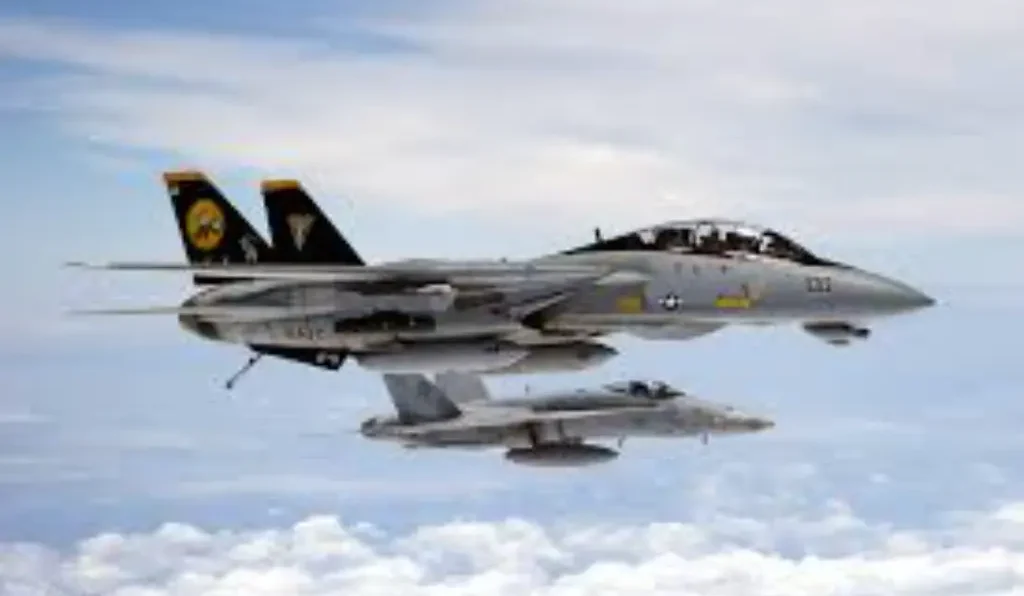
Designed by Grumman for the U.S. Navy, the F-14 Tomcat was developed to counter Soviet bombers and protect carrier battle groups. Entering service in 1974, it was the first fighter designed with lessons from Vietnam War dogfights, emphasizing versatility and advanced avionics.
- Specifications: Powered by twin Pratt & Whitney TF30 engines (later upgraded to GE F110), it reached Mach 2.34 (1,544 mph or 2,485 km/h) with a range of 1,840 miles (2,960 km). Its AN/AWG-9 radar could track 24 targets and engage six simultaneously, paired with AIM-54 Phoenix missiles (100-mile range).
- Variable Wings: The F-14’s swing-wing design optimized performance for both high-speed intercepts and low-speed dogfights.
- Crew: Operated by a pilot and radar intercept officer (RIO), enhancing combat coordination.
This section addresses queries like “F-14 Tomcat Cold War specs” with detailed technical insights.
Role in the Cold War
The F-14 Tomcat was a cornerstone of U.S. naval strategy, tasked with intercepting Soviet bombers like the Tu-95 Bear and protecting fleets from anti-ship missiles.
- Key Deployments: Stationed on carriers like the USS Enterprise, F-14s patrolled tense regions like the North Atlantic and Persian Gulf.
- Gulf of Sidra Incidents (1981, 1989): F-14s shot down Libyan MiG-23s and Su-22s, demonstrating superior radar and missile capabilities with no losses.
- Cold War Deterrence: The F-14’s ability to engage multiple targets at long range deterred Soviet air incursions, maintaining air superiority.
Statistics: Over 700 F-14s were built, with 80 sold to Iran pre-1979. The Tomcat flew thousands of sorties, primarily for reconnaissance and deterrence.
Aviation enthusiasts searching for “F-14 Tomcat Cold War role” will find this historical context engaging.
Combat in Regional Conflicts
The F-14 Tomcat saw limited but impactful combat, notably in the Iraq-Iran War and U.S. operations.
- Iran’s F-14s (1980-1988): Iran, the only foreign operator, used F-14s to down over 150 Iraqi aircraft, leveraging the AIM-54 Phoenix against MiG-23s and Mirage F1s. Despite sanctions, Iran maintained its fleet through cannibalization.
- U.S. Operations: F-14s supported strikes in Lebanon (1983) and flew combat air patrols in the Persian Gulf, protecting oil tankers during the Iran-Iraq War.
This section appeals to those researching “F-14 Tomcat combat history” by detailing its operational success.
Technological Innovations
The F-14 Tomcat introduced advancements that influenced modern fighter jets:
- Radar and Avionics: The AN/AWG-9 radar was a leap forward, enabling long-range engagements and multi-target tracking, a precursor to modern AESA radars.
- Missile Systems: The AIM-54 Phoenix, unique to the F-14, allowed engagements beyond 100 miles, shaping beyond-visual-range (BVR) combat.
- Variable Geometry: Swing wings optimized performance across speed ranges, influencing designs like the F-111 and Su-24.
For professionals exploring “Cold War aviation technology,” this ties the F-14’s innovations to modern systems like the F-35.
Cultural Impact: The Top Gun Phenomenon
The 1986 film Top Gun catapulted the F-14 Tomcat into global fame, showcasing its sleek design and high-speed dogfights. The movie boosted U.S. Navy recruitment by 500% and cemented the F-14 as a cultural icon. Its depiction of air combat maneuvering (ACM) highlighted the skill of naval aviators, resonating with audiences searching for “Top Gun F-14 history.”
Legacy in Modern Aviation
The F-14 Tomcat’s legacy endures despite its retirement in 2006:
- Successors: Replaced by the F/A-18 Hornet, the F-14’s radar and missile technologies influenced the F-22 Raptor and F-35 Lightning II.
- Tactical Influence: Its focus on long-range intercepts and multi-role capabilities shaped modern naval aviation.
- Global Reach: Iran still operates a limited number of F-14s, showcasing its enduring design.
Explore related topics like Gulf War fighter aircraft or stealth technology for deeper insights.
In conclusion, the F-14 Tomcat was a cornerstone of Cold War air superiority, blending advanced technology with iconic status. Its contributions to aerial combat and culture continue to captivate those searching for “F-14 Tomcat Cold War legacy.”