In modern warfare, military drones have become one of the US military’s most effective — and controversial — tools. From Ukraine’s front lines to the Middle East, unmanned aerial vehicles (UAVs) are conducting surveillance, delivering precision strikes, and even operating autonomously. For the Pentagon, drones represent both a force multiplier and a critical component of homeland security and allied defense.
Drones: The US and Allied Advantage in 21st-Century Combat
Military drones stand out for combining low cost with high impact. While a fighter jet can cost tens of millions, many combat drones are built for just a fraction of that. This affordability enables allies like Ukraine to deploy them in massive numbers — something that has proven decisive in ongoing conflicts.
In Ukraine, drones are reshaping the battlefield by giving forces an unblinking eye in the sky and the ability to strike targets quickly without risking pilots’ lives. This “drone revolution” is changing military planning from Washington to NATO command centers.
How Drones Are Used in Active War Zones
- Persistent Surveillance: UAVs equipped with high-resolution and thermal imaging cameras feed real-time intel to commanders, allowing rapid response to enemy movements.
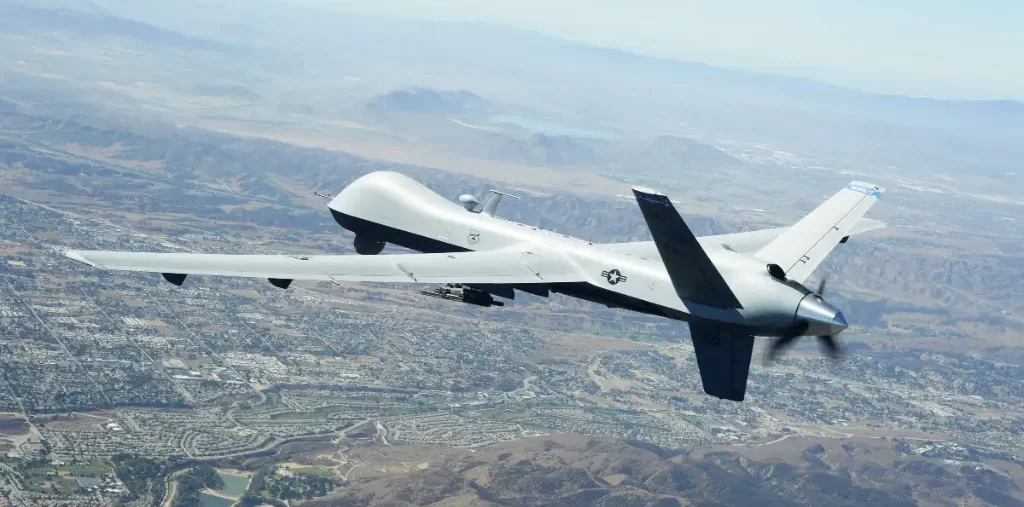
- Precision Strikes: Armed drones like the MQ-9 Reaper use Hellfire missiles and smart munitions to destroy high-value targets with minimal collateral damage.
- Kamikaze Missions: Low-cost FPV (First Person View) drones, often costing under $1,000, are flown directly into tanks, artillery, and radar sites — delivering devastating results at low expense.
- Counter-Drone Interception: Interceptor drones and EW (electronic warfare) systems are deployed to defend against enemy UAV swarms. Ukraine’s forces regularly shoot down Russian Shahed-136 drones targeting infrastructure.
- Swarm and Autonomous Operations: AI-powered drones are now capable of coordinated swarm attacks that can overwhelm defenses. The US Skyborg program is testing “loyal wingman” drones to fly alongside manned aircraft.
Case Study: Ukraine’s ‘Drone Wall’
In June 2025, Ukraine launched a coordinated strike with over 100 drones against multiple Russian airbases, damaging nearly 40 military aircraft. This operation demonstrated how massed, low-cost drones can achieve strategic results that once required larger, riskier manned missions.
Ukraine has since scaled up production — aiming for millions of drones annually — with US and NATO funding accelerating this expansion.
The US Role in Advancing Drone Warfare
The Pentagon and US defense contractors are investing heavily in:
- AI-driven autonomy for faster target recognition
- Quantum-secure communications to protect drone control links
- Hybrid drone warfare, integrating land, sea, and air unmanned platforms into joint operations
- Counter-drone technology including laser systems, microwave weapons, and advanced radar
These investments aim to prepare the US military for the next generation of drone threats — from enemy swarms to hypersonic UAVs.
Risks and Ethical Debates
Despite their precision, drones raise questions around civilian casualties, accountability, and the prospect of fully autonomous weapons making life-or-death decisions. The US Department of Defense maintains that a “human-in-the-loop” approach remains essential, but AI advancements are testing that commitment.
The Future Battlefield
By 2030, analysts expect drones to make up over 50% of aerial combat assets in some conflicts. Whether for homeland defense, long-range precision strikes, or electronic warfare, the US and its allies are positioning drones as the frontline of deterrence and offense.