🔥 Executive Summary
Russian drones have become a central element in Moscow’s military strategy in Ukraine, transforming the nature of modern warfare and creating unprecedented challenges for Ukrainian defenses. These unmanned systems have evolved from supplemental assets to primary weapons systems that enable Russia to conduct sustained attacks on Ukrainian infrastructure, military positions, and civilian targets with relative impunity and at minimal cost.
The proliferation and sophistication of Russian drone capabilities have not only shifted tactical realities on the battlefield but also raised serious concerns about regional security and NATO vulnerability, as demonstrated by recent incursions into Polish airspace .
🚁 Evolution and Types of Russian Drones
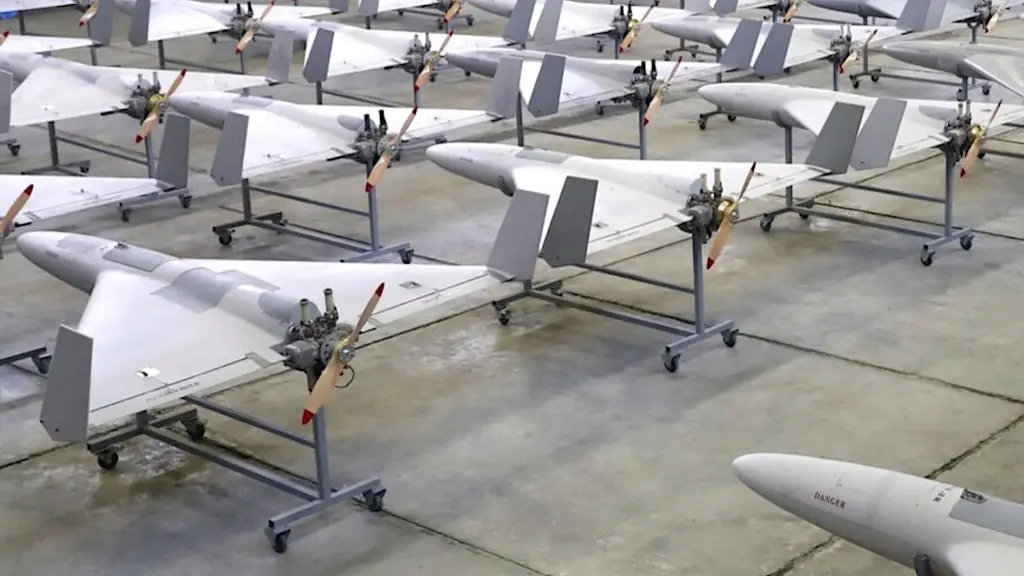
🔧 1.1. Iranian-Origin Systems (Shahed Series)
Russia initially relied on Iranian-designed Shahed drones (designated Geran-1 and Geran-2 in Russian service), which provided the foundation for its long-range drone capabilities. The Shahed-131 has a range of 700-900 km, while the larger Shahed-136 can reach at least 2,000 km, allowing strikes deep into Ukrainian territory. These systems cost approximately $20,000-$50,000 per unit when produced domestically, making them highly cost-effective weapons .
🎯 1.2. Domestic Russian Production and Development
Russia has dramatically scaled up domestic production of drones, particularly at the Alabuga facility in Tatarstan, where production reached approximately 5,100 Shahed-type drones monthly by mid-2025 (about 170 daily), with plans to increase to 190 drones daily by late 2025. This production surge has reduced costs from $200,000 per drone (when purchased from Iran) to approximately $70,000 for domestically produced versions .
Table: Russian Drone Types and Characteristics
| Drone Type | Origin | Range | Primary Function | Cost |
|---|---|---|---|---|
| Geran-1 (Shahed-131) | Iranian design/Russian production | 700-900 km | Attack | $20,000-50,000 |
| Geran-2 (Shahed-136) | Iranian design/Russian production | 2,000 km | Attack | $20,000-50,000 |
| Garpiya | Russian (Chinese components) | Unknown | Attack | Unknown |
| Gerbera | Russian | Unknown | Decoy | ~$10,000 |
| Lancet | Russian | Unknown | Kamikaze | Unknown |
| Orlan-10 | Russian | Unknown | Reconnaissance | Unknown |
📊 1.3. Specialized and Advanced Drones
Russia has developed specialized drones for various missions:
- Gerbera decoys: Made of polystyrene and costing approximately $10,000 each, these drones mimic Shaheds on radar to overwhelm Ukrainian air defenses .
- Fiber-optic drones: These systems use physical cables to avoid electronic jamming, making them particularly effective in frontline areas .
- AI-enhanced drones: Russia is developing artificial intelligence-powered drones capable of making autonomous battlefield decisions .
📈 Scale and Intensity of Drone Operations
💥 2.1. Unprecedented Attack Volumes
Russian drone attacks have reached historically high levels. On September 7, 2025, Russia launched 810 drones and decoys against Ukraine in a single night—the largest such attack since the war began. This represented a significant escalation from earlier in 2025, when Russia averaged 120 drone strikes daily between January-May, increasing to 185 per day from May-August .
🎯 2.2. Improved Effectiveness
The effectiveness of Russian drone attacks has substantially improved over time. Since April 2025, close to 20% of drones have hit their targets, compared to less than 10% in 2024. This improvement reflects evolving tactics and technical enhancements to overcome Ukrainian defenses .
💰 Strategic Advantages and Tactical Applications
⚖️ 3.1. Cost-Benefit Asymmetry
Russian drones create a significant economic advantage for Moscow. With drones costing as little as $10,000-$50,000 compared to Ukrainian interceptor missiles that can cost $3-4 million each, Russia can effectively exhaust Ukrainian air defense resources through sheer volume. This asymmetry forces Ukraine to make difficult choices about resource allocation .
🎯 3.2. Tactical Innovation
Russian forces have implemented innovative tactics to maximize drone effectiveness:
- Swarm attacks: Launching large numbers of drones simultaneously to overwhelm defenses
- Mixed salvos: Combining drones with cruise and ballistic missiles to complicate air defense responses
- Decoy operations: Using inexpensive Gerbera drones to trick Ukrainian forces into expending valuable interceptor missiles
- Electronic warfare resistance: Implementing fiber-optic guidance systems to counter Ukrainian jamming efforts
🌍 3.3. Psychological and Political Impact
The constant drone attacks have significant psychological effects on Ukrainian civilians, creating sustained fear and disrupting daily life. The targeting of government buildings in Kyiv—including the first damage to the Cabinet of Ministers building in September 2025—represents both a tactical and symbolic escalation .
🏭 Production and Industrial Base
🔧 4.1. Mass Production Capabilities
Russia has established formidable production capabilities for drones, primarily at the Alabuga facility in Tatarstan. This industrial expansion has involved:
- Recruitment of high school students and foreigners through work-study programs
- Establishment of new production lines at facilities like the Izhevsk Electromechanical Plant
- Development of a domestic supply chain that reduces reliance on foreign components
📊 4.2. Production Numbers and Goals
By June 2025, Russian production capacity reached approximately 5,100 Shahed-type drones monthly (170 daily), with plans to increase to 5,700 monthly (190 daily) by the end of 2025. This massive production scale enables sustained attacks despite significant losses .
🛡️ Impact on Ukrainian Defenses and NATO Response
⚔️ 5.1. Challenges for Ukrainian Air Defense
Ukrainian forces face enormous challenges in countering Russian drone warfare:
- Resource depletion: Expensive interceptor missiles are being exhausted against cheap drones
- Adaptation requirement: Constant innovation is needed to counter evolving Russian tactics
- Electronic warfare competition: Both sides are engaged in a continuous cycle of jamming and counter-jamming
🛡️ 5.2. Ukrainian Countermeasures
Ukraine has developed multiple response strategies:
- Interceptor drones: Developing cheaper drone-to-drone interception systems
- Electronic warfare: Jamming and disrupting drone guidance systems
- Mobile fire teams: Using MANPADS and machine guns against low-flying drones
- International support: Deploying Western systems like German Gepard anti-air guns and US Patriot missiles
🌍 5.3. NATO Airspace Violations and Regional Escalation
The drone campaign has spilled beyond Ukraine’s borders, with 19 Russian drones violating Polish airspace on September 9-10, 2025—marking the first direct engagement between NATO and Russian assets. This escalation forced the closure of Polish airspace and prompted NATO to invoke Article 4 consultations. The incident demonstrated Russia’s willingness to test Western defenses and created new security challenges for the alliance .
Table: NATO Response to Russian Drone Incursion (September 2025)
| Country | Military Assets Deployed | Role |
|---|---|---|
| Poland | F-16 fighter jets, Mi-24/Mi-17/S-70 helicopters | Interception and reconnaissance |
| Netherlands | F-35 fighter jets | Air superiority and interception |
| Italy | Gulfstream G-550 AWACS | Surveillance and air control |
| Germany | Patriot air defense systems | Anti-aircraft defense |
| NATO | A330 MRTT tanker | In-flight refueling |
🔮 Future Implications and Developments
🤖 6.1. Technological Evolution
The drone war continues to evolve rapidly with both sides developing:
- AI-powered drones: Capable of autonomous decision-making on the battlefield
- Interceptor drones: Designed as cost-effective countermeasures
- Enhanced electronic warfare: More sophisticated jamming and anti-jamming capabilities
🌍 6.2. Strategic Implications for Global Security
Russian drone warfare in Ukraine has broader implications for global security:
- NATO vulnerability: The alliance’s air defenses are not optimized for cheap drone swarms
- Non-state actor proliferation: The technology and tactics may be adopted by non-state groups worldwide
- Asian security concerns: Countries like Taiwan are already developing similar drone capabilities
💸 6.3. Economic and Industrial Considerations
The drone war highlights the growing importance of affordable mass-produced weapons systems that can challenge traditional military investments. Western nations must reconsider defense spending priorities to address the drone threat effectively .
💎 Conclusion: Transforming Modern Warfare
Russian drones have fundamentally transformed the nature of the conflict in Ukraine, providing Moscow with a sustainable, cost-effective means of applying continuous pressure on Ukrainian military and civilian infrastructure. The strategic importance of these systems extends beyond tactical battlefield effects to encompass psychological warfare, economic attrition, and testing of NATO resolve.
The rapid evolution of drone capabilities—from basic reconnaissance to sophisticated autonomous systems—demonstrates how asymmetric warfare technologies can challenge traditional military superiority. As both sides continue to innovate, the drone warfare cycle of measure-countermeasure accelerates, making this aspect of the conflict a critical determinant of its eventual outcome.
The recent incursions into NATO airspace further highlight the regional risks posed by Russian drone operations and the urgent need for the alliance to develop effective countermeasures against large-scale, low-cost drone threats. The lessons from Ukraine suggest that future conflicts will increasingly be shaped by drone capabilities, making this technology a decisive factor in 21st-century security calculations .
Note: This analysis is based on available information as of September 2025. The situation continues to evolve rapidly as both sides adapt their tactics and technologies in response to battlefield developments.