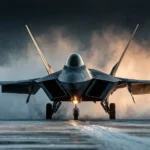
When Russia launched its full-scale invasion of Ukraine in February 2022, many military analysts predicted that Russia’s formidable air force would quickly establish air superiority. The Russian Aerospace Forces (VKS) were assumed to be far larger, more modern, and more capable than Ukraine’s air force, which was largely composed of aging Soviet-era aircraft. The expectation was that Russian jets would dominate the skies, paving the way for a swift ground advance.
However, reality proved to be a stark contrast to those predictions. Over two years into the conflict, Russia has failed to achieve air superiority, a failure that has had profound consequences for the war on the ground. The conflict has become a showcase for a new kind of air warfare, one where technology—both cutting-edge and repurposed—has played a decisive and often unexpected role. This article will analyze the air clashes and the technological innovations that have defined the conflict, from high-tech air defense systems to low-cost drones, and how they’ve redefined what’s possible in modern combat.
The Unexpected Air War: How Ukraine Defied Expectations
In the initial days of the invasion, Russia attempted to neutralize Ukraine’s air defenses with a large-scale missile and air attack. But Ukraine’s air force and, more importantly, its integrated air defense system, proved to be far more resilient than anticipated. Ukraine’s air defense network, a layered system of surface-to-air missile (SAM) batteries, proved incredibly effective at intercepting Russian aircraft and cruise missiles.
This success was not just a matter of luck. Ukraine’s air force and its allies had spent years preparing for this scenario. With intelligence support from Western nations, Ukraine was able to move its mobile air defense systems, such as the Soviet-era S-300, to evade Russian strikes. This resilience meant that Russian aircraft could not operate freely over Ukrainian territory, forcing them to fly at low altitudes where they were vulnerable to shoulder-fired missiles and other short-range air defenses. The result was a grinding, bloody air campaign that has seen both sides sustain significant losses, but has denied Russia the decisive control of the skies it needed.
Modern Technology on Display: A Clash of Systems
The air war in Ukraine is not just about planes; it’s a battle of systems. Both sides have leveraged modern technology in unique and often unexpected ways.
- Air Defense Systems: This has been the most critical element of the air war. Ukraine’s ability to hold its ground is a testament to its layered air defense network. While the Soviet-era S-300s were initially the backbone of this defense, Western-supplied systems have been a game-changer. The Patriot missile defense system, for example, has proven highly effective at intercepting Russia’s most advanced missiles and hypersonic weapons, providing a crucial shield for major cities. Systems like NASAMS (Norwegian Advanced Surface-to-Air Missile System) and the German IRIS-T have also been vital in shooting down cruise missiles and drones, creating a dense and difficult-to-penetrate air defense network.
- Electronic Warfare (EW): The conflict has been a showcase for electronic warfare, a battle fought over the electromagnetic spectrum. Both sides have used EW to jam enemy communications, radar, and GPS signals. For example, Russian EW systems have been used to disrupt Ukrainian drone signals and communications, while Ukraine has successfully used its own systems to counter Russian drones and to provide its forces with a degree of electronic protection. The ability to control this invisible battlefield has been a crucial advantage, as it impacts everything from target acquisition to troop coordination.
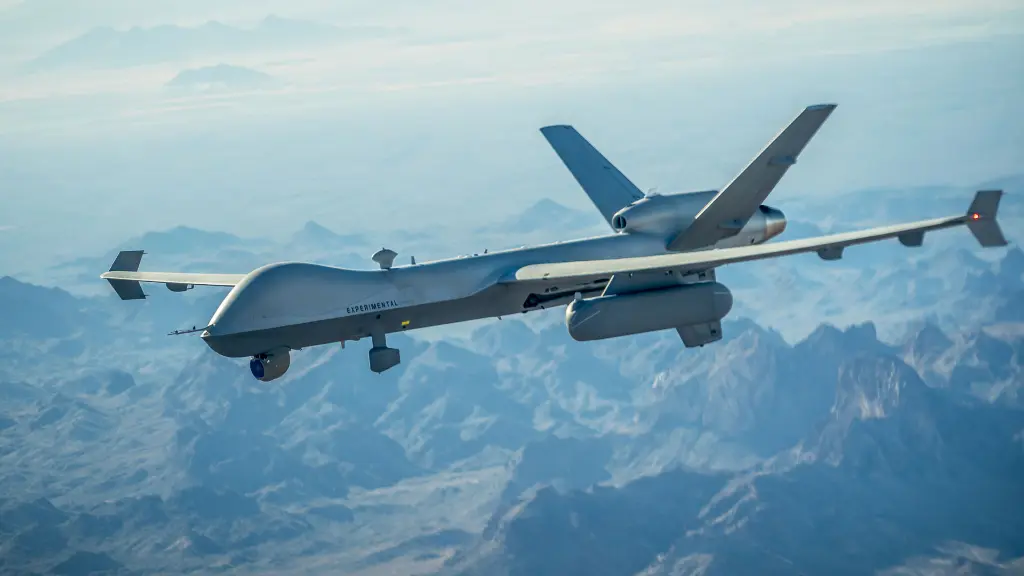
- Unmanned Aerial Vehicles (UAVs): The Ukraine conflict is arguably the first major war to be defined by the widespread use of drones. Both sides have used a mix of high-end military drones and repurposed commercial drones. The Turkish-made Bayraktar TB2 was an early hero of the war, used by Ukraine to strike Russian armor and command posts with precision-guided munitions. But perhaps more impactful has been the use of cheap, commercial-grade drones. These low-cost drones, often bought off the shelf, are used for reconnaissance, adjusting artillery fire, and even as a delivery system for improvised explosives. This proliferation of cheap drones has made the battlefield more transparent and has forced both sides to adapt their tactics to a new kind of aerial threat.
- Beyond the Aircraft: The technological advantage is not limited to what’s in the sky. Ukraine has leveraged global satellite intelligence from its Western allies to track Russian troop movements and plan its defense. In addition, the use of secure communication systems, like Starlink, has given Ukrainian forces a resilient and reliable way to communicate, even when traditional cellular and radio networks have been destroyed. This flow of information has allowed Ukraine to make faster, more informed decisions, giving them a crucial edge in a conflict against a larger adversary.
A New Paradigm of Warfare
The war in Ukraine has changed military doctrine forever. It has demonstrated that traditional metrics of air power, such as the number of aircraft, are no longer the sole determinant of success. Instead, the conflict has highlighted the importance of:
- Integrated, Layered Air Defense: A strong, multi-tiered air defense system, combining both old and new technology, is essential to denying an enemy air superiority.
- The Power of Drones: Drones, both military and commercial, are no longer a niche tool; they are a fundamental part of modern warfare. Their use for reconnaissance, targeting, and attack has made the battlefield more transparent and has democratized air power.
- Asymmetric Technology: The conflict has shown that a technologically outmatched force can leverage ingenuity and asymmetric technology, such as repurposed commercial drones and effective EW, to counter a larger and seemingly more advanced enemy.
In conclusion, the air war in Ukraine has been a masterclass in modern, asymmetric combat. It has shown the world that a determined defender, armed with a mix of resilient legacy systems, cutting-edge Western technology, and a wealth of ingenuity, can stand up to a larger and seemingly more powerful foe. The conflict has proven that air superiority is not an automatic outcome of a bigger air force; it is a hard-fought battle won by those who can best leverage technology in a war that is fought not just with planes, but also with pixels and signals.