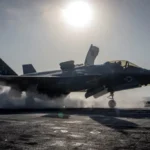
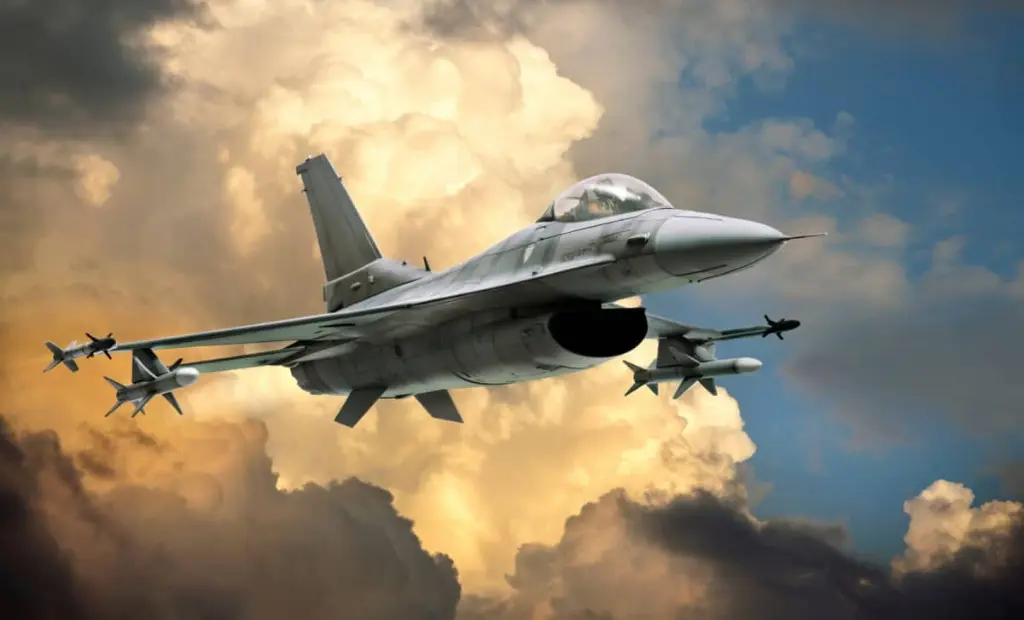
The global landscape of military aviation in 2025 is dominated by cutting-edge technology, stealth capabilities, and multirole versatility. This year’s ranking of the world’s premier fighter aircraft includes legendary platforms like the F-22 Raptor, revolutionary newcomers like the Chengdu J-20, and enduring workhorses like the F-16 Fighting Falcon.
These aircraft represent the pinnacle of aerospace engineering, combining stealth technology, advanced avionics, and superior weaponry to maintain air superiority in an increasingly complex geopolitical environment. This comprehensive analysis examines the top fighter jets operational in 2025, evaluating their capabilities, operational history, and strategic significance to air forces worldwide.
1. Lockheed Martin F-35 Lightning II (United States)
The F-35 Lightning II stands as the most advanced and widely deployed fifth-generation fighter in 2025, with over 1,000 units operational across 19 nations . This stealth multirole fighter represents the culmination of decades of research in low-observable technology and sensor fusion.
Key Features:
- Stealth Capabilities: With a radar cross-section equivalent to a golf ball (0.0015 m²), the F-35 can penetrate heavily defended airspace with minimal detection risk .
- Sensor Fusion: The AN/APG-81 AESA radar combines data from multiple sensors to provide pilots with unprecedented situational awareness .
- Versatility: Three variants (F-35A conventional, F-35B STOVL, and F-35C carrier-based) accommodate different operational requirements .
- Operational Range: Approximately 1,350 miles with internal fuel, extendable with aerial refueling .
Operational Status:
The F-35 forms the backbone of the U.S. Air Force and numerous allied nations’ air capabilities. Despite its high unit cost of approximately $85 million, its unmatched sensor fusion and stealth characteristics make it the premier multirole fighter available today .
2. Lockheed Martin F-22 Raptor (United States)
The F-22 Raptor remains the world’s undisputed air superiority fighter, maintaining its position as the most stealthy and agile combat aircraft despite being in service for over two decades .
Key Features:
- Unmatched Stealth: With a radar cross-section of just 0.0001 m² (comparable to a marble), the F-22 is virtually invisible to enemy radar .
- Supercruise Capability: Can sustain speeds of Mach 1.8 without afterburners, providing strategic advantage in interception missions .
- Thrust Vectoring: Two-dimensional thrust vectoring nozzles enable extraordinary dogfighting agility, with a thrust-to-weight ratio of 1.26 .
- Avionics Suite: Advanced sensor fusion provides 360-degree situational awareness .
Limitations:
With only 195 units produced and operational exclusively with the U.S. Air Force, the F-22’s main limitations are its limited numbers and high maintenance requirements. Its unit cost of approximately $150 million makes it the most expensive fighter jet ever built .
3. Chengdu J-20 Mighty Dragon (China)
China’s J-20 Mighty Dragon represents Beijing’s growing aerospace capabilities and serves as the country’s premier stealth air superiority platform .
Key Features:
- Impressive Payload: Can carry up to 24,000 lbs of weapons, including the long-range PL-15 missile .
- Stealth Design: While less refined than American counterparts (RCS of 0.05 m²), its frontal aspect stealth is optimized for penetrating enemy air defenses .
- Supercruise Capability: Can maintain supersonic speeds without afterburners .
- Domestic Production: Newer variants feature indigenous WS-10C engines, reducing reliance on Russian powerplants .
Operational Status:
With approximately 200 units in service and production continuing at a rapid pace, the J-20 represents a significant challenge to Western air superiority in the Pacific region .
4. Sukhoi Su-57 Felon (Russia)
Russia’s answer to fifth-generation requirements, the Su-57 Felon emphasizes “functional stealth”—balancing low observability with aerodynamic performance .
Key Features:
- Supermaneuverability: Three-dimensional thrust vectoring nozzles and a thrust-to-weight ratio of 1.20 enable exceptional agility .
- Cost-Effectiveness: At $40-50 million per unit, it offers advanced capabilities at approximately one-third the cost of an F-35 .
- Advanced Sensors: The N036 Belka radar system provides comprehensive situational awareness .
- Weapons Capacity: Can carry up to 22,000 lbs of payload across internal and external stations .
Operational Status:
After years of development challenges, Russia has delivered at least 10 units with over 70 planned, though the program has faced delays and production limitations .
5. Boeing F-15EX Eagle II (United States)
The F-15EX Eagle II represents the ultimate evolution of the venerable F-15 platform, combining legacy airframe strengths with cutting-edge technology .
Key Features:
- Unmatched Payload: Can carry up to 29,500 lbs of weapons—more than any other fighter—including 22 air-to-air missiles .
- Speed: With a top speed of Mach 2.5, it’s the fastest operational fighter in the U.S. inventory .
- Modern Avionics: Features the APG-82 AESA radar and Eagle Passive Active Warning Survivability System (EPAWSS) .
- Cost: At approximately $87 million per unit, it offers significant capability for its price point .
Operational Role:
Designed to complement rather than replace stealth aircraft, the F-15EX serves as a “weapons truck” that can operate in contested environments alongside F-22s and F-35s .
6. Dassault Rafale (France)
The French Rafale (“gust of wind”) represents Europe’s most capable indigenous multirole fighter, combining exceptional versatility with advanced technology .
Key Features:
- Omnirole Capability: Can perform air superiority, ground attack, reconnaissance, and nuclear deterrence missions simultaneously .
- Advanced EW Suite: The SPECTRA electronic warfare system provides exceptional defensive capabilities .
- Weaponry: Can carry a wide array of advanced munitions, including Meteor beyond-visual-range missiles and SCALP-EG cruise missiles .
- Carrier Operations: Maritime variant can operate from aircraft carriers .
Operational Status:
With over 500 units ordered globally and combat proven in multiple conflicts, the Rafale continues to be a successful export product for France’s defense industry .
7. Eurofighter Typhoon (Europe)
The Eurofighter Typhoon represents a collaborative effort between the UK, Germany, Italy, and Spain, offering exceptional air superiority capabilities .
Key Features:
- Agility: Delta wing and canard configuration combined with Eurojet EJ200 engines provide exceptional maneuverability and supercruise capability .
- Advanced Radar: The Captor-E AESA radar offers a 50% wider field of regard than traditional fixed plate systems .
- Weapon Systems: Compatible with Meteor beyond-visual-range air-to-air missiles .
- Continuous Upgrades: Modular design allows for ongoing hardware and software improvements .
Operational History:
The Typhoon has proven its capabilities in numerous conflicts, including operations over Syria and Libya, and has been exported to multiple nations including Saudi Arabia and Kuwait .
8. Saab JAS 39 Gripen (Sweden)
Sweden’s Gripen stands out for its cost-effectiveness, maintainability, and innovative design philosophy .
Key Features:
- Cost-Effective: At approximately $70-85 million per unit, it offers advanced capabilities at a fraction of the cost of competitors .
- Maintenance: Designed for minimal maintenance requirements and rapid turnaround times .
- Short Takeoff: Can operate from short and rough runways, ideal for dispersed basing operations .
- Network Capabilities: Advanced data-sharing capabilities enable effective network-centric warfare .
Operational Concept:
The Gripen was designed according to Sweden’s specific defense needs, emphasizing the ability to operate from dispersed locations with minimal support infrastructure .
9. General Dynamics F-16 Fighting Falcon (United States)
Despite being one of the oldest designs in this ranking, the F-16 Fighting Falcon remains one of the most numerous and versatile fighters in service .
Key Features:
- Widespread Use: With 2,084 units in active service, it’s the most widely used fighter jet globally .
- Cost-Effective: At approximately $80 million for modern variants, it offers exceptional value .
- Versatility: Proven multirole capability across air superiority, ground attack, and reconnaissance missions .
- Continuous Upgrades: Modern avionics and weapon systems keep it relevant despite its age .
Operational Status:
The F-16 continues to serve as the backbone of numerous air forces worldwide, with continued upgrades ensuring its relevance into the 2040s .
10. Sukhoi Su-35S (Russia)
The Su-35S “Super Flanker” represents the pinnacle of Russian fourth-generation-plus fighter technology, emphasizing raw performance over stealth .
Key Features:
- Supermaneuverability: AL-41F1S engines with 3D thrust vectoring enable extraordinary aerial agility .
- Powerful Radar: The Irbis-E passive electronically scanned array radar can detect fighter-sized targets at distances up to 400 km .
- Weapon Capacity: 12 hardpoints can accommodate 8,000 kg of weaponry .
- Cost: At approximately $85 million, it offers significant capability for its price .
Operational Role:
The Su-35S serves as Russia’s primary non-stealth air superiority fighter, complementing the smaller fleet of Su-57s .
Table: Comparative Overview of 2025’s Top Fighter Jets
| Aircraft | Max Speed (Mach) | Unit Cost ($) | Stealth (RCS m²) | Weapon Payload (lbs) |
|---|---|---|---|---|
| F-35 Lightning II | 1.6 | 85M | 0.0015 | 18,000 |
| F-22 Raptor | 2.25 | 150M | 0.0001 | 12,000 |
| Chengdu J-20 | 2.0 | 110M | 0.05 | 24,000 |
| Sukhoi Su-57 | 2.0 | 40-50M | 0.1 | 22,000 |
| F-15EX Eagle II | 2.5 | 87M | N/A | 29,500 |
| Dassault Rafale | 1.8 | 100M | N/A | 20,000+ |
| Eurofighter Typhoon | 2.0 | 90M | N/A | 16,535 |
| Saab Gripen | 2.0 | 70-85M | N/A | 15,000 |
| F-16 Fighting Falcon | 2.0 | 80M | N/A | 15,000 |
| Sukhoi Su-35S | 2.25 | 85M | N/A | 17,600 |
Technological Trends in 2025 Fighter Aircraft
Sensor Fusion and Networking
Modern fighter aircraft increasingly function as network nodes rather than standalone platforms. The F-35’s sensor fusion capabilities represent the current gold standard, integrating data from multiple sensors to provide pilots with a comprehensive battlefield picture .
Stealth Technology
Low observability remains a defining characteristic of fifth-generation fighters, though approaches vary between designs. While the F-22 and F-35 prioritize all-aspect stealth, the J-20 emphasizes frontal aspect stealth optimized for its intended interception role .
Unmanned Teamining
Several next-generation programs, including developments related to the J-20 and F-35, are exploring “loyal wingman” concepts where manned aircraft command drones that extend sensor reach and weapons capacity .
Electronic Warfare
Advanced electronic warfare systems like the Rafale’s SPECTRA suite are becoming standard on modern fighters, providing enhanced survivability in contested electromagnetic environments .
Global Distribution of Fighter Capabilities
The United States maintains quantitative and qualitative superiority in fighter aircraft, with approximately 5,500 military aircraft including advanced platforms like the F-22 and F-35 . China follows with around 3,309 aircraft, featuring an increasingly modern fleet centered on the J-20 . Russia maintains approximately 4,292 aircraft, though many are older Soviet-era designs .
Other significant air powers include:
- India: 2,296 aircraft featuring a mix of Russian, French, and indigenous designs
- Japan: 1,459 aircraft including advanced F-35s and upgraded F-15Js
- Pakistan: 1,434 aircraft including Chinese JF-17s and American F-16s
The ranking of fighter aircraft in 2025 reflects both technological achievement and strategic priorities. American designs continue to lead in stealth and sensor technology, with the F-35 and F-22 setting the standard for fifth-generation capabilities. China’s J-20 represents Beijing’s growing aerospace ambition, while Russia’s Su-57 offers a different approach to fifth-generation design emphasizing cost-effectiveness and maneuverability.
Fourth-generation platforms like the Rafale, Eurofighter, and F-15EX demonstrate that advanced avionics and weapons can keep older designs relevant against newer threats. Meanwhile, the enduring presence of the F-16 highlights the importance of numbers, maintainability, and continuous upgrades in military aviation.
As we look toward the future, sixth-generation programs like the American NGAD, European FCAS, and British-Japanese-Italian GCAP (Tempest) promise to further revolutionize aerial warfare. However, the aircraft described here will likely form the backbone of global air power through the 2030s and beyond, continually upgraded to meet evolving threats in an increasingly complex security environment.