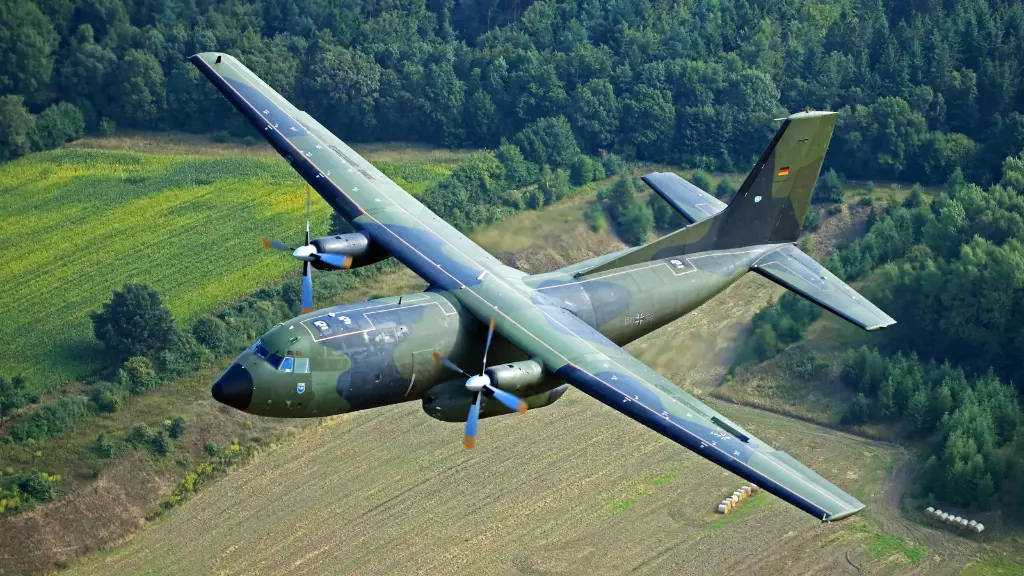
The Transall C-160 is a twin-engine turboprop military transport aircraft developed jointly by France and Germany. First flown in 1965, the C-160 served as a tactical airlifter for several European air forces, known for its reliability, short takeoff and landing capability, and ability to operate from unprepared runways.
Fact Sheet
| Role | Military Transport |
|---|---|
| Manufacturer | Transporter Allianz (Transall): Nord Aviation, VFW, HFB |
| First Flight | February 25, 1965 |
| Service Entry | 1967 |
| Crew | 3–5 |
| Capacity | Up to 93 troops or 16 tons of cargo |
Specifications
| Length | 32.4 m (106 ft 4 in) |
|---|---|
| Wingspan | 40.0 m (131 ft 3 in) |
| Height | 11.65 m (38 ft 3 in) |
| Max Takeoff Weight | 51,000 kg (112,436 lb) |
| Engines | 2 × Rolls-Royce Tyne Mk 22 turboprops (6,100 shp each) |
| Max Speed | 513 km/h (319 mph) |
| Range | 1,850 km (1,150 mi) with max payload |
| Service Ceiling | 8,500 m (27,900 ft) |
Notable Features
- Short takeoff and landing capability
- Rear cargo ramp for vehicles and heavy equipment
- Operated by France, Germany, Turkey, and South Africa
- Reliable and robust for tactical missions
- Retired from most air forces by the early 2020s
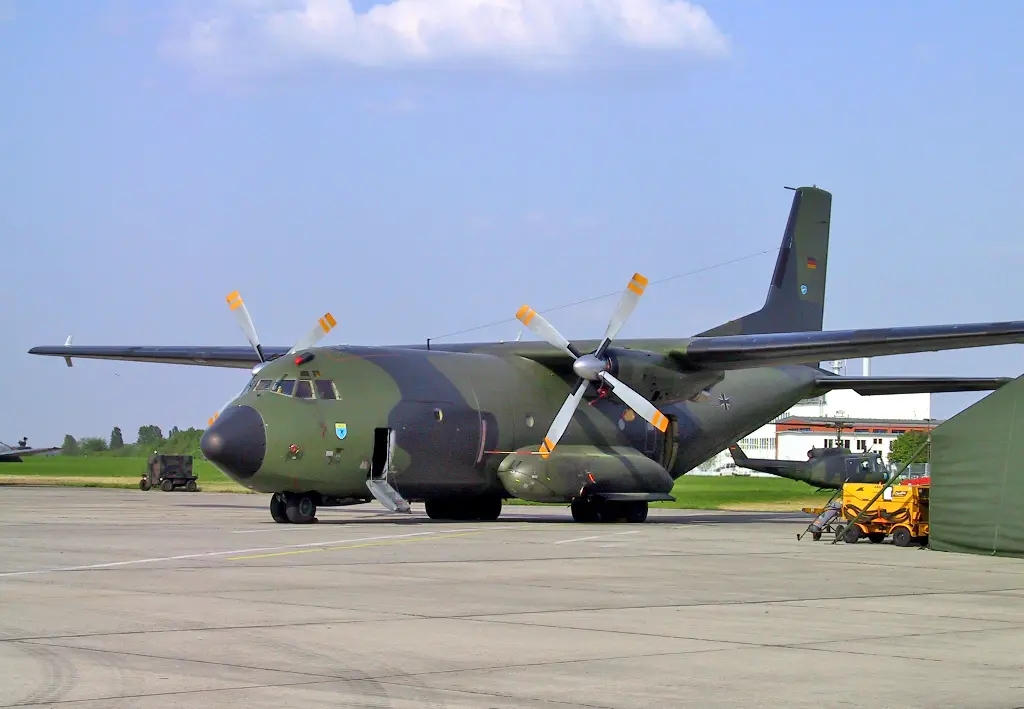
Transall C-160
The Transall C-160 was a tactical military transport aircraft, developed and produced through a unique Franco-German consortium. A joint venture between France’s Aérospatiale and Germany’s Messerschmitt-Bölkow-Blohm (MBB) and VFW-Fokker, the “Transall” name is a portmanteau of “Transporter Allianz.” It was designed to replace aging transports and served as a workhorse for decades, known for its versatility and ruggedness.
Design and Capabilities
The C-160 is powered by two Rolls-Royce Tyne turboprop engines, giving it a cruise speed of around 300 mph (480 km/h). Its high-wing design, with the engines mounted underneath, provided clearance for propeller wash over the fuselage, which allowed for better short-field performance.
Key features of the C-160 included:
- Tactical Airlift: It could carry a payload of up to 16 tons, including vehicles, palletized cargo, or up to 93 troops. Its rear loading ramp made it easy to load and unload cargo.
- Austere Operations: Like the C-130 Hercules, the C-160 was built to operate from unprepared or semi-prepared runways, making it highly effective for missions in remote areas.
- Specialized Roles: Beyond its primary transport role, the C-160 was adapted for a variety of missions, including aerial refueling, electronic intelligence (ELINT) gathering, and even as a communications relay platform for French nuclear submarines.
Operational History and Retirement
The C-160 entered service in the late 1960s with the French and German air forces, with exports to countries like South Africa and Turkey. Throughout its long career, it supported numerous overseas operations, including humanitarian missions and military deployments in Africa and the Middle East.
However, as the C-160 fleet aged, maintenance costs and technical obsolescence became significant issues. Both France and Germany decided to replace their fleets with the more modern and larger Airbus A400M Atlas. The final French Air Force C-160 was officially retired in April 2022, and the German Luftwaffe retired its last C-160s in late 2021. A small number of C-160s remain in service with the Turkish Air Force and a few civilian operators.
Previous Article
Boeing C-17 Globemaster IIINext Article
Lockheed C-130J Hercules