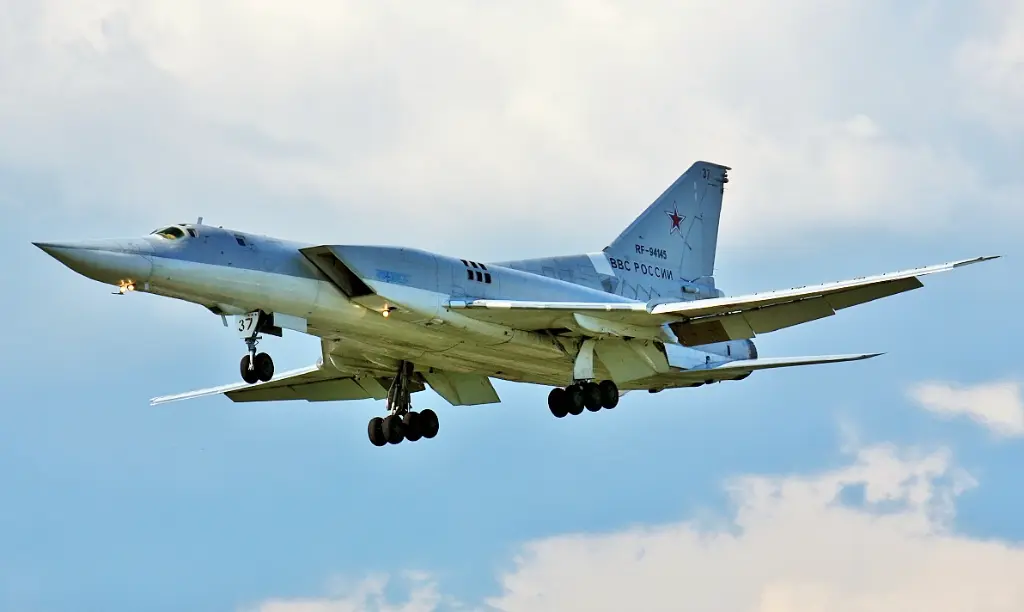
The Tupolev Tu-22M “Backfire” is a supersonic, variable-sweep wing, long-range strategic and maritime strike bomber developed by the Soviet Union. Entering service in the 1970s, the Tu-22M has been a key component of Russian long-range aviation, capable of carrying nuclear and conventional weapons, and is still in service today.
Fact Sheet
| Role | Supersonic Strategic Bomber / Maritime Strike |
|---|---|
| Manufacturer | Tupolev Design Bureau |
| First Flight | August 30, 1969 |
| Service Entry | 1972 |
| Crew | 4 |
| Number Built | ~497 |
Specifications (Tu-22M3 Model)
| Length | 42.46 m (139 ft 4 in) |
|---|---|
| Wingspan | 34.28 m (112 ft 6 in) spread, 23.30 m (76 ft 5 in) swept |
| Height | 11.05 m (36 ft 3 in) |
| Wing Area | 183 m² (1,970 sq ft) |
| Empty Weight | 53,500 kg (117,947 lb) |
| Max Takeoff Weight | 126,400 kg (278,800 lb) |
| Powerplant | 2 × Kuznetsov NK-25 turbofans (55,115 lbf each) |
| Max Speed | 2,000 km/h (1,243 mph, Mach 1.88) |
| Range | 6,800 km (4,225 mi) |
| Service Ceiling | 13,300 m (43,600 ft) |
Armament & Defensive Equipment
| Guns | 1 × 23 mm GSh-23 cannon in tail turret |
|---|---|
| Bomb Load | Up to 24,000 kg (52,910 lb) of bombs, mines, or missiles |
| Missiles | Kh-22, Kh-15, Kh-32, and other cruise missiles |
| Aiming Equipment | Radar, optical bombsight, electronic warfare systems |
Notable Features
- Variable-sweep wings for high-speed and long-range performance
- Capable of carrying nuclear and conventional weapons
- Used for strategic bombing and maritime strike roles
- Still in service with the Russian Aerospace Forces
- Modernized variants (Tu-22M3M) with advanced avionics and weapons
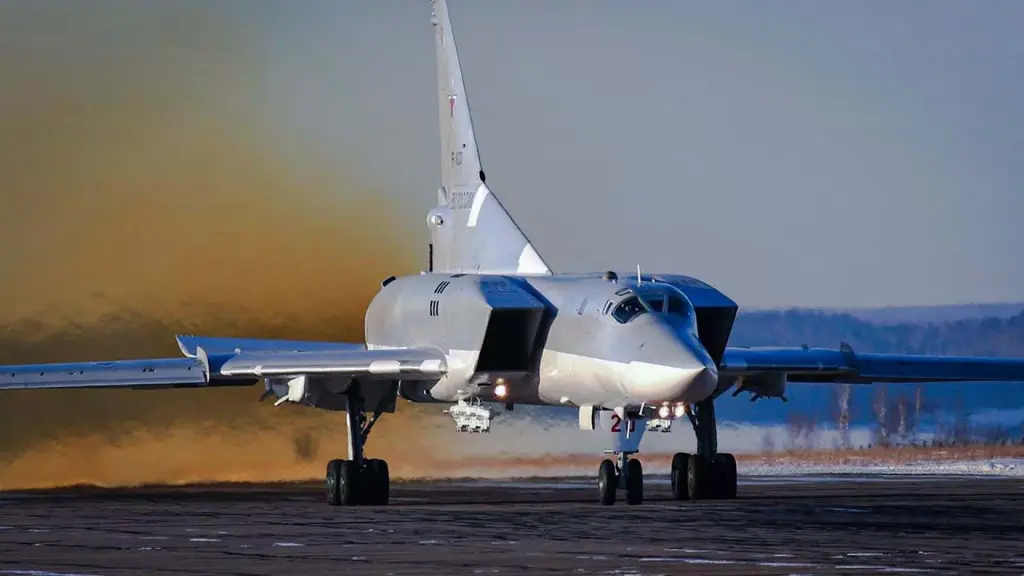
The Tupolev Tu-22M (NATO reporting name: “Backfire”) is a long-range, supersonic strategic and maritime strike bomber developed in the Soviet Union. It has been a key component of Russia’s long-range aviation since the 1970s and remains a formidable platform, even as it undergoes a major modernization. The “Backfire” has been a controversial aircraft since its inception, particularly due to its role in Cold War arms control negotiations.
Design and Development
The Tu-22M was not a direct evolution of the supersonic Tu-22 “Blinder”, but rather a new design that incorporated a variable-sweep wing, a feature common in 1960s combat aircraft. The “swing-wing” design allows the Tu-22M to fly at high subsonic speeds for long-range cruising with its wings extended and then sweep them back for a supersonic “dash” to its target. This gives it a unique combination of speed and range.
Key design features of the “Backfire” include:
- Variable-Sweep Wings: The aircraft’s wings can be swept from 20 degrees for takeoff and landing to 65 degrees for supersonic flight.
- Massive Power: It is powered by two highly powerful Kuznetsov NK-25 afterburning turbofan engines, which give it a top speed of over Mach 1.88.
- Internal Bomb Bay: The bomber can carry a large variety of conventional and nuclear gravity bombs in its internal bomb bay.
- Missile Carriage: The Tu-22M’s primary strike capability comes from its ability to carry long-range air-to-surface missiles. The most common variant is the Kh-22 (AS-4 “Kitchen”) anti-ship missile, which is mounted semi-recessed in the fuselage. A single Tu-22M can carry a single Kh-22, while some variants can carry up to three.
Cold War Arms Control Controversy
The Tu-22M played a central role in the Strategic Arms Limitation Talks (SALT) between the U.S. and the Soviet Union. The U.S. insisted that the “Backfire” was a true intercontinental strategic bomber capable of striking the continental U.S., a claim the Soviet Union denied, stating it was only a medium-range theater bomber. The disagreement over its range and capabilities became a major sticking point in arms negotiations. Ultimately, the Soviet Union agreed to limit its production and not provide the aircraft to other countries in order to secure the SALT II treaty.
Combat History and Modern Role
The Tu-22M has seen combat in a number of conflicts, a testament to its longevity.
- Soviet-Afghan War: It was used in a limited capacity to conduct strategic bombing missions against Mujahideen targets.
- First Chechen War: The Tu-22M was used to strike Chechen targets, often with unguided bombs.
- Russo-Georgian War (2008): A Tu-22M was famously shot down by Georgian air defenses while on a reconnaissance mission, marking the first time a “Backfire” was lost in combat.
- Syrian Civil War: The Russian Air Force has used the Tu-22M to strike Syrian opposition and ISIS targets, often flying long-range missions from bases in Russia and Iran.
- 2022 Russian Invasion of Ukraine: The “Backfire” has been used extensively since the start of the full-scale invasion. Tu-22M3s have launched thousands of Kh-22 missiles against Ukrainian cities and military targets. Ukraine has claimed to have successfully shot down some of the bombers, which, if confirmed, would be the first time since the Georgian conflict.
The Modernized Tu-22M3M
To extend its service life, the Russian Air Force is modernizing its Tu-22M fleet to the Tu-22M3M standard. This comprehensive upgrade includes:
- New Avionics and Digital Cockpit: Replacing analog systems with modern digital displays, improving navigation and targeting.
- Upgraded Engines: A new version of the Kuznetsov NK-32 engine, which also powers the Tu-160 “Blackjack” bomber, is being installed to improve fuel efficiency and performance.
- Hypersonic Missile Capability: Most critically, the Tu-22M3M will be capable of carrying the new Kh-47M2 Kinzhal hypersonic missile, a highly touted weapon that significantly increases its lethality and standoff range. This gives the Tu-22M a completely new role in modern warfare.
As of 2024, Russia maintains a fleet of approximately 60 Tu-22M3s, with a portion of these slated for upgrade to the M3M standard. Despite its Cold War origins, the “Backfire” remains a relevant and highly effective combat platform for Russia.
Previous Article
Tupolev Tu-16 “Badger”Next Article
Tupolev Tu-22 “Blinder”