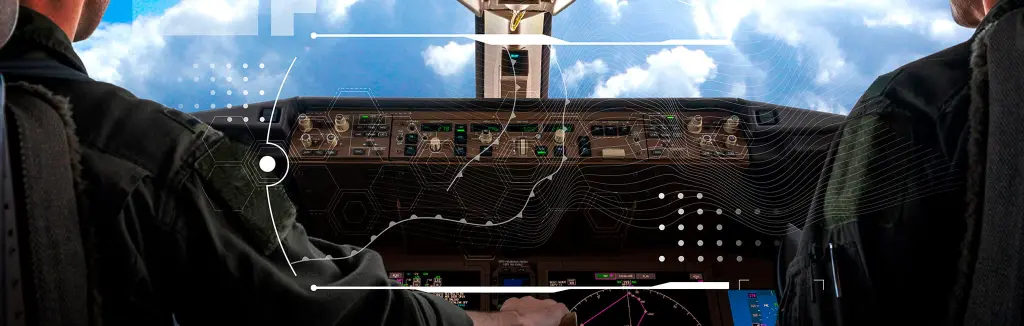
The modern aircraft cockpit is a complex environment, a place where split-second decisions and precise actions can be the difference between success and disaster. For decades, pilots have relied on a sea of switches, buttons, and knobs to manage their aircraft and its many systems. This traditional interface, while effective, created a significant challenge: pilot workload. During high-stress phases of flight or in a combat scenario, a pilot’s hands and eyes are in constant demand, which can distract them from the most critical task of all: flying the aircraft and maintaining situational awareness.
To solve this problem, engineers turned to a solution that’s as old as human communication itself: the voice. The development of sophisticated voice control systems has begun to revolutionize the cockpit, allowing pilots to interact with their aircraft in a way that is more natural, efficient, and intuitive than ever before. This article will take you on a journey through the technology, benefits, and challenges of how pilots are now operating their aircraft with only their voice.
What is Voice Control in a Cockpit?
At its core, voice control in a cockpit is a system that allows a pilot to issue spoken commands to activate or manage various aircraft systems. Instead of having to physically press a button to change a radio frequency, for example, a pilot can simply say, “Set radio to one-two-five-point-five.” The system recognizes the command and executes it automatically.
This is often referred to as Direct Voice Input (DVI), and it goes far beyond simple commands. In modern military fighters and commercial airliners, DVI can be used to control everything from communications and navigation systems to weapons and display configurations.
The Origins: A Quiet Revolution
The idea of using voice to control machines isn’t new. In the 1950s, early speech recognition systems were created, but they were massive, slow, and could only recognize a handful of words from a single speaker. The cockpit environment, with its high noise levels and demanding conditions, seemed like an impossible place for such technology.
However, as computing power grew, so did the potential for voice control. In the 1980s and 90s, military researchers began experimenting with early DVI systems on aircraft like the F-16 VISTA and the Harrier AV-8B. The goal was to prove the concept: could a voice system reliably recognize commands amidst the roar of jet engines and in a high-G environment? These early trials, while limited in scope, laid the groundwork for the advanced systems we see today.
How It Works: The Technology Behind the Voice
The technology behind a modern cockpit voice control system is a marvel of engineering, combining several key components to function effectively.
- Noise-Cancelling Microphones: The biggest hurdle for voice control in an aircraft is the noise. The sound of jet engines, air rushing past the canopy, and cabin equipment can easily drown out a pilot’s voice. The solution lies in advanced noise-cancelling microphones built into the pilot’s helmet. These microphones are designed to isolate the pilot’s voice from the surrounding noise, filtering out the background sounds and ensuring a clean audio signal for the system to process.
- Speech Recognition Software: Once the voice signal is clean, it is fed into a powerful speech recognition computer. Unlike a simple voice assistant on your phone, a military-grade system is tailored to the specific environment and task. It uses a pre-programmed vocabulary of commands and is often speaker-independent, meaning it doesn’t need to be “trained” to a specific pilot’s voice. This is crucial for operational flexibility, as any pilot can jump into any aircraft and use the system immediately.
- The Context-Aware Brain: Modern voice control systems are incredibly smart. They are context-aware, meaning they understand the aircraft’s current state and can anticipate the pilot’s needs. For example, if the pilot is in the middle of a landing approach, the system knows to only recognize commands related to landing gear, flaps, and airspeeds, ignoring commands that might be relevant during a dogfight. This contextual awareness prevents false activations and makes the system far more robust and reliable.
- The Digital Interface: The final step is for the computer to translate the recognized command into a digital instruction that the aircraft’s systems can understand. This instruction is then sent to the appropriate subsystem, be it the radio, navigation display, or weapons management system, to be executed.
The Game-Changing Advantages
Voice control is more than a convenience; it’s a critical safety and performance enhancement.
- Reduced Pilot Workload: This is the primary benefit. By using voice commands for routine tasks like changing radio frequencies or calling up a map on a display, a pilot is freed from the need to use their hands and eyes for manual input. This allows them to keep their hands on the stick and throttle (HOTAS), a core principle of modern combat aviation, and their eyes on the battlespace or out the window.
- Enhanced Situational Awareness: With voice control, pilots can maintain a better awareness of what’s happening around them. Instead of looking down at a display to change a setting, they can issue a command while looking out for other aircraft or monitoring a threat. This is a crucial advantage in the fast-paced, 360-degree environment of a modern dogfight.
- Faster and More Efficient Task Execution: In a time-sensitive situation, a voice command can be issued and executed far more quickly than navigating a series of menus or flipping multiple switches. This speed can be the difference between successfully identifying a target and missing a critical window of opportunity.
- Improved Safety: The hands-free nature of voice control means pilots can focus on flying the aircraft during critical phases of flight, such as takeoff and landing. It also reduces the chances of input errors, which are more likely when a pilot is fumbling with buttons during turbulence or an emergency.
Where We See It Today
Voice control has made its way into the cockpits of some of the world’s most advanced military aircraft. The Eurofighter Typhoon was one of the first to feature a voice command system, primarily for non-critical functions like managing its Head-Up Display (HUD) and radio. The F-35 Lightning II has taken this technology to the next level, integrating it into its highly advanced cockpit and helmet-mounted display system. An F-35 pilot can issue voice commands to control many of the aircraft’s subsystems, making the cockpit an even more intuitive and hands-free environment.
The Challenges and the Future
Despite its promise, voice control is not without its challenges. The environment is still incredibly noisy, and while modern systems are good, they are not perfect. Pilots must be trained to speak clearly and use a specific, pre-defined vocabulary of commands. The future, however, holds even greater potential.
Researchers are working on systems that can handle natural language commands, moving beyond a rigid vocabulary to a more conversational interface. They are also exploring the use of AI-powered virtual copilots that could anticipate a pilot’s needs, suggest actions, and even warn them of potential dangers, all through a sophisticated voice interface. These advancements promise to further reduce pilot workload and make the human-machine interaction in the cockpit even more seamless.
In conclusion, voice control in the cockpit represents a pivotal step in the evolution of aviation. By giving pilots the ability to operate complex systems with the most natural interface of all—their voice—engineers have found a powerful way to reduce workload, enhance safety, and give pilots the freedom to focus on what truly matters: flying the mission.