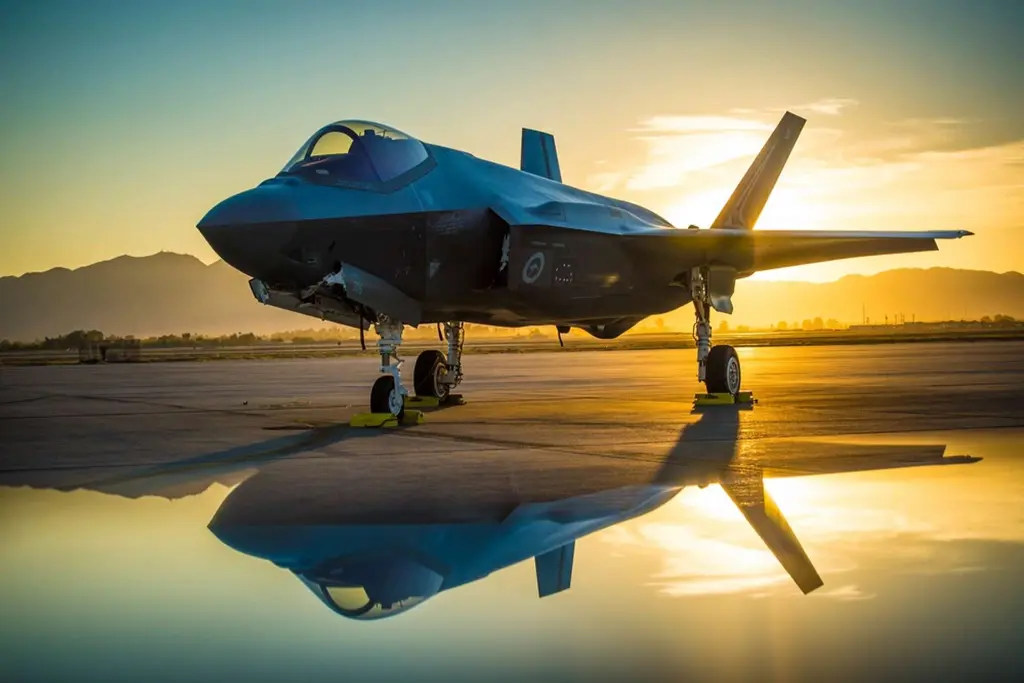
The F-35 Lightning II, often touted as the most advanced combat aircraft in the world, has generated both admiration and controversy since its development. With a colossal investment exceeding $1.7 trillion and the promise of revolutionizing air warfare, the F-35 finds itself at a critical juncture in its trajectory.
This article delves into the F-35 in detail, exploring its innovative technologies, potential risks, and the multifaceted future that awaits it in the global military landscape. We’ll go beyond the overview, examining specific data points, real-world examples, and nuanced perspectives.
A Quantum Leap in Aerospace Technology: Core Capabilities & Specific Examples
The F-35 represents a paradigm shift in aerospace technology, not just an incremental upgrade. Its core strengths lie in stealth, sensor fusion, and network-centric warfare.
- Stealth Technology – A Deep Dive: The F-35 employs a multi-faceted approach to stealth. Its shape is designed to deflect radar waves, reducing its radar cross-section (RCS). Materials like radar-absorbent materials (RAM) further minimize radar signature. For example, the F-35A has an RCS of less than 0.01 square meters, significantly smaller than its predecessors like the F-16 (around 1 square meter). This enables it to penetrate heavily defended airspace with a reduced risk of detection. Data Point: Radar signature reduction is estimated to be 80% compared to the F-22 Raptor, a previously unchallenged stealth fighter.
- Sensor Fusion – The Power of Integrated Data: The F-35’s sensor suite is its most potent asset. This includes:
- AN/APG-81 AESA Radar: This advanced radar can simultaneously track multiple targets, provide high-resolution imagery, and perform ground mapping. It can track up to 100 targets simultaneously. Data Point: The AESA radar has a detection range of over 160 kilometers.
- Electro-Optical Targeting System (EOTS): Provides infrared imagery for targeting and navigation.
- Distributed Aperture System (DAS): 6 infrared cameras encircling the aircraft provide 360-degree situational awareness, allowing pilots to “see” through the aircraft. Example: During exercises, pilots have successfully identified and tracked low-observable targets using the DAS, something previously unattainable.
- Electronic Warfare (EW) Suite: Integrates jamming and electronic countermeasures to protect the aircraft from enemy radar and communications.
- Network-Centric Warfare (NCW): The F-35’s ability to share data securely with other aircraft, ships, and ground stations is critical. Example: In joint exercises, F-35s have relayed targeting data to F-15EX Eagle II fighters and naval vessels, enabling coordinated strikes against simulated enemy forces with greater precision. This data sharing happens through secure data links like MADL (Multifunction Advanced Data Link).
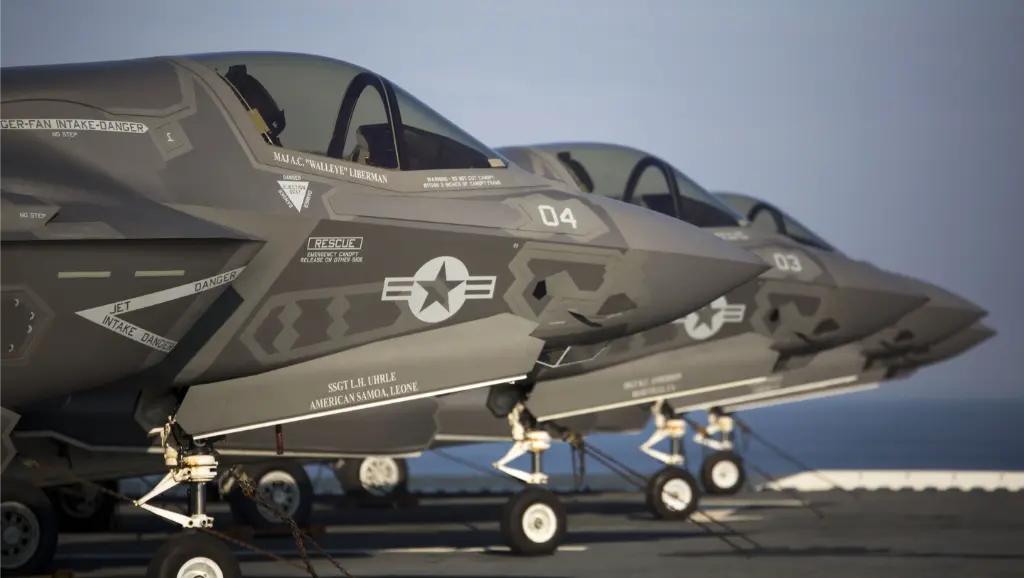
Challenges on the Path to Excellence: A Detailed Examination
Despite its remarkable potential, the F-35 program has faced significant hurdles that have impacted its cost, schedule, and ultimately, its reputation.
- Software Complexities and Delays: The F-35’s software is notoriously complex, involving millions of lines of code. This complexity has led to numerous software delays and glitches.
- Example 1: Block 3F Software Issues (2020-2022): The initial release of Block 3F software, intended to significantly improve the F-35’s capabilities, was plagued with problems. These included issues with the radar, data links, and targeting systems, forcing the Air Force to delay its deployment.
- Example 2: Ongoing Bug Fixes: Even after Block 3F was released, ongoing bug fixes and software updates have been required, impacting operational readiness. Data Point: As of 2023, over 200 software updates have been released for the F-35.
- Impact: These delays have pushed back deployment timelines and increased maintenance costs.
- Reliability Concerns & Maintenance Costs: Early reports revealed reliability issues with various components, including the engine, landing gear, and flight control systems.
- Example: Engine Issues: The Pratt & Whitney F135 engine, used in the F-35, has experienced issues with its bolted joint, requiring frequent inspections and repairs. Data Point: Early reports indicated engine overhaul costs could exceed $20 million per engine. While improvements have been made, maintenance remains a significant challenge.
- Impact: High maintenance costs contribute significantly to the overall program cost.
- Cost Overruns – A Financial Burden: The F-35 is the most expensive weapon system in history. The projected cost per aircraft has dramatically increased over time.
- Initial Estimates vs. Current Costs: Initial projections estimated a cost of around $100 million per F-35A. However, the actual cost per aircraft has exceeded $150 million, and some projections estimate costs exceeding $200 million.
- Impact: These cost overruns have strained defense budgets and led to debates about the program’s long-term viability.
- Joint Program Office (JPO) Challenges: The F-35 program is a joint venture involving multiple countries (U.S., UK, Australia, Netherlands, Italy, Denmark, Norway, Canada). Coordinating development, procurement, and maintenance across these nations has proven challenging, leading to delays and inefficiencies.
Looking Ahead: The Future of the F-35
Despite its challenges, the F-35 program is continuing to evolve, with ongoing efforts to address its shortcomings.
- Software Modernization (Block 4): The F-35 is undergoing a major software upgrade with Block 4, which includes enhancements to its radar, data links, and electronic warfare capabilities. This aims to address many of the software issues plaguing earlier versions.
- Increased Operational Tempo: As software issues are resolved, the F-35 is expected to see increased deployment and operational tempo.
- International Expansion: More countries are adopting the F-35, further solidifying its role as a key element of global air power.
- Next-Generation Capabilities: Future upgrades are planned to include enhanced sensor capabilities, including directed energy weapons, and improved cyber defenses.
Conclusion:
The F-35 Lightning II represents a significant leap forward in aerospace technology, offering unparalleled stealth, sensor fusion, and network-centric capabilities. However, the program has faced significant challenges in terms of cost, schedule, and reliability.
While these hurdles remain, ongoing efforts to address these issues and develop next-generation capabilities suggest that the F-35 will continue to play a critical role in shaping the future of air warfare. The program’s success will ultimately depend on its ability to deliver on its promise of a revolutionary aircraft while managing its complex challenges.